
If you notice water stains on the ceiling near your fireplace, a musty smell after a storm, or drips inside the firebox, your chimney is likely the culprit. In the Greater Seattle area, where steady rain falls for much of the year and roofs stay damp for weeks at a time, a chimney leak rarely fixes itself. It usually gets worse. The good news is that most chimney leaks trace back to a handful of predictable problems, and once you know what to look for, you can get the right repair before a small stain turns into rotted framing or a failing chimney structure.
Here are the six most common reasons a chimney leaks water when it rains, plus what each one looks like from the ground and what it takes to fix.
1. A Missing, Damaged, or Undersized Chimney Cap
The chimney cap is the metal cover that sits on top of the flue opening. Its whole job is to keep rain, debris, birds, and squirrels out of the flue while still letting smoke escape. When the cap is missing, rusted through, or was never installed, rain pours straight down the inside of your chimney.
This is one of the most common leaks we find on Puget Sound homes, partly because our wind-driven rain pushes water into openings a cap would normally protect. Signs include water dripping directly into the firebox, a rusty damper, or animals and leaves getting into the flue.
A quality cap with a mesh screen also keeps embers in and moisture out. Replacing or upgrading a cap is one of the more affordable chimney repairs, though costs vary with flue size and materials, so it is best to call for an estimate.
2. A Cracked or Deteriorated Chimney Crown
The crown is the concrete or mortar slab at the very top of a masonry chimney that slopes away from the flue to shed water. Over years of sun, rain, and temperature swings, the crown develops hairline cracks. Water works into those cracks, and in our wet climate it stays there, widening the gaps and seeping down into the chimney structure.
From the ground you usually cannot see crown damage, which is why it goes unnoticed until stains appear. A cracked crown lets water into the masonry below and often shows up as damp patches on the exterior brick or interior walls after heavy rain.
Depending on the severity, the fix ranges from sealing the crown with a flexible waterproof coating to rebuilding it entirely. A chimney technician can tell you which one you actually need after an inspection.
3. Failed or Improperly Installed Flashing
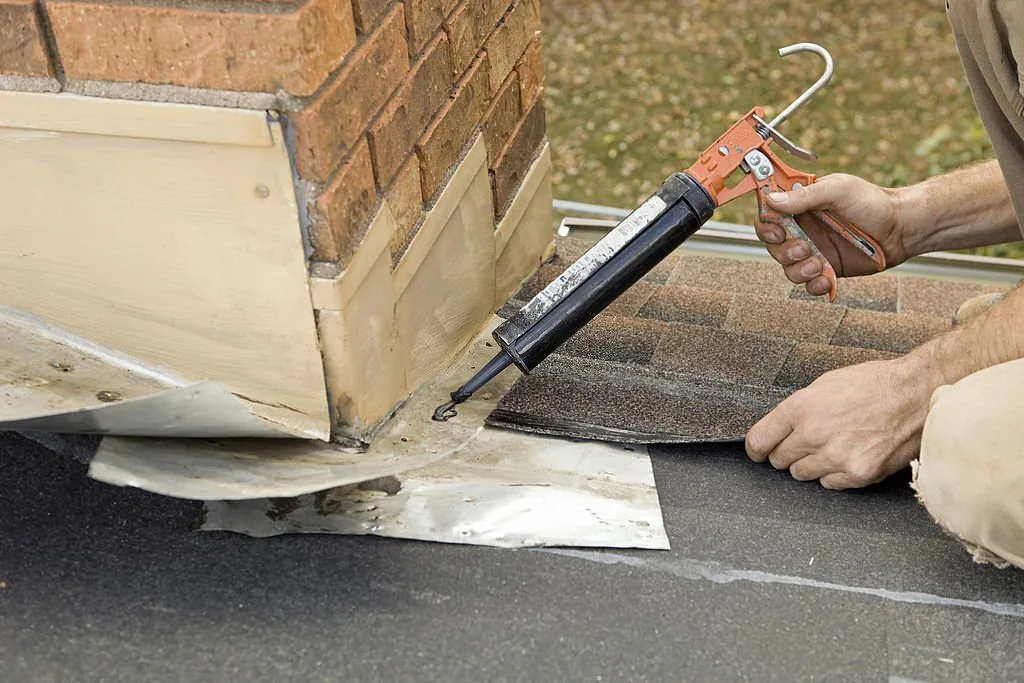
Flashing is the layered metal seal where the chimney meets the roofline. It is one of the trickiest parts of a roof to get right, and it is the single most common source of chimney leaks on any home. When flashing rusts, lifts, pulls away, or was sealed only with caulk that has since dried out, water runs behind it and into the attic and ceiling.
Flashing leaks are easy to mistake for a roof problem because the water often shows up several feet away from the chimney. Watch for:
- Ceiling stains near, but not directly under, the chimney
- Water in the attic around the chimney chase
- Peeling paint or damaged drywall on nearby walls
- Visible gaps or lifted metal where the chimney meets the roof
Around Seattle, moss and debris that collect against the flashing trap moisture and accelerate corrosion, so this area deserves a close look every few years. A proper repair means re-sealing or replacing the flashing with correctly layered metal, not just adding more caulk.
4. Porous or Deteriorating Brick and Mortar
Brick and mortar look solid, but they are actually porous and absorb water like a sponge. In a dry climate that water evaporates quickly. In the Pacific Northwest, where masonry can stay wet for days or weeks, the moisture soaks deep into the chimney and finds its way inside.
Over time, saturated masonry breaks down. Mortar joints crumble, brick faces flake or spall, and the gaps let in even more water. While our region does not see the hard freeze-thaw cycles of colder states as often, we do get enough cold snaps each winter for trapped water to freeze, expand, and crack the masonry from the inside out.
Signs include white chalky residue on the brick (efflorescence), crumbling mortar, and pieces of brick on the ground at the base of the chimney. The long-term fix often involves repointing the mortar joints and applying a breathable masonry waterproofing sealant that repels rain while still letting the chimney dry out.
5. Condensation Inside the Flue
Not every "leak" comes from rain outside. Sometimes water forms inside the chimney itself. If you have switched to a gas appliance or have an oversized or unlined flue, warm exhaust can cool and condense against the flue walls, dripping back down as moisture. This is easy to confuse with a rain leak because it tends to appear whenever the appliance runs.
Our long, cool, damp shoulder seasons make condensation issues more noticeable here than in hotter, drier regions. A chimney professional can determine whether you are dealing with condensation versus rain intrusion, and whether a properly sized liner is the answer.
6. Worn-Out or Missing Waterproofing
Masonry chimneys are meant to be protected by a water-repellent treatment, but that protection wears off over roughly five to ten years, faster in a climate as wet as ours. Once it fades, the brick and crown go back to soaking up every rainstorm. Many homeowners never realize their chimney had waterproofing to begin with, or that it needs periodic renewal.
Reapplying a quality breathable sealant is one of the most cost-effective ways to prevent leaks, but it only works on masonry that is still in good shape. If the mortar is already crumbling or the crown is cracked, those problems have to be repaired first. Sealing over existing damage traps water rather than keeping it out.
How to Tell Which Problem You Have
Because several of these causes produce similar symptoms, guessing rarely works, and climbing onto a wet Seattle roof to investigate is genuinely dangerous. A professional chimney inspection is the reliable way to pinpoint the source. During an inspection, a technician examines the cap, crown, flashing, masonry, and flue, then explains exactly where the water is getting in and what the repair involves.
A few things you can safely check from the ground or from inside:
- Look for ceiling or wall stains that appear or darken after rain
- Note any musty or damp smell coming from the fireplace
- Watch for rust on the damper or firebox
- Check for crumbling brick or mortar pieces at the chimney base
The most important thing is not to wait. Water is patient, and a leak that seems minor in the fall can rot roof decking, ruin drywall, and undermine the chimney's structure by the time spring arrives. Catching it early almost always means a smaller, less expensive repair.
Get Your Leak Diagnosed by a Local Pro
A leaking chimney is not a wait-and-see problem, especially with the amount of rain the Puget Sound region gets each year. If you have noticed stains, drips, odors, or crumbling masonry, the team at James Chimney Sweep can inspect your chimney, find exactly where the water is coming in, and recommend the right fix. Call us today at (206) 207-3974 to schedule an inspection and keep your Seattle-area home dry through every storm.
Related