
Home › Services › Chimney Liner Installation
Chimney Liner Installation Seattle, WA
New stainless steel, insulated and cast-in-place liners for unlined or oversized flues across King, Pierce and Snohomish counties.
- 25+ years in business
- CSIA certified
- Licensed, bonded & insured
Request Chimney Liner Installation
Tell us what's going on — we'll confirm a time by phone or text.
Chimney liner installation means adding a proper flue liner to a chimney that has none, or whose existing flue is too large or too rough to safely vent the appliance connected to it. James Chimney Sweep installs UL-listed stainless steel liners (304 and 316 alloy), insulated liner systems, and cast-in-place liners throughout Seattle, Tacoma and the greater Puget Sound, sized to the fireplace, wood stove, insert, furnace or water heater they serve.
This page is about putting a liner where one is needed but does not currently exist, or where the original clay tile flue is oversized or unlined for the appliance. If your chimney already has a liner that is cracked, rusted or separated, that is a different job: our Chimney Liner Replacement service covers removing a failed liner and fitting a new one, Chimney Liner Repair covers patching localized damage, and Chimney Liner Rebuild covers rebuilding the masonry flue itself. Installation is the starting point when a flue has never been lined correctly in the first place.
Many Seattle homes built before the mid-twentieth century have brick flues with no clay tile at all, or clay tiles laid loosely with open mortar joints. Those chimneys were built for open wood fires and coal, not the high-efficiency inserts, stoves and gas appliances people connect today. A correctly sized liner gives the exhaust a smooth, sealed, continuous path from the appliance to the top of the chimney, which is exactly what an unlined flue cannot do.
Symptoms & Problems
Signs Your Chimney Needs a Liner Installed
- A home inspection or Level 2 camera inspection reported an unlined or partially lined flue
- You can see bare brick, open mortar joints or no tile when looking up the flue with a flashlight
- A new wood stove, insert or gas appliance has been or is about to be connected to the chimney
- The flue is much larger than the appliance outlet, so the fire drafts poorly and smokes
- Heavy, fast creosote buildup in a flue that is oversized for the appliance
- Warm or discolored wall surfaces next to the chimney while a fire is burning
- A furnace or water heater was upgraded to a newer model that vents into an old masonry flue
- The chimney sweep noted gaps, voids or missing tile sections during a routine cleaning
How It Works
How We Install a Chimney Liner
Inspect and measure
We run a camera inspection of the full flue to confirm whether it is unlined, oversized or obstructed, check for offsets and bends, and measure the appliance outlet, the flue length and the cross-sectional area. From that we choose the liner type, alloy and diameter that matches the appliance and the fuel.
Install the liner system
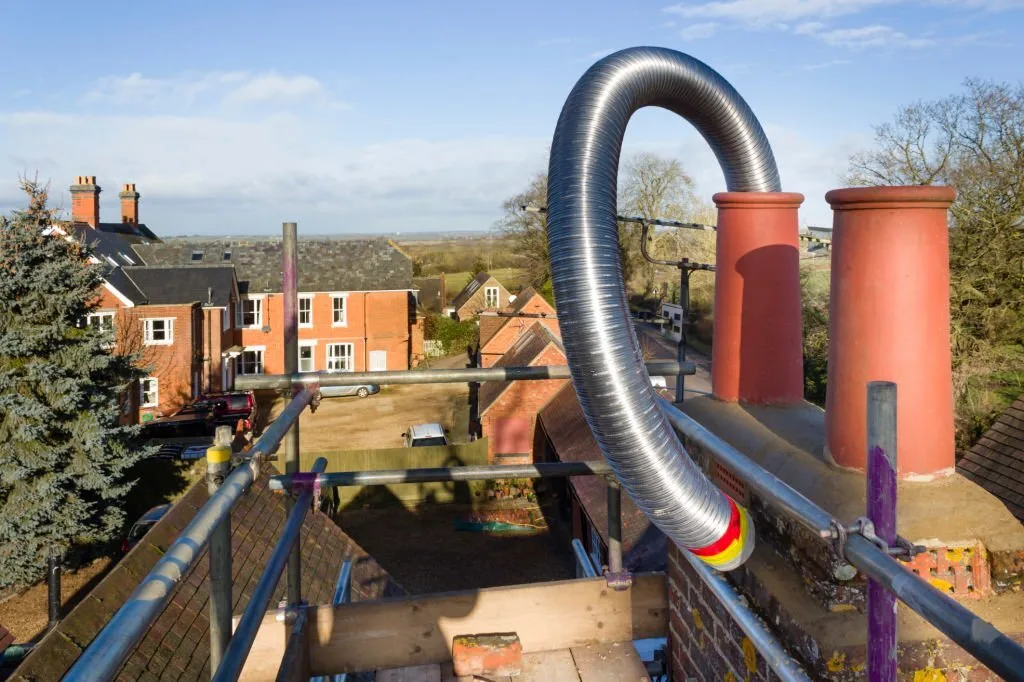
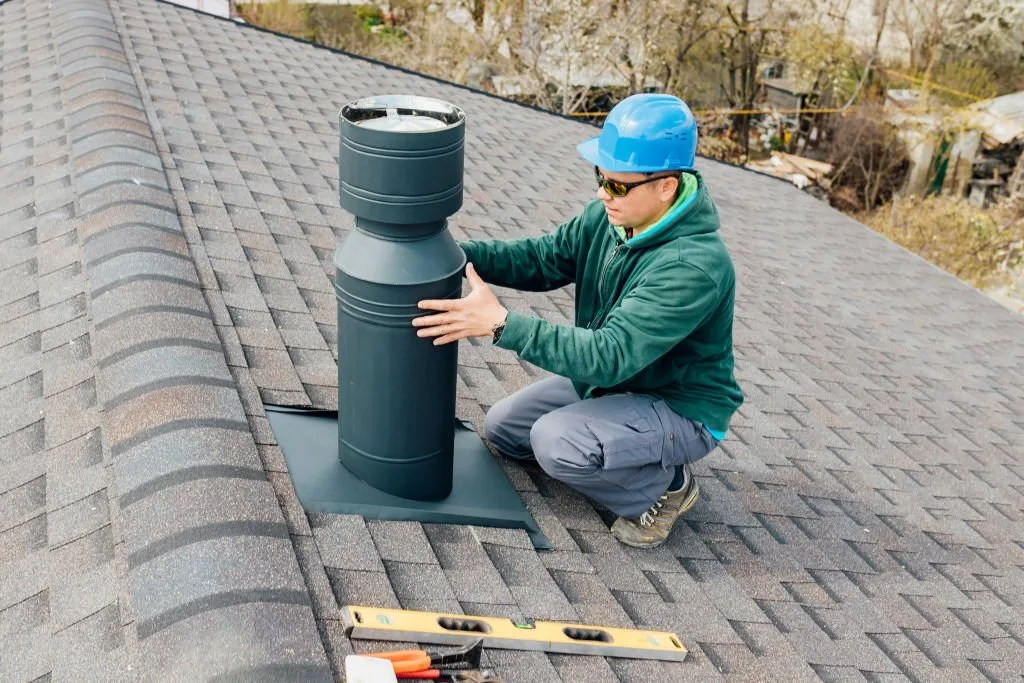
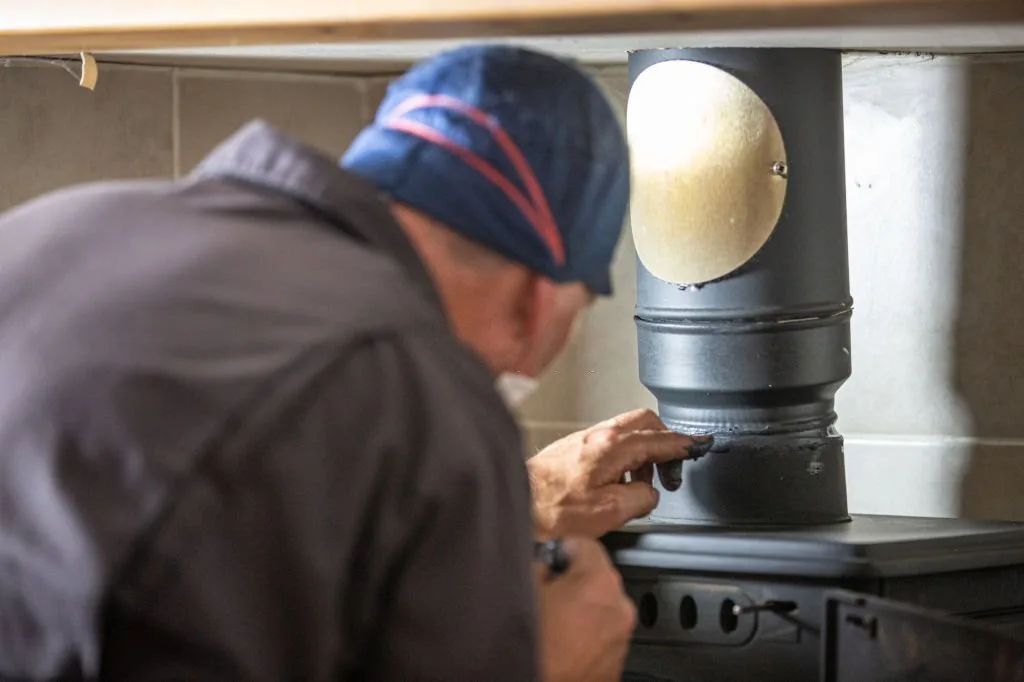
For stainless liners we lower the flexible or rigid liner from the top, attach the bottom connector to the appliance or smoke chamber, wrap or pour insulation where the design calls for it, and seal the top with a plate, storm collar and a properly sized cap. For cast-in-place liners we position the former and pump the cementitious mix to create a new smooth, insulated flue inside the old masonry.
Test, document and explain
We verify draft with the appliance running where possible, confirm every connection is secure, photograph the finished work and leave you with a written summary of what was installed, the liner specification, and how to maintain it going forward.
Options
Liner Types We Install
- 304 stainless steel flexible liner — the standard choice for wood-burning fireplaces, stoves and inserts; handles high flue temperatures and snakes through offsets in older masonry.
- 316 stainless steel liner — a higher-alloy option with better resistance to acidic condensate, chosen for gas appliances, oil furnaces and some multi-fuel situations.
- Insulated liner system — a stainless liner wrapped in ceramic blanket or surrounded by poured insulation; keeps flue gases hot so they draft well and produce less creosote, and is the usual recommendation when the liner is not in direct contact with sound masonry.
- Rigid stainless sections — used in straight flues where a smooth interior wall is preferred; rigid pipe is easier to clean and slightly more efficient than corrugated flex.
- Cast-in-place liner — a poured cementitious liner that creates a new flue inside the old chimney and adds structural support to deteriorated masonry; suited to unlined brick flues that are too rough or irregular for a metal liner alone.
Pricing
What affects the price
- Liner type and alloy (304 flex, 316, rigid or cast-in-place)
- Flue height and the number of stories the chimney runs through
- Diameter required by the appliance and the fuel type
- Whether insulation is required and how it will be applied
- Offsets, bends or obstructions that complicate lowering the liner
- Condition of the smoke chamber, crown and top of the chimney where the liner terminates
- Appliance connection type (fireplace, insert, stove, furnace or water heater)
We don't publish flat prices because every chimney is different. You'll get a written quote after we look at the system — no surprises.
Timing & Safety
When a Liner Installation Is Necessary
Installing a liner is usually necessary, not optional, in these situations:
- The chimney has no liner at all and is being used with any appliance.
- A wood stove or insert is being connected to a fireplace flue. Most manufacturers call for a liner sized to the appliance outlet, and an oversized open flue will draft poorly and build creosote quickly.
- A gas or oil furnace or water heater vents into an old masonry flue. Cooler, wetter exhaust from modern appliances condenses inside oversized brick flues and eats the mortar.
- A camera inspection found the clay tile is missing in sections or was never fully installed.
Installation is a judgment call when the existing clay liner is intact and correctly sized, and the only concern is efficiency. In that case a cleaning and inspection may be all you need for now, and we will tell you so. NFPA 211 recommends that flues serving solid-fuel appliances be lined and inspected annually, and that is the benchmark we work to.
Safety considerations
An unlined or oversized flue is one of the most common hidden fire hazards in older Seattle homes. Without a liner, hot flue gases reach the brick directly, heat travels through mortar joints into framing, and creosote settles on rough surfaces where it is hard to remove. A correctly installed liner contains the heat and the exhaust inside a sealed path.
- Never connect a new stove, insert or appliance to a chimney until the flue has been inspected and confirmed to be lined and sized correctly.
- Do not attempt to lower a liner yourself. The work requires roof access, rigging and correct connection at the appliance, and a poorly seated liner can leak exhaust into the house. Leave it to a qualified technician.
- If your liner will serve a gas appliance: gas lines and valves are only serviced by a qualified technician. If you ever smell gas, leave the house immediately and call the gas utility or 911 from outside.
- Install carbon monoxide alarms on every level of the home regardless of what fuel your appliance burns.
Seattle & Puget Sound conditions
Seattle's housing stock is a big reason liner installation is such a frequent job here. Craftsman bungalows, Tudors and pre-war brick homes across Seattle, Tacoma, Everett and the older neighborhoods in between were often built with unlined brick flues or loosely set clay tile. Decades of Puget Sound rain soaking into porous brick, followed by winter freeze-thaw cycles, opens the mortar joints further. Salt air near the Sound and in waterfront neighborhoods accelerates corrosion of any bare metal at the chimney top, which is why we specify the right alloy and a proper top plate and cap rather than leaving the liner exposed. Our long, damp heating season also means appliances run for months at a time, so the difference between a cold, oversized flue and a warm, insulated, correctly sized liner shows up in how the fire drafts and how much creosote builds between cleanings.
Real Work
Chimney Liner Installation in action
Give Your Old Flue a Proper Liner
Call 206-207-3974 or request a quote and we will inspect the flue, size the liner to your appliance and explain the right system for your home.
☎ (206) 207-3974 Request ServiceQuestions
Chimney Liner Installation FAQ
How do I know whether my chimney has a liner at all?
The only reliable way is a camera inspection of the full flue. Looking up from the firebox with a flashlight sometimes shows bare brick or open joints, but a camera documents the entire length and tells us whether the tile stops partway up, which is common in older Seattle homes.
What does it mean to size a liner to the appliance?
The liner's diameter must match the appliance outlet and the flue height so the exhaust moves at the right speed. Too large and gases cool, slow down and deposit creosote; too small and the appliance cannot vent. We measure the appliance, the flue and the chimney height and follow the manufacturer's venting tables before choosing a diameter.
Should I choose 304 or 316 stainless steel?
304 is the usual choice for wood-burning appliances because it handles high temperatures well. 316 has better resistance to the acidic condensate produced by gas and oil appliances. We recommend the alloy based on the fuel you burn, not on price alone.
Is an insulated liner worth it in the Puget Sound climate?
Usually yes. Our heating season is long and damp, and exterior chimneys in particular run cold. Insulation keeps flue gases warm so the appliance drafts reliably and creosote forms more slowly, and it is often required by the liner listing when the liner does not sit against sound masonry.
When is a cast-in-place liner better than stainless steel?
Cast-in-place makes the most sense when the old brick flue is irregular, badly deteriorated or has voids a metal liner would not seal against, because the poured material also strengthens the masonry. For a structurally sound chimney that simply lacks a liner, a stainless system is usually faster and less disruptive.
I already have a clay liner that is cracked. Is this the right service?
Not quite. If an existing liner has failed, look at our Chimney Liner Replacement or Chimney Liner Repair services, depending on how much of it is damaged. Installation is for chimneys that have no liner, or a flue that is unlined or oversized for the appliance connected to it.
Related services
Service areas
Helpful reading