Home › Services › Chimney Sweep
Chimney Sweep Seattle, WA
Creosote and soot removal with HEPA dust containment for wood-burning fireplaces, inserts and stoves across Seattle, Tacoma and the Puget Sound corridor.
- 25+ years in business
- CSIA certified
- Licensed, bonded & insured
Request Chimney Sweep
Tell us what's going on — we'll confirm a time by phone or text.
A chimney sweep removes the creosote, soot and debris that build up inside your flue every time you burn wood. Creosote is the tar-like residue left behind by smoke, and it is flammable. Enough of it on the flue walls is what feeds a chimney fire. Sweeping clears those deposits, restores proper draft, and lets a technician get a clear look at the liner, smoke chamber and firebox so problems are caught early.
If you burn wood in a fireplace, insert or freestanding stove anywhere in King, Pierce or Snohomish County, this service is for you. The same applies if you just bought a home and have no record of when the chimney was last cleaned, or if you have noticed smoke rolling into the room, a strong campfire smell on humid days, or black flakes falling into the firebox.
James Chimney Sweep follows the approach the Chimney Safety Institute of America and NFPA 211 describe: every chimney is inspected annually, and it is swept whenever deposits require it. Some households need a sweep every year; light users may not. The inspection is what tells us which applies to you, so you are never paying for a cleaning you do not need.
Symptoms & Problems
Signs your chimney needs sweeping
- Smoke backing into the room when the fire is lit
- A strong, sour campfire smell that gets worse on rainy or humid days
- Black flakes or shiny, tar-like chips falling into the firebox
- Fires that are hard to start or burn sluggishly even with dry wood
- Visible soot buildup on the damper or the inside of the flue opening
- A roaring, rumbling or popping sound from the chimney while burning
- Birds, nesting material or leaves noticed at the top of the flue
- No record of a sweep in the last year of regular wood burning
How It Works
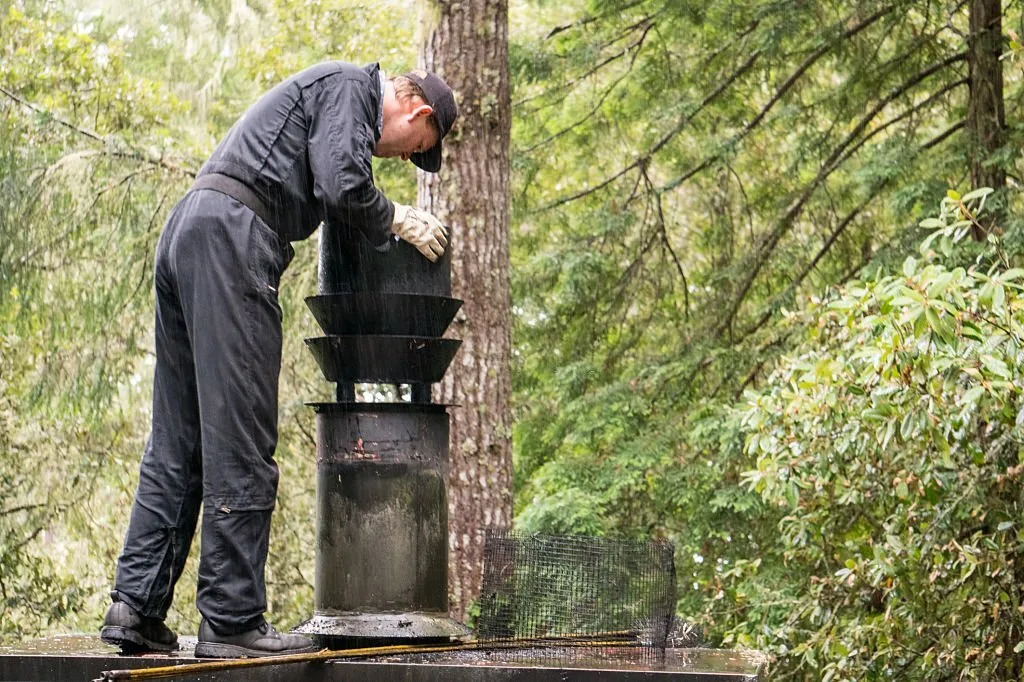
How a chimney sweep visit works
Inspection and assessment
A technician examines the firebox, damper, smoke chamber and flue to gauge how much creosote is present and what stage it is in. This decides the tools needed and confirms whether a sweep is actually warranted.
Contained sweeping
Drop cloths go down and a HEPA-filtered vacuum runs the entire time to keep soot out of your living space. Rotary or rod-and-brush tools sized to your flue scrub deposits loose from the liner, smoke shelf and smoke chamber, and everything is vacuumed out through the firebox.
Visual check and report
After cleaning, the technician looks over the liner, firebox, damper and accessible exterior and explains what was found. You get a plain-language summary, and if anything needs a closer look, such as a Level 2 camera inspection or a repair, we tell you and let you decide.
Options
Sweeping and cleaning options
- Standard rod-and-brush or rotary sweep — the right choice for first- and second-stage creosote (powdery soot and crunchy flakes), which is what most annual sweeps find.
- Glazed creosote treatment — third-stage creosote is a hardened, shiny glaze that brushes cannot remove. It is treated with chemical modifiers over one or more burns and then swept, or mechanically removed with specialized heads.
- Insert and stove sweeps — wood inserts and stoves are cleaned through the appliance or connector pipe, and some require pulling the unit forward to reach the flue. We confirm which applies before the visit.
- Smoke chamber and firebox cleaning — the area just above the damper collects the heaviest deposits in many open fireplaces and is included as part of a thorough sweep, not an add-on.
- Sweep with Level 2 camera inspection — recommended when you are buying or selling a home, after a chimney fire, or when the visual check turns up something the technician cannot fully see.
Pricing
What affects the price
- Type of appliance: open masonry fireplace, factory-built fireplace, wood insert or freestanding stove
- Stage and amount of creosote; glazed deposits take longer and need additional treatment
- Flue height and number of offsets or bends
- Whether an insert must be pulled to reach the flue
- Number of flues or appliances serviced in the same visit
- Whether a Level 2 camera inspection is added
- Access conditions, such as steep roof pitch or a chimney that must be serviced entirely from below
We don't publish flat prices because every chimney is different. You'll get a written quote after we look at the system — no surprises.
Timing & Safety
When sweeping is necessary, and when it is optional
The standard is an inspection once a year, with sweeping whenever deposits make it necessary. NFPA 211 recommends that chimneys, fireplaces and vents be inspected at least annually and cleaned as needed. Industry guidance treats an eighth of an inch of buildup as the point where a sweep is needed; if glazed creosote is present, cleaning is needed at any thickness.
- Necessary: you burn a cord or more of wood per season, you see flaky or shiny deposits, smoke is spilling into the room, there has been a chimney fire, or the flue has not been cleaned in a year of regular use.
- Strongly advised: you are moving into a home with an unknown burning history, you switched fuel or installed a new insert, or an animal has been in the flue.
- Usually optional after inspection: you light a handful of fires a year with dry, seasoned wood and the inspection finds only a thin film of soot. In that case we document the condition and recommend the next check rather than sweeping for the sake of it.
Safety considerations
- Creosote is the primary fuel in chimney fires. A flue fire can crack clay tile liners and damage the chimney even when it goes out on its own, which is why a sweep after any suspected chimney fire includes a close look at the liner.
- A blocked or heavily coated flue can push smoke and carbon monoxide back into the house. Install and test carbon monoxide alarms on every level, and stop using the fireplace until a blocked flue is cleared.
- Never try to burn off creosote with a hot fire or use chimney-cleaning logs as a substitute for a sweep. Those products can loosen deposits that then fall and accumulate on the smoke shelf.
- Stay off the roof. Roof work belongs to trained technicians with the right equipment, and many Puget Sound roofs are slick with moss and rain most of the year.
- If your fireplace has a gas log set or gas starter and you ever smell gas, leave the house immediately and call your gas utility or 911 from outside. Sweeping does not involve gas-line work.
- Burn only dry, seasoned firewood. Wet wood, trash, treated lumber and cardboard all add creosote quickly and can release toxic fumes.
Seattle & Puget Sound conditions
Western Washington is hard on chimneys in ways that make sweeping more important, not less. Our long damp season means firewood that was not covered and stacked off the ground often burns at a higher moisture content, and wet wood is the single biggest driver of creosote. Humid air also carries creosote odor down the flue into the house, which is why so many Seattle and Tacoma homeowners first notice a chimney problem by smell in the spring. Moss and debris from the big firs and maples around Puget Sound homes collect at the chimney top and in uncapped flues, and the region's mild but frequent freeze-thaw cycles widen small cracks in masonry that the inspection portion of a sweep visit is meant to catch. Many homes from Everett to DuPont also rely on wood heat through winter outages, so a clean, open flue matters when the power goes out.
Real Work
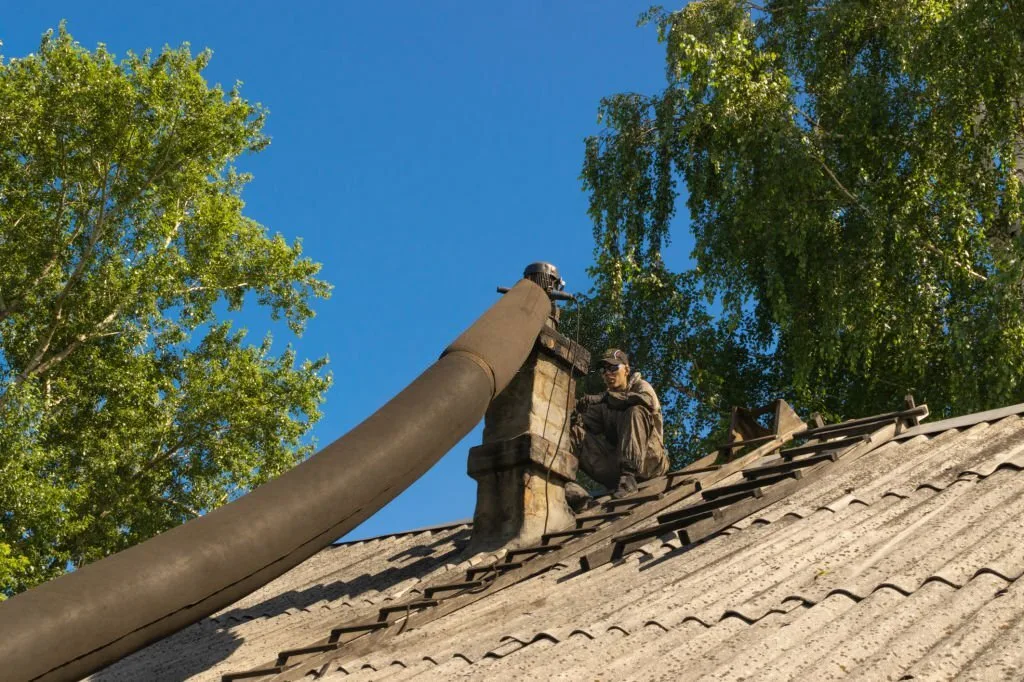
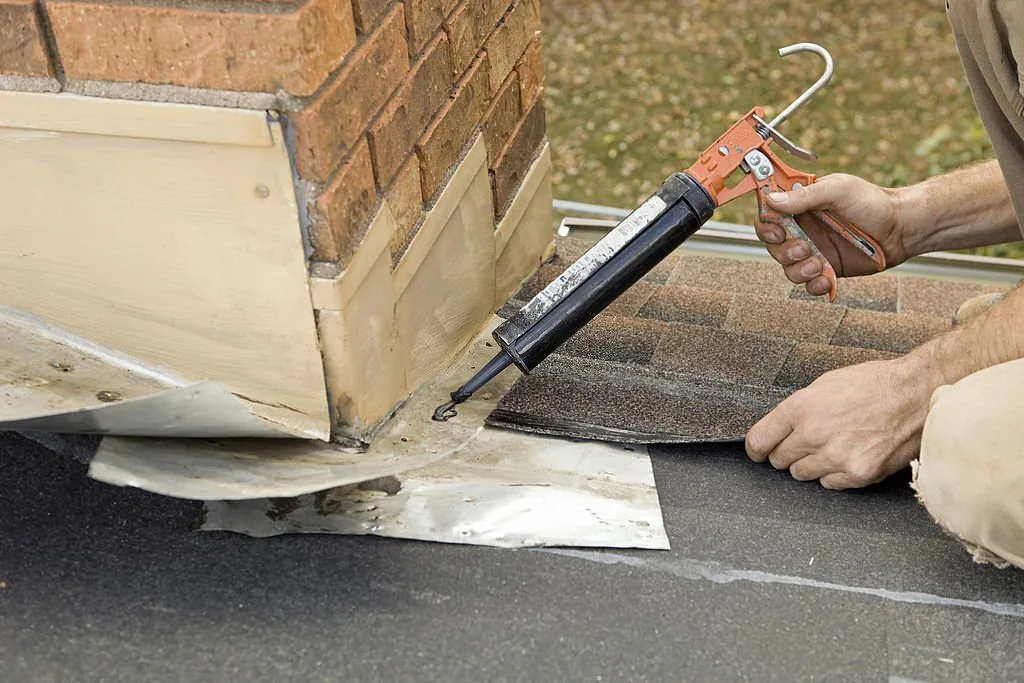
Chimney Sweep in action
Request a chimney sweep before the burning season
Call 206-207-3974 or email info@jameschimneysweep.com, Sunday through Friday from 7am to 8pm, to request a sweep anywhere in King, Pierce or Snohomish County.
☎ (206) 207-3974 Request ServiceQuestions
Chimney Sweep FAQ
How often should a chimney be swept in the Seattle area?
Have it inspected once a year, and sweep when the inspection shows deposits at or near an eighth of an inch, or any glazed creosote. Households that burn most evenings through the wet season usually need a sweep every year. Occasional users may go longer, but the annual inspection is what confirms that safely.
Will sweeping make a mess in my house?
No. The technician lays drop cloths, seals the fireplace opening, and runs a HEPA-filtered vacuum for the entire job so soot is captured at the source instead of drifting into the room. The work area is left as it was found.
Do I need to do anything before the appointment?
Do not burn a fire for at least 24 hours beforehand so the firebox is cold, remove anything from the hearth and mantel that you would rather not have near the work area, and clear a path to the fireplace. If you have a wood insert, let us know when you book so the right tools come out.
Is a chimney sweep the same as a chimney inspection?
They are related but not the same. A sweep removes deposits; an inspection evaluates condition. Every sweep visit includes a visual check of the accessible parts of the system, and when a closer look is warranted, such as before a home sale or after a chimney fire, a Level 2 camera inspection of the full flue is recommended.
Can I just use a creosote sweeping log instead?
Those products may soften some deposits, but they do not remove them, and they cannot find a cracked liner, a failing damper or a nest in the flue. They are not a substitute for a sweep and inspection by a technician.
What happens if the technician finds a problem during the sweep?
You will hear about it on the spot in plain language, with a recommendation for the next step, whether that is a camera inspection, a repair or simply monitoring. Nothing beyond the sweep is done without your approval. Call 206-207-3974 if you want to discuss a finding after the visit.
Related services
Service areas
Helpful reading