
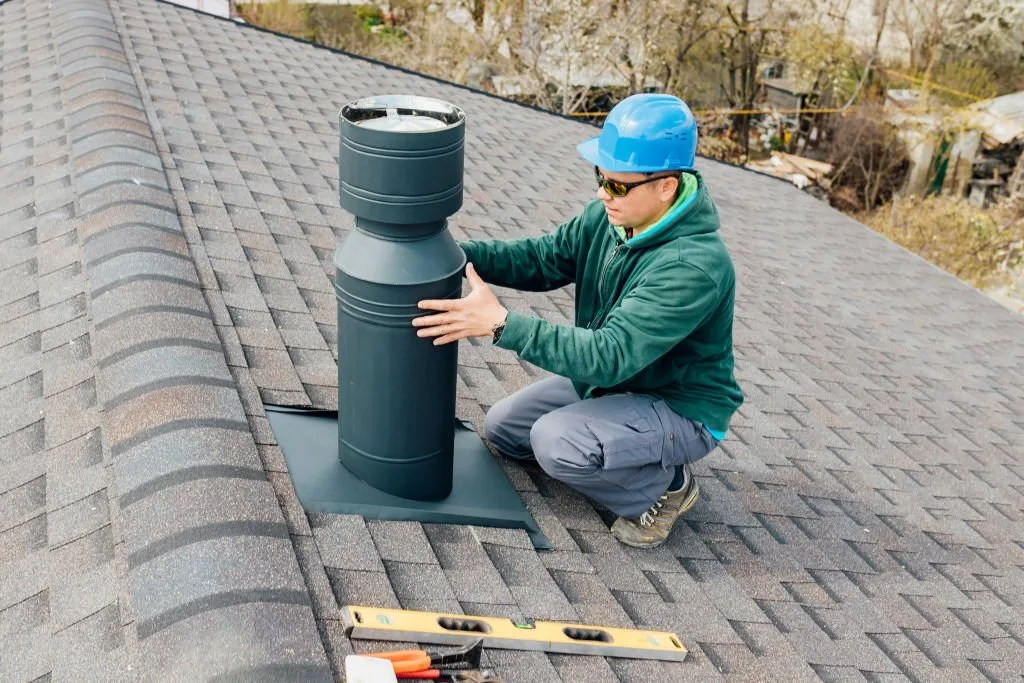
If you have a gas fireplace, you have probably heard two opposite things: "gas burns clean, so you never have to touch the chimney," and "every chimney needs to be swept every year." Neither one is quite right. The honest answer is that a gas fireplace rarely needs sweeping in the traditional sense, but it absolutely needs an annual inspection, and sometimes that inspection turns up work that has to be done. Here is how it actually breaks down for homes around Seattle, Tacoma and the rest of Puget Sound.
The short answer
- Creosote is not the issue. Natural gas and propane do not produce the sticky, flammable creosote that wood fires leave behind. The "sweep for creosote" logic that applies to wood stoves and open wood-burning fireplaces does not carry over.
- Inspection is still the standard. NFPA 211 recommends that chimneys, fireplaces and vents be inspected at least once a year, and that advice does not exempt gas appliances. A gas fireplace has a venting system, a burner, and combustion byproducts, and all of those can fail quietly.
- Cleaning happens when the inspection calls for it. Debris, nests, corrosion flakes, or a buildup of dust and soot on the burner or logs are all reasons an inspector will recommend cleaning. The trigger is what we find, not the calendar.
Why gas still gets an annual inspection
Gas is easier on a chimney than wood, but "easier" is not "maintenance-free." These are the things an annual inspection is really looking for on a gas unit.
Venting that is blocked or disconnected
Whether your fireplace vents through a masonry chimney with a liner, a metal B-vent, or a direct-vent pipe out the wall, the job of that vent is to carry combustion gases outside. Birds, squirrels and raccoons love a warm, sheltered opening, and a nest partway up a flue can block it in a single spring. Leaves and roofing debris do the same thing over time. Vent sections can also shift or separate at the joints, especially after a house settles or someone has been working in the attic. A vent that is blocked or open to the house does not announce itself; it just quietly stops doing its job.
Corrosion from acidic condensation
This is the one that surprises most gas fireplace owners. Burning gas produces a lot of water vapor, and that vapor is mildly acidic. When flue gases cool before they leave the chimney, which is common in our damp, cool climate and especially with an oversized old masonry flue, the vapor condenses on the inside of the flue. Over the years that acidic moisture eats at clay tile liners, mortar joints and metal vent pipe. The result can be flaking liner material that falls and blocks the flue, rusted-through vent sections, or moisture damage that shows up as staining on the chimney breast or a ceiling. An inspection catches this long before it becomes a repair.
Logs, burner and glass
Ceramic gas logs are meant to sit in a very specific arrangement. If they have been moved, even slightly, during cleaning or when a child or pet bumped them, the flames can hit the logs in the wrong places. That leads to incomplete combustion, heavy black soot on the logs and glass, and higher carbon monoxide output. Inspectors also look at the burner ports for dust and spider webs (which clog them more often than you would think), check the pilot assembly, and confirm that the glass on a direct-vent unit seals properly.
Carbon monoxide risk
A properly tuned, properly vented gas fireplace produces very little carbon monoxide, and what it does produce goes outside. The problem cases are exactly the ones above: a blocked vent, a leaking joint, misplaced logs, or a dirty burner. Any of those can push combustion byproducts into the room. Because CO is odorless, you cannot rely on your nose. Every home with a gas appliance should have working carbon monoxide alarms near sleeping areas and on each level, and the annual inspection is the second line of defense.
Vent-free (ventless) units are not exempt
Some gas fireplaces have no chimney or vent at all and release combustion products into the room by design. They do not need a chimney inspection because there is no chimney, but they do need the burner, logs, oxygen-depletion sensor and room clearances checked regularly, and they should be used only as the manufacturer directs. If you are not sure which type you own, look for a vent pipe or flue above the unit, or check the rating plate inside the lower access panel.
Converted fireplaces: wood to gas
A lot of Seattle-area fireplaces started life burning wood and were later fitted with a gas log set or a gas insert. Two things matter here:
- Old creosote may still be in the flue. Gas will not add to it, but it will not remove it either. If the chimney was never swept before the conversion, that creosote is still up there, and it is still flammable. Your first inspection after a conversion, or the first one you have done if you bought the house that way, should settle that question.
- The damper matters. Gas log sets installed in a wood-burning firebox usually require the damper to be fixed open (a damper clamp) so combustion gases cannot be trapped in the house. An inspector confirms that is in place and that the flue is sized and lined appropriately for the appliance.
What an inspection actually involves
For a gas fireplace in normal use with no changes to the system, a standard chimney inspection covers the readily accessible parts of the appliance, the connection to the vent, and the visible portions of the chimney or vent inside and out. If you have just bought the home, changed appliances, or had a chimney fire, water event, or earthquake, a more thorough level with a camera scan of the flue interior is appropriate. The differences between those levels are spelled out in our guide to chimney inspection levels.
During a gas-specific inspection, expect the technician to:
- Check the vent or flue for blockages, debris, nests and liner damage.
- Examine vent joints and the termination cap for corrosion and separation.
- Confirm the log arrangement against the manufacturer's layout and look for soot patterns that suggest impingement.
- Inspect the burner, pilot and ignition for dust, webs and proper flame.
- Verify the damper clamp on converted fireplaces and check clearances to combustibles.
- Note moisture staining, efflorescence or spalling that points to condensation damage.
If cleaning is needed, it is usually light work: vacuuming the firebox and burner area, clearing debris from the flue, and cleaning the glass with the correct product. A heavier cleaning is needed when a blocked flue or flaking liner is found.
How this compares to a wood-burning fireplace
With wood, the annual inspection is still the baseline, and sweeping is added whenever creosote deposits have built up enough to matter. That can be every season for a heavily used stove or only occasionally for a rarely used fireplace. We go through the details in how often you should sweep your chimney. With gas, the inspection is the same baseline, but the cleaning side of the equation is driven by debris and corrosion rather than creosote, so most years it is minor.
Gas safety: what to do yourself, and what not to
There are a few things every gas fireplace owner should do, and a few things no homeowner should attempt.
- If you smell gas, leave. Do not flip switches, use the phone inside, or try to find the leak. Get everyone out, then call your gas utility's emergency line or 911 from outside.
- Install and test CO alarms. Replace batteries on schedule and replace the alarms themselves when they reach the end of their rated life.
- Watch for warning signs. Sooty glass, a lazy yellow flame where it used to be blue-and-orange, a sulfur or metallic smell when the fire is on, condensation on nearby windows, or headaches and drowsiness when the fireplace is running are all reasons to stop using it and have it checked.
- Never work on the gas line, valve or connector yourself. That includes "just tightening" a fitting. Gas piping work is for a licensed gas fitter or your utility.
- Do not go on the roof to check the cap or flue. Seattle roofs are wet and slick most of the year. Looking at the termination from the ground with binoculars is fine; climbing is not.
- Do not rearrange the logs on your own. If they look wrong, leave the unit off and have the layout reset against the manufacturer's diagram.
Bottom line
A gas fireplace does not need the kind of routine sweeping a wood fireplace does, because it does not make creosote. It does need a yearly inspection, because the things that go wrong with gas, such as blocked or separated venting, acid corrosion of the liner, misplaced logs, and carbon monoxide, are invisible from the couch. Most years the visit ends with a clean bill of health and a little light cleaning. The years it does not are the years it pays for itself. If your gas fireplace has not been looked at in the last twelve months, or you have noticed any of the warning signs above, call 206-207-3974 to schedule an inspection.
Related