
Home › Services › Chimney Damper Repair
Chimney Damper Repair Seattle, WA
Repair and replacement of stuck, rusted, warped or leaky throat and top-sealing dampers for homes across Seattle, Tacoma and the Puget Sound.
- 25+ years in business
- CSIA certified
- Licensed, bonded & insured
Request Chimney Damper Repair
Tell us what's going on — we'll confirm a time by phone or text.
Chimney damper repair is the fix for the metal plate that is supposed to open when you light a fire and close tightly when you don't. When that plate sticks, rusts, warps, or no longer seats against its frame, you get smoke spilling into the room, a cold draft pouring down the chimney all winter, and heated air escaping up the flue. James Chimney Sweep has spent 25+ years freeing, repairing and replacing dampers in Seattle, Tacoma and across King, Pierce and Snohomish counties. We are CSIA certified and licensed, bonded and insured in Washington.
This page is about the damper itself, the moving part that controls the flue opening. If the firebox walls, hearth or masonry are the problem, that is covered on our Fireplace Repair page. If the refractory panels in a prefabricated fireplace are cracked, see Fireplace Panel Repair or Fireplace Panel Replacement. Here, the question is simpler: can your existing damper be brought back to working order, or is it time to replace it with a top-sealing damper that actually stops the draft?
Most homeowners call us for one of two reasons: the damper will not move, or the damper moves but the room is still cold. Both have clear answers once we see the hardware.
Symptoms & Problems
Signs Your Damper Needs Attention
- The handle or chain will not budge, or moves only with force
- Smoke rolls into the room when you light a fire
- A steady cold draft comes from the fireplace even when it is closed
- You can see daylight around the closed plate when looking up the flue
- Rust flakes, soot or debris drop onto the hearth when you work the handle
- The plate looks bent, tilted or no longer sits flat in its frame
- Rain or a damp, sour smell comes down the chimney after a storm
- Your heating bill climbs in winter with the fireplace sitting unused
How It Works
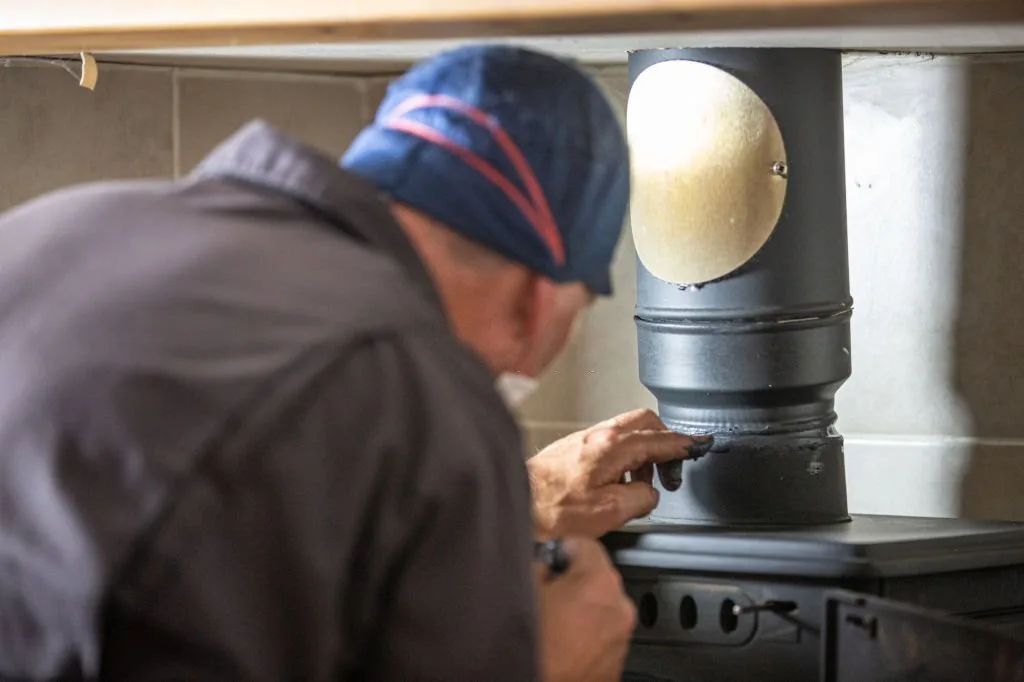
How We Repair a Chimney Damper
Inspect the damper and the throat
We open the firebox, examine the plate, frame, hinge pins and handle assembly, and check the smoke shelf and throat area for debris, rust, creosote buildup or masonry damage that may be binding the plate. We also check how the plate seats when closed, because a damper that moves freely but leaks is a different problem than one that is jammed.
Free, repair or replace
Where the damper is salvageable we clean out the throat, remove rust scale and debris, free seized pivots, re-seat a dislodged plate, and replace worn handles, chains or pins. Where the plate is warped, cracked, rusted through or the frame is broken, we will recommend either a replacement throat damper or a top-sealing damper mounted at the chimney crown, which seals far better than any throat damper can.
Test and report
We cycle the damper through its full range, confirm it opens fully for safe venting and closes as tightly as the hardware allows, and show you how to operate it. You receive a plain-language summary of what we found, what we did, and anything else in the flue or firebox that deserves a look before the next burning season.
Options
Repair and Replacement Options
- Clean and free the existing damper — when the plate and frame are sound but rust, creosote, fallen mortar or debris have jammed the pivots. The most common and least invasive fix.
- Repair or replace damper hardware — when the handle, chain, pins or rotary control are worn or broken but the plate itself is intact.
- Replace the throat damper plate — when the plate is warped or rusted through but the cast frame set into the masonry is still usable and a matching plate is available.
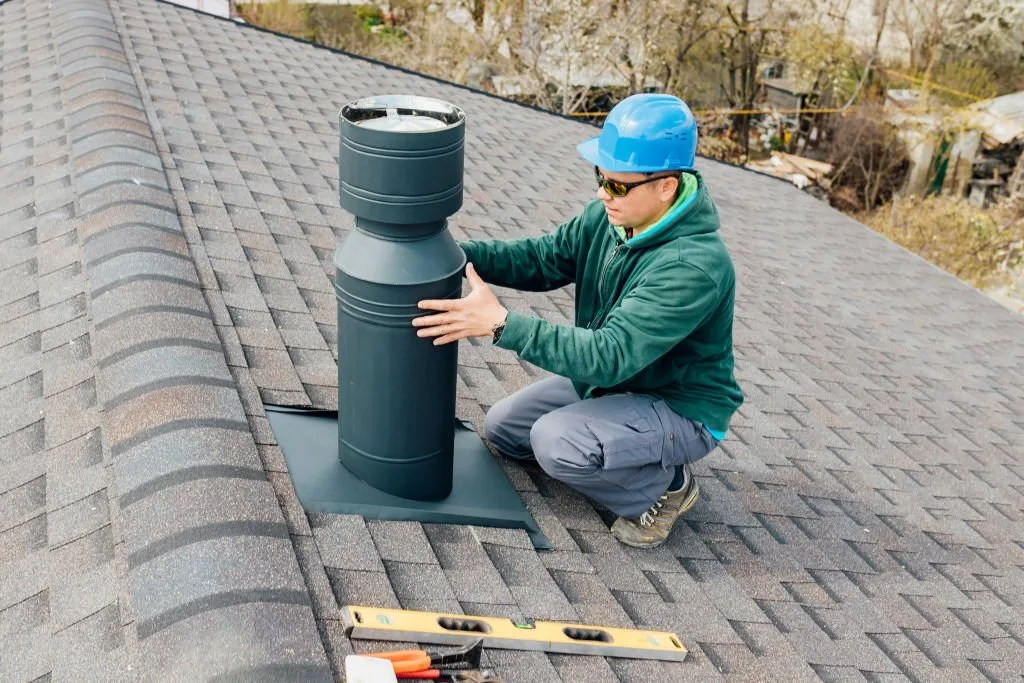
- Install a top-sealing damper — when the throat damper is beyond repair, the frame is broken, or you want a real seal. A top-mount damper closes with a gasket at the top of the flue, blocks rain and cold air, and is operated by a cable from the firebox.
- Damper work paired with a flue cleaning — when heavy creosote is part of what is binding the damper, a cleaning is done first so the repair holds. Routine firebox cleaning on its own is covered on our Fireplace Cleaning page.
Pricing
What affects the price
- Whether the damper can be freed and repaired or must be replaced
- Throat damper replacement versus a top-sealing damper at the crown
- Flue size and shape, which determines the top-mount damper needed
- Amount of rust, creosote or debris that must be removed from the throat first
- Condition of the smoke chamber and crown around the damper
- Chimney height and roof access for top-mount installations
- Whether a chimney cap must be removed, modified or replaced
We don't publish flat prices because every chimney is different. You'll get a written quote after we look at the system — no surprises.
Timing & Safety
When Damper Repair Is Necessary vs. Optional
Necessary now:
- The damper will not open fully. A partly open damper restricts the draft and pushes smoke and carbon monoxide into the room. Do not use the fireplace until it is fixed.
- The damper will not close at all and the chimney is open to the weather and to animals year-round.
- The plate has come off its pivots and could fall onto a burning fire or block the flue.
Worth doing soon:
- The damper closes but leaks noticeably. You are paying to heat the outdoors every cold night. A top-sealing damper usually pays back in comfort quickly.
- The handle is stiff or the plate drops unexpectedly. These rarely get better on their own.
Optional:
- A working but older throat damper on a fireplace you rarely use. Many homeowners still choose a top-mount damper for the rain and draft seal alone, but it is a comfort upgrade rather than a safety need.
Safety considerations
A damper problem is a venting problem. Never light a fire if the damper will not open all the way, and never try to force a jammed plate with tools while a fire is burning or the firebox is hot. Rusted cast-iron plates can shear off their pins without warning. Leave roof-level work, including top-mount damper installation, to a trained technician. If your fireplace has a gas log set or gas insert, the damper may have a clamp installed to hold it permanently open; that clamp must not be removed, and any gas line or valve work is only done by a qualified technician. If you ever smell gas, leave the house and call your gas utility or 911. NFPA 211 recommends an annual inspection of chimneys and fireplaces, and a damper check is part of that.
Seattle & Puget Sound conditions
Dampers in Seattle and the Puget Sound fail in a specific way. Months of rain come down an uncapped or poorly capped flue, pool on the smoke shelf, and sit against the cast-iron plate and pivots. Add the mild, damp winters that keep the metal from ever fully drying and you get rust that seizes the hinges and eats the plate edges until it no longer seals. Near the Sound, salt air speeds that corrosion along. Freeze-thaw in the colder snaps cracks mortar in the throat, and those chips fall into the damper track. The result is the classic local call: a damper that worked last spring and will not move by November. A top-sealing damper addresses the root cause, because it keeps rain out of the flue entirely instead of letting it land on the throat hardware.
Real Work
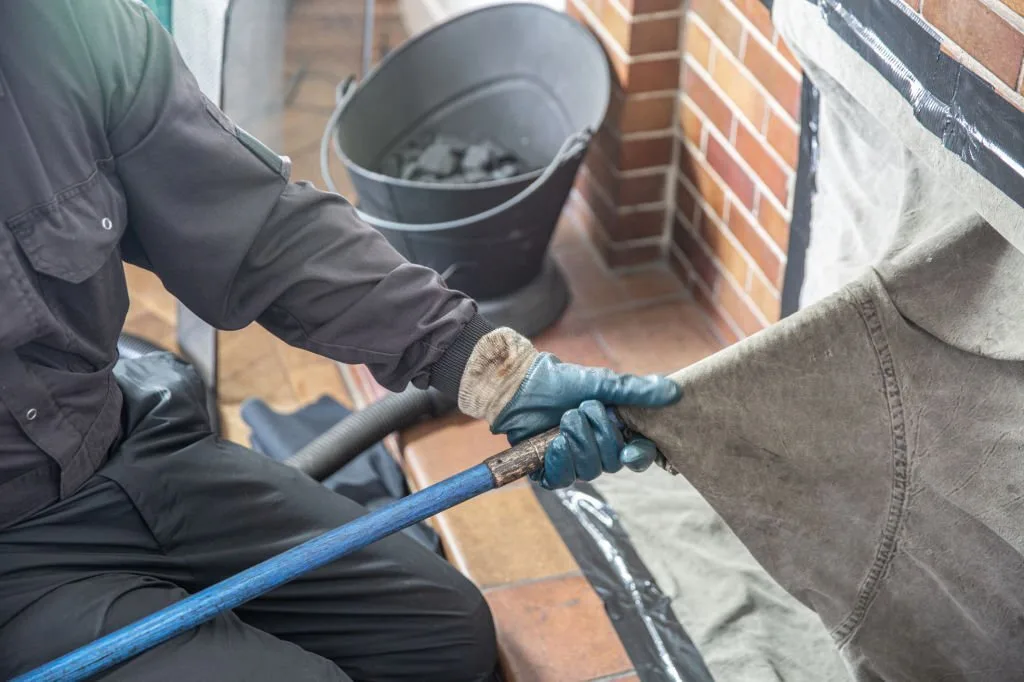
Chimney Damper Repair in action
Stop the Draft and Get Your Damper Working Again
Request a quote for chimney damper repair or a top-sealing damper anywhere in King, Pierce or Snohomish County by calling 206-207-3974, Sunday through Friday, 7am to 8pm.
☎ (206) 207-3974 Request ServiceQuestions
Chimney Damper Repair FAQ
Can a rusted damper be repaired, or does it always need replacing?
Often it can be repaired. Surface rust and debris that jam the pivots can be cleaned out and the damper freed. When the plate is rusted through, badly warped, or the cast frame is cracked, repair stops being worthwhile and we recommend replacement, usually with a top-sealing damper.
What is the difference between a throat damper and a top-sealing damper?
A throat damper is the cast-iron plate just above the firebox. A top-sealing damper sits at the top of the chimney and closes on a rubber gasket, which gives a much tighter seal against cold air, rain and animals. It is operated by a cable that runs down the flue to a handle in the firebox.
Why is my fireplace so drafty even with the damper closed?
Throat dampers are metal on metal and were never airtight, and years of rust, warping and debris make the gap worse. If the draft bothers you, a top-sealing damper is the upgrade that fixes it; tightening a throat damper only gets you so far.
Does damper repair require a chimney cleaning first?
Not always, but often. If creosote or fallen mortar is part of what is binding the damper, we clean the throat and flue so the repair lasts. We will tell you during the inspection whether a cleaning is needed.
Can a top-sealing damper be installed if I already have a chimney cap?
Usually yes. Some top-mount dampers include their own cap, and others work under an existing cap with modifications. We check the flue size and current cap before recommending a specific unit.
I have gas logs. Should my damper even close?
Vented gas log sets are generally installed with the damper clamped open so combustion gases always vent. Do not remove that clamp. If you are unsure what your setup requires, ask us during the visit and we will explain what applies to your fireplace.
Related services
Service areas
Helpful reading