
Home › Services › Fireplace Cleaning
Fireplace Cleaning Seattle, WA
Thorough cleaning of wood-burning and gas fireplaces, from the firebox and glass to the hearth and surround, across Seattle, Tacoma and the Puget Sound.
- 25+ years in business
- CSIA certified
- Licensed, bonded & insured
Request Fireplace Cleaning
Tell us what's going on — we'll confirm a time by phone or text.
Fireplace cleaning is the removal of soot, ash, creosote flakes, dust and residue from the parts of a fireplace you see and use every day: the firebox, the glass, the hearth, the surround and the grate or log set. James Chimney Sweep cleans both wood-burning and gas fireplaces for homeowners in Seattle, Tacoma and throughout King, Pierce and Snohomish counties. Gas units get a different treatment than wood units, and we know the difference.
This service is for anyone whose fireplace looks dirty, smells stale, has a film on the glass, or has simply not been touched since last winter. It is also the right starting point if you have bought a home and have no idea how the fireplace was cared for. Where our wood fireplace cleaning page focuses strictly on wood-burning units and their heavier creosote load, this page covers the full picture: wood and gas, and the honest question of when a surface cleaning is enough and when your fireplace actually needs a chimney sweep or an inspection instead.
With 25+ years in the Puget Sound and CSIA certification, we will tell you which one you need rather than selling you the bigger job by default.
Symptoms & Problems
Signs Your Fireplace Needs Cleaning
- A white, gray or brown haze on the glass that does not wipe off with a damp cloth
- Ash buildup in the firebox that is higher than an inch or spilling onto the hearth
- A smoky or sour smell in the room even when the fireplace is not in use
- Black soot streaks on the surround, mantel or the wall above the opening
- Gas logs that look dull, dusty, or have cobwebs and debris around the burner
- Flakes of black, crunchy material dropping into the firebox from above
- Sooty fingerprints or dust every time someone touches the doors or screen
- The fireplace has not been cleaned since the previous heating season
How It Works
How We Clean a Fireplace
Look first, then clean
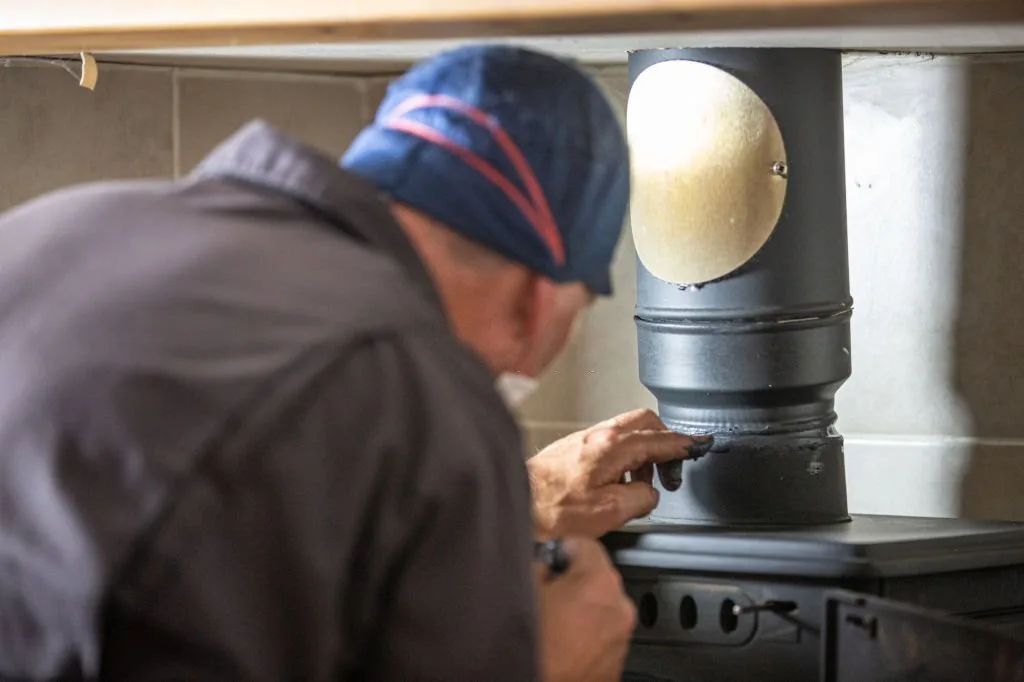
We start by identifying the fuel type and the style of fireplace, then examine the firebox, the glass, the damper area, the grate or burner and the surround. This tells us how heavy the buildup is and whether the job is a cleaning or something more. If we see cracked refractory panels, a damper that will not seat or heavy creosote above the firebox, we say so before we start.
Clean the parts you see and use
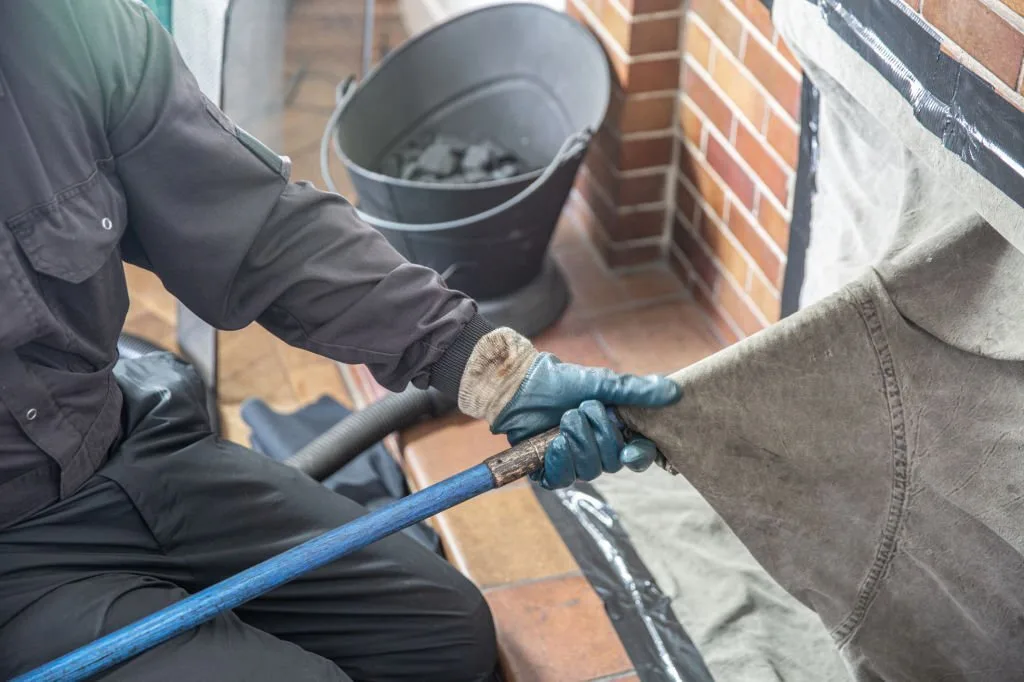
For wood units we remove ash, brush and vacuum the firebox with a HEPA-filtered vacuum, clean the grate and andirons, and remove soot from the lintel and the inside face of the doors. For gas units we carefully remove and clean the glass, dust the log set and media, vacuum the burner pan and firebox, and clear the area around the pilot without disturbing valves or gas connections. Both finish with the hearth and surround wiped down and the room left clean.
Report and recommend
You get a plain-English summary of what we found: the condition of the firebox, glass, damper and visible flue entrance, and an honest call on whether you also need a chimney sweep, an inspection or a repair. If everything looks good, we tell you that too, along with a sensible interval for the next cleaning.
Options
Fireplace Cleaning Options
- Wood fireplace surface cleaning — ash removal, firebox brushing, grate and door cleaning, and soot removal from the surround. Right for a fireplace that has been used lightly or moderately and had its flue swept within the last year.
- Gas fireplace cleaning — glass removed and cleaned inside and out, log set and ember media dusted and repositioned, burner pan and firebox vacuumed, exterior wiped down. Right for any gas unit with hazy glass or a dusty, dull flame picture.
- Cleaning plus chimney sweep — when the firebox cleaning reveals creosote above the damper, or you have burned a full season or more since the last sweep, we add the flue. The cleaning is the visible part; the sweep is the part that reduces chimney fire risk.
- Cleaning plus inspection — for new homeowners, after a long period of no use, or after any event like a chimney fire, a storm or an earthquake. Cleaning makes the surfaces visible; the inspection evaluates them.
- Seasonal pre-burn tune-up — a late-summer or early-fall cleaning of either fuel type so the first fire of the year is clean, clear and odor-free.
Pricing
What affects the price
- Fuel type: gas units involve careful glass and log handling, wood units involve heavier ash and soot
- How much buildup there is and how long it has been since the last cleaning
- Whether glass doors, a screen, or a decorative log set need to be removed and reinstalled
- Whether the job expands to a chimney sweep once we see the flue entrance
- Whether an inspection is added for a new home or a long-unused fireplace
- Access and protection needs: tight rooms, carpet and furniture that need covering
- Travel distance within King, Pierce and Snohomish counties
We don't publish flat prices because every chimney is different. You'll get a written quote after we look at the system — no surprises.
Timing & Safety
When a Cleaning Is Enough, and When It Is Not
A fireplace cleaning is the right service when the problem is what you can see: hazy glass, a full firebox, soot on the surround, dusty gas logs or a stale smell in the room. If the flue was swept within the past year and you burn moderately, a cleaning alone usually brings the fireplace back to looking and smelling the way it should.
- Cleaning is usually enough when: the flue was swept recently, you burn seasoned wood or run a gas unit, the glass and firebox are the main complaints, and there are no signs of damage.
- You need a chimney sweep, not just a cleaning, when: you have burned a full season or more since the last sweep, creosote flakes are dropping into the firebox, smoke backs into the room, or you can see black glaze above the damper. NFPA 211 recommends an annual inspection of chimneys and fireplaces, and sweeping whenever deposits warrant it.
- You need an inspection first when: you just bought the home, the fireplace has not been used in years, there was a chimney fire or a strong odor, or you can see cracked panels, a rusty damper or loose brick. Cleaning a damaged fireplace makes it look better without making it safer, and we would rather you know the difference.
- Cleaning is optional when: a gas unit has only light dust and the glass is clear, or a wood fireplace has been used only a handful of times since its last full service. In that case an annual check is still worthwhile, but the cleaning can wait.
If cleaning uncovers a damper that will not close, cracked firebox panels or a failing surround, those are handled under our chimney damper repair, fireplace panel repair and fireplace repair services rather than as part of a cleaning. We will explain what we saw and let you decide.
Safety considerations
A clean fireplace is a safer fireplace, but only if the work is done with the right care. A few things we follow on every job, and a few things we ask of you:
- Ash can hold live embers for days. We never clean a firebox that is still warm, and we ask that you not burn for at least 24 hours before a wood fireplace cleaning.
- We use HEPA-filtered vacuums and drop cloths so soot and fine ash stay out of your air and off your floors. Household vacuums are not built for fireplace ash and can spread it through the room.
- Fireplace glass, especially on gas units, is cleaned with products made for it. Ordinary glass cleaners can leave residue that bakes on and etches the glass over time.
- On gas fireplaces we clean around the burner, pilot and log set but do not service gas lines or valves. Gas lines and valves are only serviced by a qualified technician. If you ever smell gas, leave the house and call the gas utility or 911 before calling anyone else.
- If we find creosote above the damper, a cracked panel or a damper that will not seal, we will tell you before you light the next fire. Cleaning is not a substitute for fixing those problems.
Seattle & Puget Sound conditions
Puget Sound fireplaces have their own habits. Our long, damp heating season means wood fireplaces often get used daily from October through April, and firewood that was stacked outside through a Seattle winter rarely burns as cleanly as it should, which leaves more soot on the glass and the firebox walls. Gas fireplaces in the region tend to run for many hours at a low setting, and that steady low heat bakes a white mineral haze onto the glass faster than occasional high-heat use would. Damp air also means a dirty firebox holds odor, so a fireplace that smells of old smoke in a Tacoma or Everett home in July is usually just overdue for a cleaning rather than a sign of something serious. We also see moisture-related rust on dampers and grates from our rainy months, which is worth catching while the fireplace is clean and easy to look at.
Real Work
Fireplace Cleaning in action
Get Your Fireplace Clean Before the First Fire of the Season
Call 206-207-3974 or request a quote, and we will schedule a wood or gas fireplace cleaning anywhere in King, Pierce or Snohomish counties, Sunday through Friday, 7am to 8pm.
☎ (206) 207-3974 Request ServiceQuestions
Fireplace Cleaning FAQ
Is fireplace cleaning the same as a chimney sweep?
No. Fireplace cleaning covers the parts of the fireplace you see and use: the firebox, glass, hearth, surround, grate or gas logs. A chimney sweep cleans the flue above the damper, which is where creosote builds up and where chimney fires start. Many homes need both, and we will tell you honestly which one applies to yours.
Do gas fireplaces really need cleaning?
Yes, though less often than wood units. Gas fireplaces collect dust on the logs and media, develop a mineral haze on the glass, and gather debris and cobwebs around the burner. A dusty gas fireplace looks dull, can smell when first lit, and is harder to look at for problems. An annual cleaning keeps the flame picture clear and lets us spot issues early.
How often should a fireplace be cleaned?
Most wood-burning fireplaces that are used through the winter benefit from a cleaning at least once a year, ideally before the season starts. Gas fireplaces usually do well with an annual cleaning as well. Heavy users, homes with pets or allergies, and fireplaces that are the main heat source may want a mid-season visit too.
Will you clean the fireplace glass, and why does it turn white?
Yes, glass cleaning is part of every fireplace cleaning. On gas units the white film is a mineral deposit left by combustion, and on wood units it is mostly soot and creosote. Both come off with the right products and method. If glass is scratched, etched or cracked, that is a replacement matter handled under fireplace glass door installation rather than cleaning.
I just bought a house in Seattle and the fireplace looks dirty. Should I start with a cleaning?
Start with an inspection and a cleaning together. You do not know how the previous owner used the fireplace or when it was last swept, and a cleaning alone cannot tell you whether the flue, damper and firebox panels are in safe condition. Cleaning the firebox makes those parts visible so the inspection is more useful.
Can I just clean the fireplace myself?
Scooping cold ash and wiping the hearth is reasonable for most homeowners. Cleaning behind gas logs, removing gas fireplace glass, and judging whether the residue in a firebox is harmless soot or glazed creosote is where a professional earns their keep. If you are unsure what you are looking at, a quick visit is cheaper than guessing wrong.
Related services
Service areas
Helpful reading