Home › Services › Chimney Liner Replacement
Chimney Liner Replacement Seattle, WA
We replace cracked, corroded, missing or wrong-size chimney liners with properly sized stainless steel across Seattle, Tacoma and the Puget Sound.
- 25+ years in business
- CSIA certified
- Licensed, bonded & insured
Request Chimney Liner Replacement
Tell us what's going on — we'll confirm a time by phone or text.
Chimney liner replacement is the job you need when the liner you already have can no longer be trusted to do its one job: carry hot flue gases out of the house without leaking heat, smoke or carbon monoxide into the structure. That usually means clay tiles that have cracked, shifted or fallen out, a stainless liner that has rusted or split, or a liner that was the wrong size for a new furnace, water heater, insert or stove. We remove or properly abandon the failed liner and install a new, correctly sized stainless steel liner in its place.
Who needs it? Homeowners across King, Pierce and Snohomish counties whose camera inspection shows damage that a spot fix cannot safely address, and anyone who changed a heating appliance and now has a flue that is too big, too small or the wrong material for what is venting into it. If your chimney has never had a liner at all, that is a different service, Chimney Liner Installation. If the liner is damaged in one or two spots and the rest is sound, Chimney Liner Repair may be enough. Replacement is for liners that are past repair.
James Chimney Sweep has served the Puget Sound for more than 25 years. We are CSIA certified, and licensed, bonded and insured in Washington. Our office is at 6234 S 119th St, Seattle, WA 98178, and we answer the phone Sunday through Friday, 7am to 8pm.
Symptoms & Problems
Signs your chimney liner has failed and needs replacing
- A camera inspection shows multiple cracked, spalled or missing clay tiles
- Pieces of clay tile or flakes of rusted metal show up in the firebox or cleanout
- A stainless liner is corroded, split at a seam or crushed out of round
- You replaced a furnace, water heater, insert or stove and the flue size no longer matches
- Condensation streaks, white staining or a sour smell around the chimney after an appliance change
- Smoke or odor in rooms next to the chimney, or a carbon monoxide alarm that has gone off
- A previous liner was installed without insulation or the wrong alloy for the fuel
- An inspector or home sale report flagged the flue as unsafe to use
How It Works
How we replace a chimney liner
Camera inspection and sizing
We run a camera the full length of the flue to document exactly what failed and where, then measure the flue and the appliance it serves. Replacement is only recommended when the existing liner cannot be made safe any other way, and we show you the footage so the decision is yours.
Remove or abandon the old liner, install new stainless
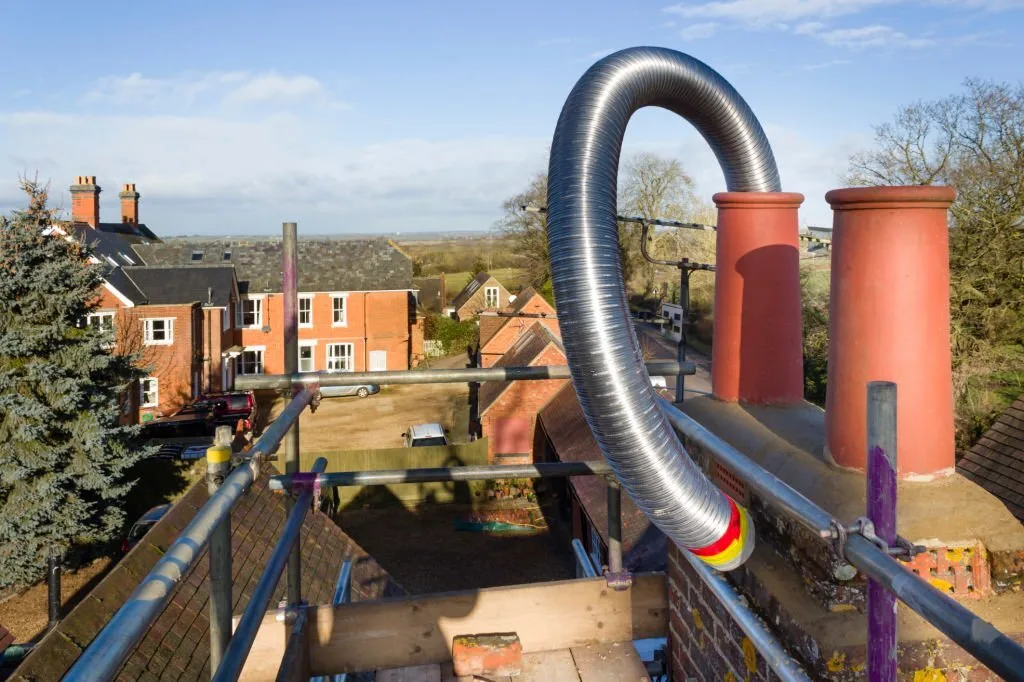
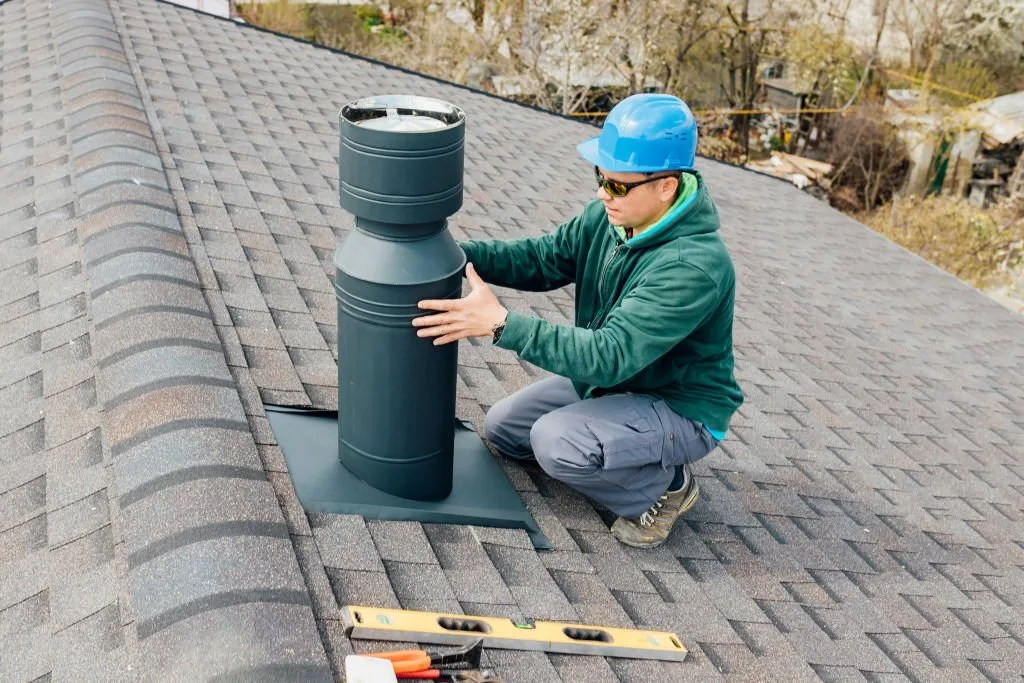
A failed stainless liner is pulled out. Broken clay tiles are either broken out to gain room or left in place when they are stable and there is clearance, depending on the diameter the new appliance needs. We then install a new stainless steel liner sized to the appliance, with insulation where the installation calls for it, a new top plate and rain cap, and a proper connection at the appliance or firebox.
Test, document and next steps
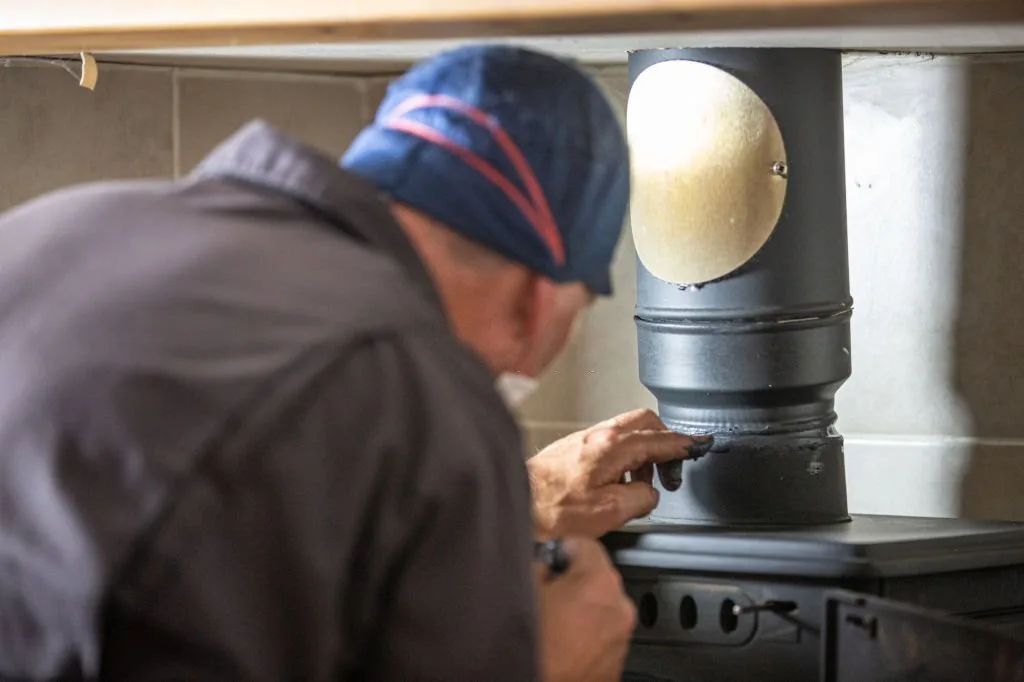
We check draft and connections, clean up, and give you a written summary with before and after photos. You'll know what was replaced, what alloy and size went in, and when the next inspection and sweep are due.
Options
Replacement options we'll discuss
- Flexible stainless liner (304 or 316 alloy) — the most common replacement for wood fireplaces, inserts and stoves with offsets or bends in the flue; alloy is chosen for the fuel.
- Rigid stainless liner — for straight flues where a smooth interior and maximum durability are wanted.
- Insulated liner — wrapped or poured insulation keeps flue gases hot, improves draft and reduces creosote; often needed when the old clay is removed or clearances to framing are tight.
- Gas or oil appliance liner — corrosion-resistant alloy sized to the furnace or water heater venting into the chimney, replacing an oversized masonry flue that was causing condensation.
- Tile break-out before relining — when the new liner will not fit past the damaged clay, we remove the tiles first so the correct diameter can be installed.
Pricing
What affects the price
- Flue height and the number of offsets or bends
- Whether the old liner can be pulled or abandoned in place, or clay tiles must be broken out
- Liner diameter and the alloy required for the fuel (wood, gas, oil, pellet)
- Insulation requirements and clearance to combustibles
- Access to the top of the chimney, including roof pitch and height
- Appliance connection work at the firebox, insert or furnace
- Condition of the crown, cap and top of the chimney once the old liner is out
We don't publish flat prices because every chimney is different. You'll get a written quote after we look at the system — no surprises.
Timing & Safety
When replacement is necessary versus optional
Replacement is the right call when:
- Multiple clay tiles are cracked through, displaced or missing, so gaps exist along the flue
- A stainless liner is corroded, split or crushed anywhere along its length
- An appliance change left the flue oversized, undersized or made of a material not suited to the fuel
- Repair would only patch one spot while the rest of the liner is in similar condition
Replacement may be optional when:
- Damage is confined to one or two tiles or a single joint and the remainder is sound, which is where Chimney Liner Repair fits
- The flue itself is sound but the masonry around it is failing, which points toward Chimney Liner Rebuild rather than a new liner
- The flue is not in use and will be capped off rather than brought back into service
NFPA 211 recommends an annual inspection of chimneys and venting systems. A Level 2 camera inspection is the standard way to tell a repairable liner from one that needs to come out, and we will never recommend replacement without showing you why.
Safety considerations
A failed liner is not a cosmetic problem. Gaps in clay tile or a corroded steel liner can let heat reach framing, and flue gases including carbon monoxide can migrate into living space. Please keep these points in mind:
- Stop using the fireplace, stove or insert once an inspection has shown liner failure until the new liner is in.
- Keep working carbon monoxide and smoke alarms on every level of the home.
- If you ever smell gas, leave the house and call your gas utility or 911. Gas lines and valves are only serviced by a qualified technician.
- Liner replacement involves working at the top of the chimney and handling heavy, sharp materials. Leave the inspection and the work to a trained crew.
- We do not diagnose liner condition over the phone or from photos; a camera inspection is the only honest way to know.
Seattle & Puget Sound conditions
Puget Sound weather is hard on chimney liners. Months of rain find their way through a worn crown or missing cap and soak clay tiles, and the freeze-thaw cycles we get from Everett down to Tacoma pop the surface off wet tile a little more each winter. Near the Sound, salt air speeds up corrosion on lower-grade or unprotected steel liners. On top of that, many older Seattle homes have had a gas furnace or insert added to a chimney built for a wood fireplace, and the oversized masonry flue runs cool, condenses and eats the tile from the inside. When we replace a liner here, we size it to the appliance and pair it with a sound cap and crown so the new stainless is not facing the same moisture that killed the old one.
Real Work
Chimney Liner Replacement in action
Stop using a failed liner. Replace it with stainless that fits.
Call 206-207-3974 or request a quote and we'll schedule a camera inspection anywhere in King, Pierce or Snohomish County.
☎ (206) 207-3974 Request ServiceQuestions
Chimney Liner Replacement FAQ
How do you know my liner needs replacing instead of repairing?
By camera inspection. If the damage is limited to a tile or a joint and the rest of the flue is intact, a repair is usually possible. If cracks, gaps or corrosion run along much of the liner, or the size is wrong for the appliance, patching one spot leaves the rest of the problem in place, and replacement is the safer recommendation.
Do the old clay tiles have to be removed?
Not always. If the tiles are stable and there is enough room for a properly sized stainless liner, we can leave them and run the new liner through. If the flue is too narrow for the diameter the appliance needs, or the tiles are so broken they would interfere with the liner, we break them out first.
I switched to a gas furnace and now there is staining on the chimney. Is that a liner problem?
Often, yes. Gas appliances produce cooler, wetter exhaust than a wood fire, and an oversized masonry flue lets that exhaust condense on the tile. Over time the acidic condensate breaks the liner down. The fix is usually a correctly sized, corrosion-resistant stainless liner for the new appliance.
Can you replace a stainless liner that another company installed?
Yes. Stainless liners fail from corrosion, poor alloy choice for the fuel, physical damage or a bad connection at the appliance. We pull the old liner, inspect the flue behind it, and install a new one sized and rated for what you are burning.
Do you have to remove the old clay liner to replace it?
Not always. A stainless liner can often be installed inside an existing clay flue if there is room; if the old tiles have collapsed or the flue is too narrow, the broken tile is removed first. The camera inspection tells us which applies.
Will a new liner change how my fireplace drafts?
Usually for the better. A liner sized to the appliance and, where appropriate, insulated keeps flue gases warmer and moving, which improves draft and reduces creosote buildup compared with a cracked or oversized flue.
Related services
Service areas
Helpful reading