
Home › Services › Fireplace Refacing
Fireplace Refacing Seattle, WA
A new stone, tile, brick or painted face over your existing fireplace, for homes across Seattle, Tacoma and King, Pierce and Snohomish counties.
- 25+ years in business
- CSIA certified
- Licensed, bonded & insured
Request Fireplace Refacing
Tell us what's going on — we'll confirm a time by phone or text.
Fireplace refacing is a cosmetic update of the part of your fireplace you actually look at: the surround, the hearth face, and the wall above the opening. We apply stone veneer, tile, thin brick, or a masonry-rated paint finish over the existing face, without tearing out the firebox, changing the opening size, or touching the flue. It is the right choice when the fireplace works fine but looks dated, and you want the room to feel new without a construction project.
Refacing is not a repair. If the firebox has cracked or missing firebrick, that is a Fireplace Repair or Fireplace Panel Repair job first. If you want to move the opening, convert to gas, change how the fireplace burns, or rebuild the structure, that is a Fireplace Remodel, which we treat as a separate service with its own scope. Refacing stops at the surface, and we say that plainly because a good-looking face over a bad fireplace helps no one.
James Chimney Sweep has served Seattle and the Puget Sound for more than 25 years. We are CSIA certified and licensed, bonded and insured in Washington, so the fireplace underneath the new finish gets checked by people who know what a safe one looks like.
Symptoms & Problems
Signs Your Fireplace Is a Good Candidate for Refacing
- The fireplace works and passes inspection, but the brick or tile looks dated or mismatched with the room
- Old paint is peeling or yellowed on the surround
- Soot staining on the face will not clean off, even after a thorough fireplace cleaning
- The hearth or surround is sound but chipped, dull, or an unwanted color
- You are updating the room and the fireplace is the one piece that still looks old
- A previous owner painted over brick and you want a real masonry finish back
- The surround material is fine, but the mantel and face no longer match each other
- You want the look of stone or tile without the cost or disruption of rebuilding
How It Works
How Fireplace Refacing Works
Inspect the structure first
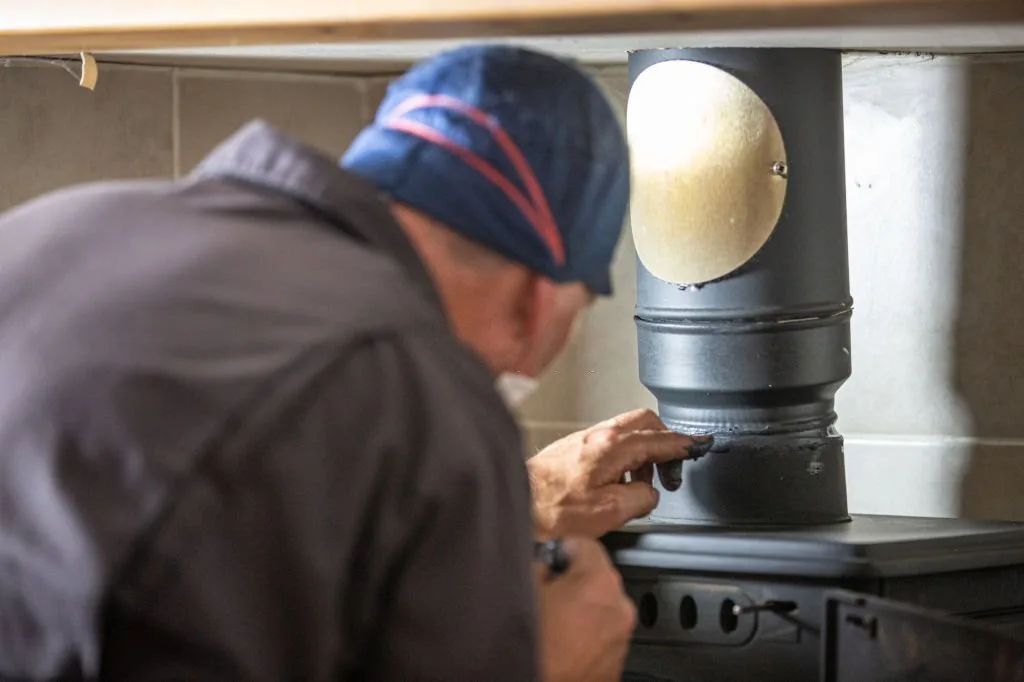
Before any finish goes on, we check the firebox, the hearth, the face and the area around the opening for cracks, loose masonry, water damage or heat damage. Refacing covers surfaces, so we confirm the surfaces are worth covering. If we find something that needs repair, we tell you before quoting the cosmetic work.
Prep and apply the new face
We clean and prepare the existing surface, address clearances to combustibles for the finish you chose, and install the veneer, tile, thin brick or paint system. Heat-rated materials and adhesives are used around the opening, and the hearth extension is kept to its required dimensions.
Finish, cure and walk-through
Grout, sealant and paint need proper cure time before the first fire. We walk you through what was done, the cure schedule, how to clean the new finish, and anything we noticed during inspection that belongs on a future maintenance list.
Options
Refacing Finishes We Install
- Stone veneer — manufactured or natural thin stone over the existing face; the most common choice for a full visual change without a structural rebuild.
- Tile — porcelain, ceramic or natural stone tile on the surround and hearth face; good for clean, modern lines and easy cleaning.
- Thin brick — brick slips applied over old brick or drywall to restore a traditional masonry look, or to change the brick color entirely.
- Masonry paint or whitewash — the lowest-disruption option when the existing brick is sound and you simply want a different color; we use finishes rated for the heat near a fireplace opening.
- Mixed finishes — tile or stone around the opening with a painted or plastered field above, where the design calls for it.
Pricing
What affects the price
- Square footage of the face being covered, including whether the finish runs to the ceiling
- Material chosen: paint, tile, thin brick, manufactured stone or natural stone
- Condition of the existing surface and how much prep, cleaning or leveling it needs
- Whether a mantel is removed, reused or replaced as part of the work
- Whether the hearth is included or only the vertical face
- Any repair work discovered during inspection that must be done before refacing
- Access and protection needs in the room, such as flooring and furniture
We don't publish flat prices because every chimney is different. You'll get a written quote after we look at the system — no surprises.
Timing & Safety
When Refacing Makes Sense, and When It Does Not
Refacing is the right call when:
- The fireplace has been inspected and the firebox, hearth and flue are in safe working condition.
- Your goal is appearance, not function.
- You want to keep the existing opening size and fuel type.
- Budget or timeline rules out a full remodel.
Refacing is the wrong call when:
- The firebox has cracked or missing firebrick, or a factory-built unit has damaged refractory panels. Those are repair jobs, and covering them with a new face hides the problem rather than solving it.
- The chimney has water intrusion, a damaged crown or a flue issue. Moisture will keep coming through a new finish.
- You want to change the opening, add a gas insert, or rebuild the structure. That is a Fireplace Remodel.
- The face is pulling away from the wall or shows movement. Loose substrate will not hold veneer.
We are honest about this in the first visit. If the structure is not sound, we quote the repair and not the refacing until the repair is done.
Safety considerations
A fireplace face sits inches from an opening that can reach very high temperatures, so refacing is not a purely decorative job even though the result is decorative.
- Materials near the opening must be non-combustible and rated for the heat. Ordinary tile adhesive, wood trim or standard interior paint in the wrong spot can scorch, crack or fail.
- Clearances from the opening to a mantel or any combustible trim are maintained, not covered up.
- The hearth extension keeps its required depth and width. A new finish must not reduce the non-combustible area in front of the opening.
- We inspect for heat damage and structural cracks before covering anything. NFPA 211 recommends an annual inspection, and a refacing job is a natural time to have it done.
- If your fireplace is gas-fueled, refacing does not involve the gas line or valve. Gas lines and valves are only serviced by a qualified technician. If you ever smell gas, leave the house and call the gas utility or 911.
Seattle & Puget Sound conditions
Seattle and Puget Sound fireplaces spend most of the year in a damp climate, and that shapes refacing in two ways. First, we check for moisture before covering anything. Water that has been wicking down a masonry chimney through months of rain will show up as staining or efflorescence on the face, and a new veneer over a wet wall will bubble, stain or let go. If we find moisture, the source gets addressed at the chimney first. Second, the materials we recommend account for the constant humidity: sealed natural stone, properly grouted tile, and breathable masonry paints rather than finishes that trap moisture behind them. In older Seattle, Tacoma and Everett homes, the original brick face is often sound and only needs cleaning and a fresh finish, which keeps the job simple and affordable.
Real Work
Fireplace Refacing in action
Give Your Fireplace a New Face Over a Sound Structure
Call 206-207-3974 or request a quote, and we will inspect the fireplace first and recommend the finish that fits your room.
☎ (206) 207-3974 Request ServiceQuestions
Fireplace Refacing FAQ
Can you reface a fireplace without removing the existing brick?
Yes. Most refacing goes directly over the existing brick or tile once it is cleaned and checked for soundness. Thin stone, thin brick and tile are designed to bond to an existing face. Removal only comes into play if the existing surface is loose, badly damaged, or too thick for the new finish to keep proper clearances.
Will refacing fix cracks in my firebox?
No. Refacing only covers the exterior face you see from the room. Cracked or missing firebrick inside the firebox, or damaged panels in a factory-built unit, are repair work and must be fixed first. We inspect the firebox before any refacing quote so nothing gets covered that should have been repaired.
What is the difference between refacing and a fireplace remodel?
Refacing changes the surface finish and keeps the structure, opening and fuel type as they are. A remodel changes the fireplace itself, such as moving or resizing the opening, adding an insert, rebuilding the surround framing, or converting fuel. If your wish list includes any of those, ask us about remodeling instead.
Can I paint my brick fireplace myself?
Interior brick away from the opening can be painted by a careful homeowner, but the area around the firebox opening needs a heat-rated finish and proper clearances, and the brick should be inspected and clean first. Soot-stained or damp brick will not hold paint. We are glad to look at it and tell you what the surface needs.
How soon can I use the fireplace after refacing?
It depends on the finish. Adhesives, grout, sealers and paint each have their own cure time, and a fire too soon can crack grout or discolor paint. We give you a specific cure schedule at the walk-through and recommend waiting the full period before the first burn.
Do you reface gas fireplaces too?
Yes, the visible surround of a gas fireplace can be refaced the same way. The work stays on the face and does not involve the gas line, valve or burner, which are only serviced by a qualified technician. Clearances specified by the unit manufacturer are followed for any new finish.
Related services
Service areas
Helpful reading