
Home › Services › Fireplace Repair
Fireplace Repair Seattle, WA
Diagnosis and repair of fireboxes, dampers, hearths, lintels, doors and draft problems for wood and gas fireplaces across King, Pierce and Snohomish counties.
- 25+ years in business
- CSIA certified
- Licensed, bonded & insured
Request Fireplace Repair
Tell us what's going on — we'll confirm a time by phone or text.
Fireplace repair is the service you call when something about the fireplace itself is wrong and you are not sure exactly what. The firebox has cracks, the damper will not move, the hearth is loose, smoke rolls into the room, the doors do not close, or the whole thing simply does not burn the way it used to. James Chimney Sweep has been diagnosing and repairing fireplaces around Seattle, Tacoma and the rest of the Puget Sound for 25+ years. We are CSIA certified and licensed, bonded and insured in Washington, and our job on a repair call is to find the actual cause and fix it, not guess.
This is the broad entry point for fireplace problems. Many homeowners do not know whether their trouble is a damper issue, a refractory panel issue, a draft issue or a masonry issue, and that is fine. We inspect the whole assembly, explain what we find, and either repair it on the spot or tell you plainly which focused service it needs. Where a problem falls squarely into one of those focused areas, we say so: a stuck or missing damper is covered in depth under Chimney Damper Repair, cracked factory-built liner panels under Fireplace Panel Repair and Fireplace Panel Replacement, and new doors under Fireplace Glass Door Installation. Cosmetic updates are not repair work at all, and belong under Fireplace Refacing or Fireplace Remodel.
If your fireplace is a gas unit and you ever smell gas, leave the house and call your gas utility or 911 before calling us. Gas lines and valves are only serviced by a qualified technician.
Symptoms & Problems
Signs your fireplace needs repair
- Cracked, crumbling or spalling firebrick or mortar joints inside the firebox
- Smoke spilling into the room instead of going up the chimney
- A damper that is stuck open, stuck closed, rusted or missing its handle
- A sagging, rusted or cracked steel lintel above the fireplace opening
- Loose, cracked or sunken hearth bricks, tile or stone
- Glass doors or mesh screens that no longer close, seal or latch
- Cold drafts and a strong odor from the fireplace when it is not in use
- A gas fireplace that will not light, burns with a lazy yellow flame or shuts off on its own
How It Works
How a fireplace repair visit works
Inspect the whole fireplace, not just the complaint
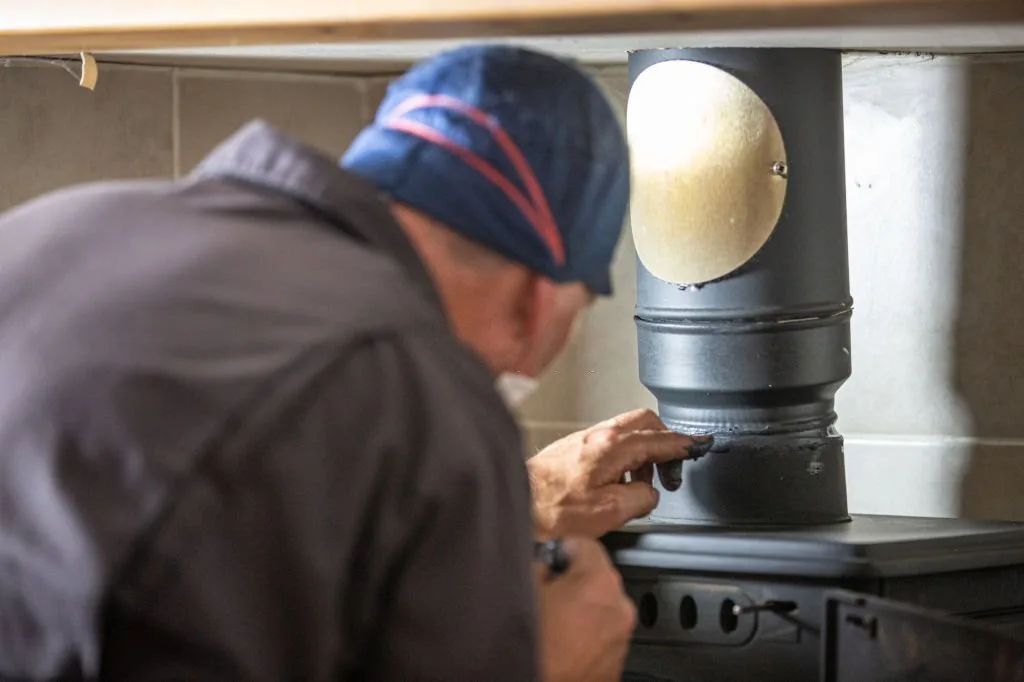
We look at the firebox, smoke chamber, damper, lintel, hearth and doors, and we check the draft with the fireplace cold and, where safe, with a small test fire. For gas units we check the burner, pilot and venting visually. Most fireplace problems have more than one contributing cause, and we want to see all of them before quoting.
Repair what we found, in the right order
Typical repair work includes tuckpointing or rebuilding firebrick with refractory mortar, freeing or replacing a damper, parging a smoke chamber, resetting or replacing hearth material, correcting a lintel, and adjusting or resealing doors. If the cause is a draft or sizing issue, we address the cause rather than just treating the smoke.
Walk you through the results and next steps
You get a plain explanation of what was wrong, what we did, and anything that should be monitored or scheduled later. If a problem belongs to a specialized service such as panel replacement or a full remodel, we tell you that up front so you can plan with accurate information.
Options
Common fireplace repairs we perform
- Firebox masonry repair — when firebrick is cracked or mortar joints have eroded but the firebox structure is sound; we repoint with refractory mortar or replace individual bricks. If the firebox is a factory-built metal unit with cracked refractory panels, that work is covered under Fireplace Panel Repair or Fireplace Panel Replacement.
- Damper freeing, adjustment or replacement — when the throat damper is seized, warped or missing. Quick fixes happen during a repair visit; complete damper replacement and top-sealing damper options are explained in detail under Chimney Damper Repair.
- Smoke chamber and draft correction — when smoke comes into the room. This can involve parging a rough smoke chamber, correcting the opening-to-flue ratio with a smoke guard, addressing a blocked flue, or solving a house-pressure problem.
- Hearth and lintel repair — when the hearth extension is loose, cracked or no longer meets the clearance it should, or the lintel above the opening has rusted, sagged or cracked the brick around it.
- Door, screen and face repair — when existing doors do not close or seal, hinges are bent, gaskets are gone, or the facing brick has loosened. New door sets are handled under Fireplace Glass Door Installation.
Pricing
What affects the price
- Which component is damaged and how many components are involved
- Masonry fireplace versus factory-built (prefab) fireplace
- Wood-burning versus gas, and whether gas components need a qualified technician
- Extent of firebox masonry damage: a few joints versus a partial rebuild
- Accessibility of the damper, smoke chamber and lintel
- Whether the draft problem requires a smoke guard, flue work or a house-pressure fix
- Need for matching brick, stone or tile on a visible hearth or face
We don't publish flat prices because every chimney is different. You'll get a written quote after we look at the system — no surprises.
Timing & Safety
When fireplace repair is necessary versus optional
Necessary before the next fire:
- Cracks in the firebox that let you see through to the masonry behind, or crumbling joints deeper than a fingertip
- A damper stuck closed (you cannot burn) or one that cannot be verified open before lighting
- Smoke entering the living space, which means combustion byproducts are entering it too
- A lintel that has visibly dropped or cracked the surrounding brick
- A hearth extension that is loose, cracked or has lost its protective coverage in front of the opening
- Any gas fireplace that will not stay lit, has a strange odor, or shows soot on the glass or logs
Worth scheduling, but not urgent:
- Hairline surface crazing in firebrick that is not loose or spreading
- A damper that works but is stiff or drafty when closed
- Doors that close but have worn gaskets
- A faint musty or creosote smell in summer with no other symptoms
NFPA 211 recommends an annual inspection of chimneys, fireplaces and vents. If you are not sure which list your problem belongs on, an inspection tells you, and most of the small items above are cheaper to fix now than after another winter of use.
Safety considerations
A fireplace with a damaged firebox, a failed damper or a draft problem can expose framing to heat and put carbon monoxide and smoke into the home. Please stop using the fireplace until it is looked at if you see smoke in the room, smell hot or burning odors from the walls, or can see daylight or gaps through firebox joints.
- Do not burn with a damper you cannot confirm is open.
- Do not patch firebox cracks with ordinary mortar, caulk or furnace cement and keep burning; the repair needs refractory material rated for the job.
- Keep a working carbon monoxide alarm on every level of the home, especially near bedrooms.
- If you have a gas fireplace and smell gas, leave the house and call your gas utility or 911. Gas lines and valves are only serviced by a qualified technician.
- Leave roof work and chimney-top work to us; Puget Sound roofs are slick for much of the year.
Seattle & Puget Sound conditions
Seattle-area fireplaces have a few local enemies. Rain that runs down the flue through a damaged or missing damper keeps the firebox wet for months, which accelerates mortar loss and rusts dampers and lintels far faster than in a drier climate. Moss and debris at the top of the chimney shed into the smoke chamber and add to draft trouble. Tightly sealed, newer or remodeled homes around King, Pierce and Snohomish counties often have strong kitchen and bath exhaust fans that depressurize the house and pull smoke back into the room, a draft problem that looks like a chimney fault but is really a house-pressure issue. Freeze-thaw cycles are milder here than in colder regions, but they are enough over a wet winter to open small cracks in firebrick and hearths. Near the Sound, salt air adds to corrosion on steel dampers, lintels and door frames.
Real Work
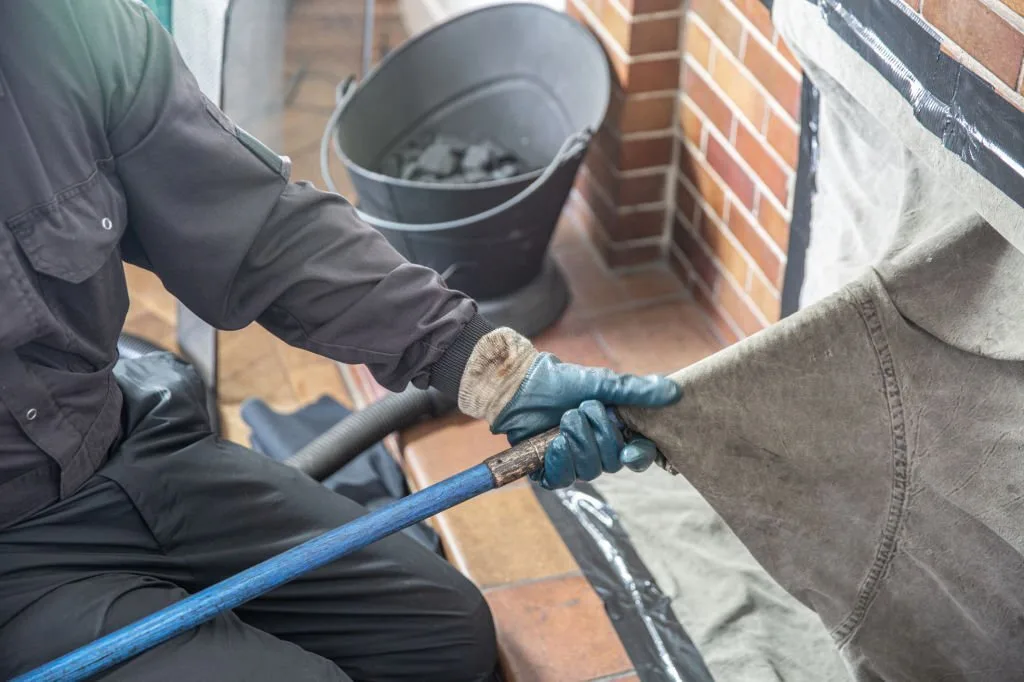
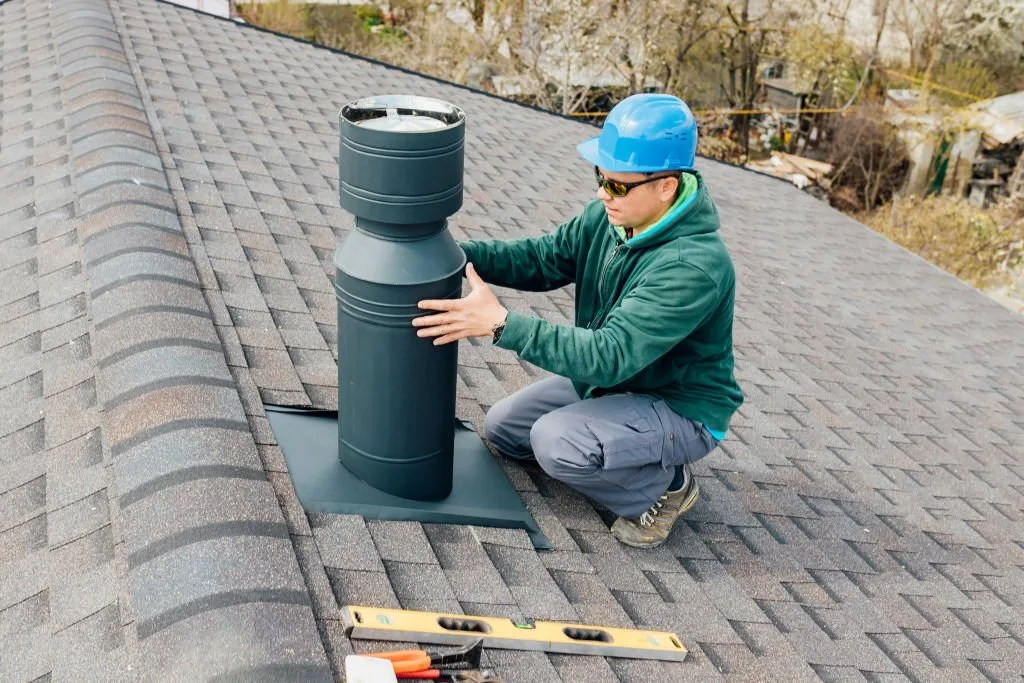
Fireplace Repair in action
Not sure what is wrong with your fireplace? Start here.
Call 206-207-3974 or request a quote and a CSIA certified technician will inspect your fireplace, explain the cause and fix it.
☎ (206) 207-3974 Request ServiceQuestions
Fireplace Repair FAQ
How do I know if I need fireplace repair or just a cleaning?
Cleaning removes soot and creosote; repair fixes something that is broken. If the fireplace burns and drafts fine but is dirty, Fireplace Cleaning is what you need. If bricks are loose, the damper is stuck, doors will not close, or smoke enters the room even when it is clean, that is a repair. If you are not sure, book a repair visit; we start with an inspection and will tell you if cleaning alone would solve it.
Can you repair a prefab (factory-built) fireplace, or only masonry?
Both. Factory-built fireplaces have refractory panels, a steel firebox and a specific damper and door design. We repair those components too, but the lining panels themselves are a focused job we describe under Fireplace Panel Repair and Fireplace Panel Replacement. For a prefab unit, tell us the brand or model if you can read it on the label inside the opening.
Why does my fireplace smoke when the kitchen fan or dryer is running?
Exhaust fans pull air out of the house, and the fireplace becomes the easiest path for replacement air, reversing the draft. This is common in tightly built Puget Sound homes. Fixes range from cracking a window while burning to adding a makeup-air source or a smoke guard. We diagnose which applies rather than assuming the chimney is at fault.
Is a cracked firebox dangerous if I only burn a few times a year?
It can be. Firebox joints and bricks are the barrier between fire and the structure around it. A few fires through open joints can still heat framing or let gases escape. Small surface crazing is usually fine to monitor; open joints, missing mortar or loose bricks should be repaired before the next fire regardless of how often you burn.
Do you repair gas fireplaces?
We repair the fireplace components around a gas unit, including the firebox, doors, hearth and venting, and we can check the burner, pilot and glass visually. Work on gas lines and valves is only done by a qualified technician. If you smell gas at any time, leave the house and call your gas utility or 911 first.
When does a repair stop making sense and a remodel or new installation make more sense?
If the firebox, smoke chamber and damper are all failing together, or the fireplace no longer suits how you use the room, a rebuild may cost more than it is worth. In that case we will say so and point you to Fireplace Remodel or Fireplace Installation. Most repairs, though, are focused on one or two components and extend the life of the existing fireplace for many years.
Related services
Service areas
Helpful reading