
Home › Services › Chimney Crown Rebuild
Chimney Crown Rebuild Seattle, WA
Full demolition and re-pour of structurally failed chimney crowns for homes across Seattle, Tacoma and King, Pierce and Snohomish counties.
- 25+ years in business
- CSIA certified
- Licensed, bonded & insured
Request Chimney Crown Rebuild
Tell us what's going on — we'll confirm a time by phone or text.
A chimney crown rebuild is the complete replacement of the concrete cap that sits on top of your masonry chimney. We break out the old crown, clear the top of the chimney down to sound brick, and pour a new crown that is built the way a crown should have been built in the first place: thick, reinforced, sloped to shed water, with an overhang and a drip edge that keep runoff off the brick below. This is the right service when the crown is too far gone to save, or when it was never a real crown at all.
Homeowners in Seattle and the Puget Sound usually need a rebuild for one of four reasons: the crown is cracked all the way through in several places, it is spalling and crumbling at the edges, it was built as a thin mortar wash instead of a poured crown, or it has no overhang so water runs straight down the chimney face. These are structural problems, not surface problems.
If your crown only has hairline cracks and is otherwise solid, you likely need our chimney crown repair service, which patches and coats the existing crown rather than replacing it. A crown rebuild removes and replaces; a crown repair preserves and protects.
Symptoms & Problems
Signs your chimney crown needs to be rebuilt, not patched
- Multiple cracks running all the way through the crown to the brick below
- Chunks of concrete missing or crumbling off the crown edges (spalling)
- A thin, sloped layer of mortar on top instead of a real poured concrete crown
- No overhang: the crown is flush with the brick and water runs down the chimney face
- Crown is flat or dished, holding puddles of rain instead of shedding it
- Brick or mortar in the top few courses is loose, stained or flaking
- Previous patches or sealers have peeled, cracked or failed within a year or two
- Flue tile at the top is cracked or separating from the crown
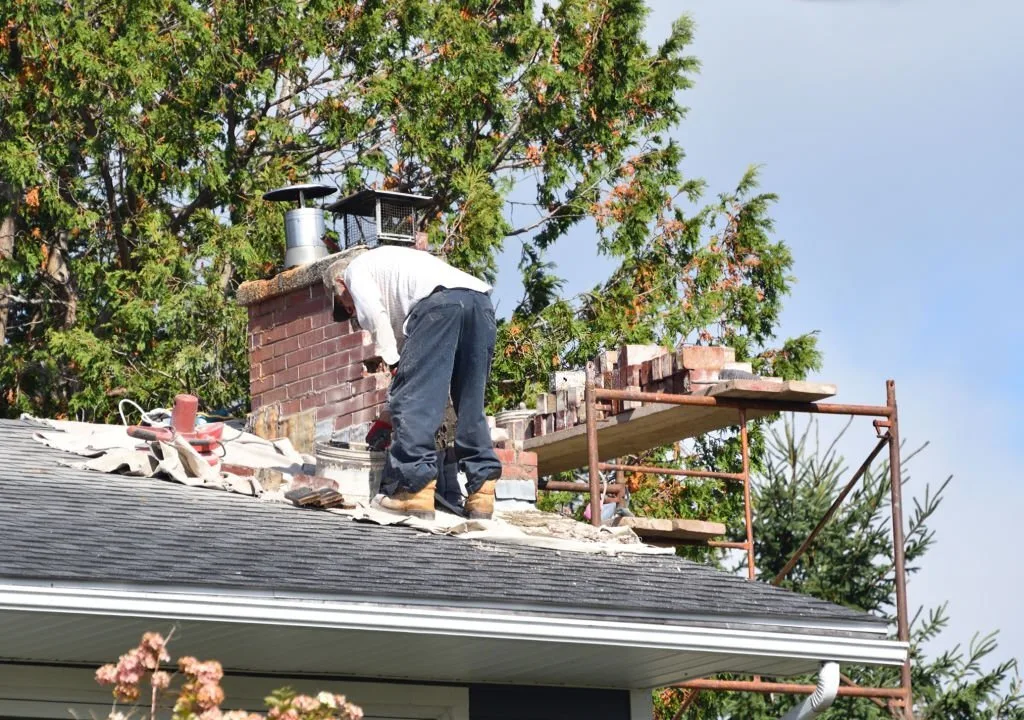
How It Works
How we rebuild a chimney crown
Inspect the crown and the top of the chimney
We start by confirming that a rebuild is actually what you need. We examine the crown, the top courses of brick, the flue liner where it exits the crown, and the flashing at the roofline. If the crown can be saved with a patch and coat, we tell you that, because a repair costs less. If the damage is structural or the crown was never properly built, we explain why a rebuild is the honest recommendation and give you a written quote.
Remove the old crown and re-pour a proper one
We break out the failed crown and any loose material beneath it, and repair any top courses of brick that need attention so the new crown sits on a sound base. We set forms for a crown that overhangs the brick on all sides, build in a drip edge on the underside of that overhang, wrap the flue liner with a bond break so the crown and the liner can expand independently, add reinforcement, and pour a crown with a continuous slope away from the flue. The crown is then finished and allowed to cure.
Report, cure and next steps
You receive photos of the finished crown and a summary of what was done. We explain the curing period, whether the new crown should receive a breathable water repellent once it has fully cured, and how often the crown should be looked at during routine chimney inspections. If we found anything else at the top of the chimney, such as a damaged liner or failing flashing, we note it so you can plan for it.
Options
Crown rebuild options
- Standard cast-in-place concrete crown — the most common rebuild. Forms are set on the chimney and a reinforced concrete crown is poured in place with overhang, drip edge and slope. Suits the majority of brick and block chimneys.
- Rebuild with top-course brick repair — when the crown failed long ago and water has damaged the top few courses of masonry, we reset or replace those bricks before pouring so the new crown has a solid base.
- Rebuild with flue liner extension or cap — if the flue tile is too short or damaged where it meets the crown, the liner is extended or corrected before the crown is poured around it with a proper bond break.
- Mortar-wash replacement — many older Seattle chimneys have only a thin sloped smear of mortar on top. This is not a crown. We remove it and build a real poured crown in its place.
- Oversized crown for multi-flue chimneys — wide chimneys with two or more flues need a larger, heavier crown with reinforcement and expansion considerations. The principles are the same but the forming and pouring take more care.
Pricing
What affects the price
- Size of the chimney top and number of flues the crown must surround
- Condition of the top courses of brick and how much masonry repair is needed before pouring
- Whether the flue liner needs to be extended or corrected at the crown
- Chimney height and roof pitch, which affect staging and safe access
- Whether the old crown is a thin mortar wash or a thick concrete slab that takes longer to remove
- Need for a water repellent treatment after the new crown cures
- Access to the home and how far the chimney is from where materials can be staged
We don't publish flat prices because every chimney is different. You'll get a written quote after we look at the system — no surprises.
Timing & Safety
When a rebuild is necessary and when a repair is enough
A rebuild is the right call when the crown can no longer do its job, which is to keep water out of the chimney structure. That is true when:
- Cracks go all the way through and there are several of them, so a patch would only be chasing new cracks every season
- The edges are spalling and the crown is losing mass, which means the concrete itself has failed
- The crown was built as a mortar wash, with no thickness, no reinforcement and no overhang, so there is nothing worth saving
- The crown is flush with the brick with no overhang, and the top courses of brick are showing water damage as a result
- The crown is bonded tightly to the flue liner with no bond break, and the liner is cracking because the two materials expand at different rates
A rebuild is optional, and usually not the best value, when the crown is thick, sound and properly overhung and simply has a few hairline cracks or worn surface. In that case a crown repair, and in some cases only crown sealing, will extend its life for years at a lower cost. We will tell you which situation you have before any work is quoted.
Safety considerations
The chimney crown is the first line of defense against water entering the chimney. When it fails, rain reaches the flue liner, the brick and the mortar joints, and over time that water can work its way into the smoke chamber and the firebox. Water-damaged liners and deteriorated mortar are not just a leak problem; they can compromise how safely the chimney contains heat and combustion gases.
- Crown work is done from the roof and chimney top. Please do not climb up to inspect or attempt a crown rebuild yourself. Let us assess it from the roof with proper equipment.
- NFPA 211 recommends an annual chimney inspection. A failing crown is one of the most common findings, and catching it before water gets into the structure is far cheaper than dealing with the damage later.
- During a rebuild, the fireplace or appliance connected to that flue should not be used until the crown has cured and we confirm the flue is clear.
- We are CSIA certified and licensed, bonded and insured in Washington, with more than 25 years of experience on Puget Sound chimneys.
Seattle & Puget Sound conditions
Seattle and the Puget Sound region are hard on chimney crowns in a specific way. Our long wet season means a cracked or dished crown sits with water in it for weeks at a time rather than drying out. That water soaks into the concrete and into the top courses of brick. Then, during the freeze-thaw spells we get from late fall through early spring, it expands and forces cracks open wider and pops the faces off brick. Moss and algae take hold on a crown that stays damp, and their roots work into cracks and hold even more moisture. Homes near the Sound, in Tacoma, West Seattle, Everett and along the waterfront, get salt-laden air on top of all that, which speeds up the breakdown of mortar and concrete. A crown with a real overhang and drip edge matters more here than in a dry climate, because it throws that constant runoff clear of the brick instead of letting it run down the chimney face for nine months of the year.
Real Work
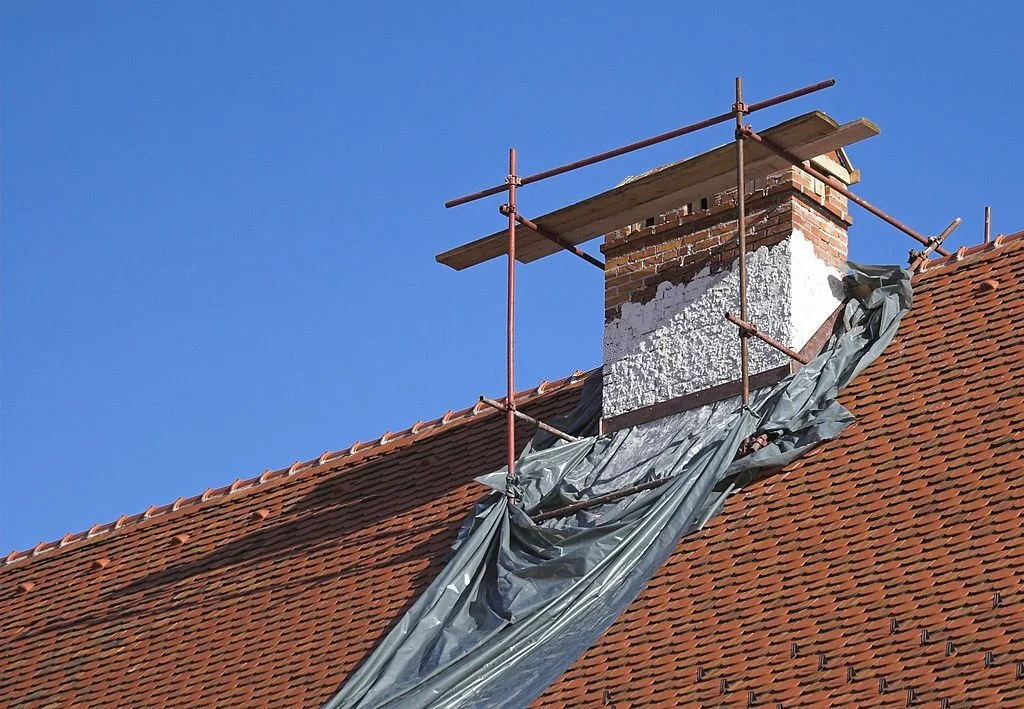
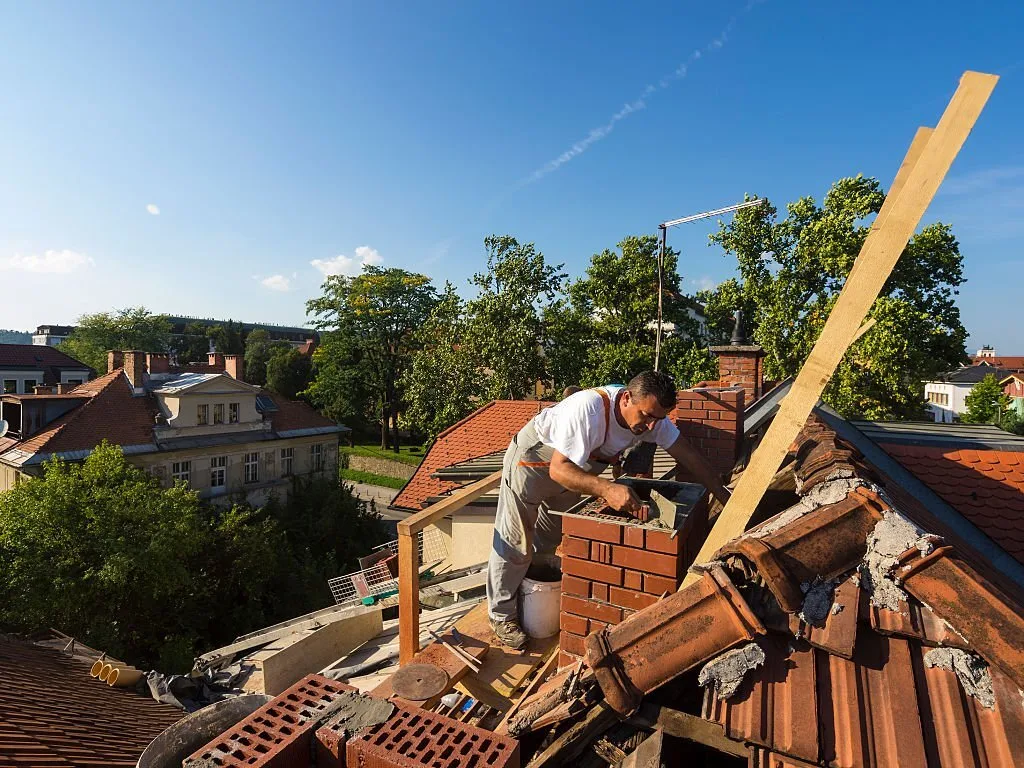
Chimney Crown Rebuild in action
Is your crown past the point of patching?
Call 206-207-3974 or request a quote online and we will inspect the top of your chimney and tell you honestly whether it needs a rebuild or a repair.
☎ (206) 207-3974 Request ServiceQuestions
Chimney Crown Rebuild FAQ
What is the difference between a crown rebuild and a crown repair?
A repair keeps your existing crown and fixes it with crack filler, patching mortar and a flexible coating. A rebuild removes the crown entirely and pours a new one. We recommend a repair when the crown is thick, sound and properly built; we recommend a rebuild when it is structurally failed or was never built correctly in the first place.
My chimney has a mortar wash on top. Is that a crown?
Not really. A mortar wash is a thin, sloped layer of mortar smeared over the top bricks. It has no thickness, no reinforcement and no overhang, and it typically cracks within a few years. Many older Seattle homes have them. Because there is nothing to repair, the right fix is to remove the wash and pour a proper concrete crown.
Why does the overhang and drip edge matter so much?
Without an overhang, rainwater runs off the crown and straight down the face of the chimney, soaking the brick and mortar joints. An overhang carries the water past the brick, and the drip edge, a small groove on the underside, makes the water drop off instead of clinging and wicking back to the masonry. In our climate that is the difference between a chimney that stays dry and one that slowly deteriorates.
What is a bond break and do I need one?
A bond break is a thin gap or flexible material placed between the flue liner and the crown. The liner heats up and expands when you use the fireplace; the crown does not. If they are locked together, one of them cracks. Every crown we pour includes a bond break around the flue so both can move independently.
How long does a crown rebuild take, and when can I use the fireplace?
Most rebuilds are completed in a single visit, though the new concrete needs time to cure before it is exposed to heat and before any water repellent is applied. We will give you a specific timeline for your chimney and tell you when the flue is ready to use again.
Should the new crown be sealed after it is rebuilt?
A properly poured crown does not need sealing to function, but once it has fully cured a breathable water repellent adds a layer of protection against our constant rain and helps the crown last longer. We cover that under our chimney crown sealing service and can schedule it once the cure period has passed.
Related services
Service areas
Helpful reading