
Home › Services › Chimney Waterproofing
Chimney Waterproofing Seattle, WA
Breathable masonry water repellent for brick and stone chimneys across Seattle, Tacoma and the I-5 corridor from DuPont to Mount Vernon.
- 25+ years in business
- CSIA certified
- Licensed, bonded & insured
Request Chimney Waterproofing
Tell us what's going on — we'll confirm a time by phone or text.
Chimney waterproofing is the application of a vapor-permeable water repellent to the exterior masonry of a chimney. Brick and mortar are porous; every Puget Sound rain soaks into them a little, and over years that moisture drives spalling brick faces, crumbling mortar joints, rust on the damper and firebox, and stains on the ceiling near the chimney. A proper repellent sheds most of that liquid water at the surface while still letting water vapor escape from inside the masonry, so the chimney can dry out instead of staying damp.
Waterproofing is for homeowners with a sound, dry masonry chimney who want to slow the slow damage. It is not a leak fix. If your chimney is leaking right now, the water is almost always getting in through a failed crown, a missing or rusted cap, loose flashing, or open cracks, and a surface coating will not stop any of those. Our approach is inspection first, repairs where they are needed, and repellent last, on dry masonry, as a protective step rather than a patch.
We serve Seattle, Tacoma, Everett, Bellevue and the surrounding cities in King, Pierce and Snohomish counties. Call 206-207-3974 to request a quote.
Symptoms & Problems
Signs Your Chimney Is Absorbing Too Much Water
- Brick faces flaking or popping off (spalling), especially on the weather side
- White, chalky staining (efflorescence) on the exterior brick
- Dark, damp-looking patches on the chimney that linger for days after rain
- Moss, algae or lichen growing on the mortar joints or brick
- Mortar joints that are sandy, recessed or crumbling
- Rust streaks on the firebox, damper or chimney cap
- Musty smell from the fireplace during wet weather
- Paint or drywall damage on the wall or ceiling around the chimney
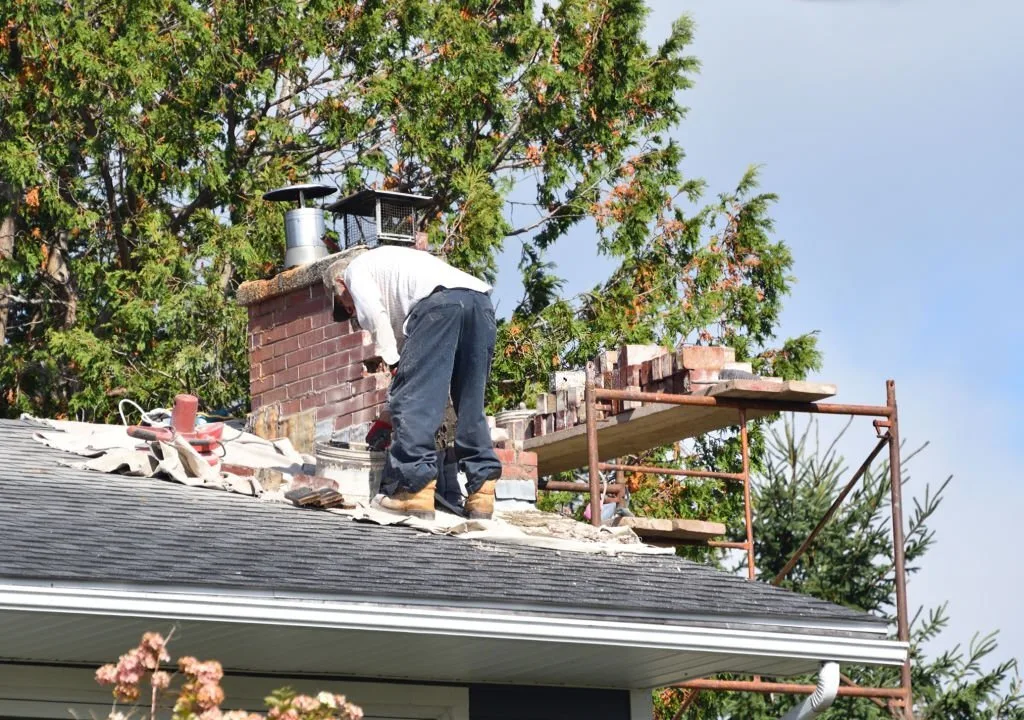
How It Works
How Chimney Waterproofing Works
Inspection of the whole chimney
A technician looks at the crown, cap, flashing, mortar joints and brick faces to find where water is actually entering. Any active leak or open crack is identified and documented before we talk about a coating.
Repairs first, then clean and dry
Crown sealing, tuckpointing, cap or flashing work happen before waterproofing so the repellent is not sealing over a problem. The masonry is cleaned of moss and loose debris and must be dry when the product goes on, which in Puget Sound usually means scheduling around a dry stretch.
Application and written notes
The repellent is applied to saturation on the exterior masonry, typically in two passes. You receive a summary of what was repaired, what was treated, and what we recommend watching at your next annual inspection.
Options
Waterproofing and Related Options
- Vapor-permeable siloxane or silane repellent — the standard treatment for sound brick or block chimneys; sheds liquid water while letting vapor escape so moisture is not trapped inside the masonry.
- Crown sealing or crown rebuild — applies when the concrete crown on top of the chimney is hairline-cracked (flexible crown coat) or badly broken (rebuild); most chimney leaks start here, not in the brick.
- Tuckpointing before treatment — applies when mortar joints are recessed or crumbling; a repellent cannot bridge open joints, so they are repointed first and allowed to cure.
- Cap and flashing correction — applies when the chimney has no cap, a rusted cap, or flashing that has pulled away from the roof line; these are fixed before any coating is considered.
- Film-forming sealers — generally not recommended on chimney masonry; they can trap moisture behind the film and speed up spalling in a freeze-thaw climate, so we discuss them only if the masonry has already been coated.
Pricing
What affects the price
- Chimney height and the square footage of exposed masonry
- Roof pitch, height and how the exterior is reached safely
- Amount of moss, algae and efflorescence that must be cleaned off first
- Whether crown, mortar or flashing repairs are needed before treatment
- Number of coats the masonry absorbs (older, softer brick drinks more)
- Type of masonry (brick, block, stone) and any previous coatings
- Scheduling around dry weather and drive time within the service area
We don't publish flat prices because every chimney is different. You'll get a written quote after we look at the system — no surprises.
Timing & Safety
When Waterproofing Is Worth It, and When It Is Not
Worth doing when:
- The chimney is structurally sound and the crown, cap and flashing are in good shape or have just been repaired.
- You are seeing early-stage signs such as efflorescence, moss growth or light surface damp, but no spalling yet.
- You have just paid for tuckpointing or a crown rebuild and want that investment to last longer.
- The chimney faces prevailing weather with no overhang or nearby shelter.
Not the right step when:
- The chimney is actively leaking. Find and fix the entry point first; a repellent on a leaking chimney delays the real repair.
- Brick is already spalling heavily or mortar is missing. Repellent will not hold loose material together.
- The masonry is wet. Product applied to damp brick does not bond and can trap water.
- A previous film-forming sealer is present and has not been removed.
Waterproofing is optional maintenance, not a code item. NFPA 211 recommends an annual chimney inspection; that inspection is where a technician can tell you honestly whether a repellent would help your chimney or whether the money is better spent on a repair.
Safety considerations
- Application involves ladders and roof work. Please do not climb onto the roof to inspect or spray the chimney yourself; let our team handle the exterior.
- Water intrusion that reaches the flue liner can cause liner deterioration and let combustion gases reach living space. That is a reason to have moisture damage evaluated, not ignored.
- Repellents are applied to the exterior only. Nothing is applied inside the flue, and the chimney should be cool and the fireplace unused on application day.
- If your chimney serves a gas appliance and you ever smell gas, leave the house and call your gas utility or 911 before calling anyone else.
- Overspray is kept off roofing, windows and plants; we cover or rinse adjacent surfaces as needed.
Seattle & Puget Sound conditions
Seattle and the Puget Sound corridor get roughly eight months of rain, and much of it arrives as steady drizzle that keeps masonry damp for weeks at a time rather than a quick downpour that dries off. Brick that never fully dries grows moss and algae, and the roots and organic film hold even more water against the surface. Then the handful of hard freezes each winter, and the repeated freeze-thaw nights in the foothills and north toward Mount Vernon, turn that trapped water into ice, pushing the brick faces off. A breathable repellent cuts the amount of liquid water that gets in during the long wet season so there is less to freeze. The practical complication here is timing: the masonry must be dry for the product to bond, so we schedule waterproofing in the drier windows from late spring through early fall whenever possible, and we will tell you if conditions are not right on the day.
Real Work
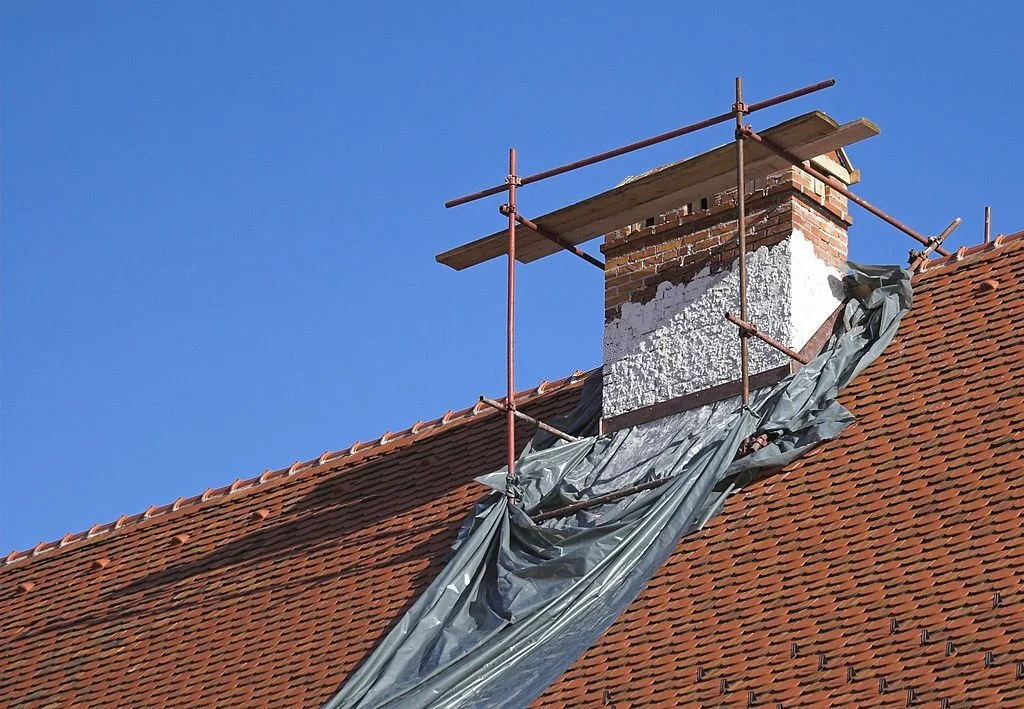
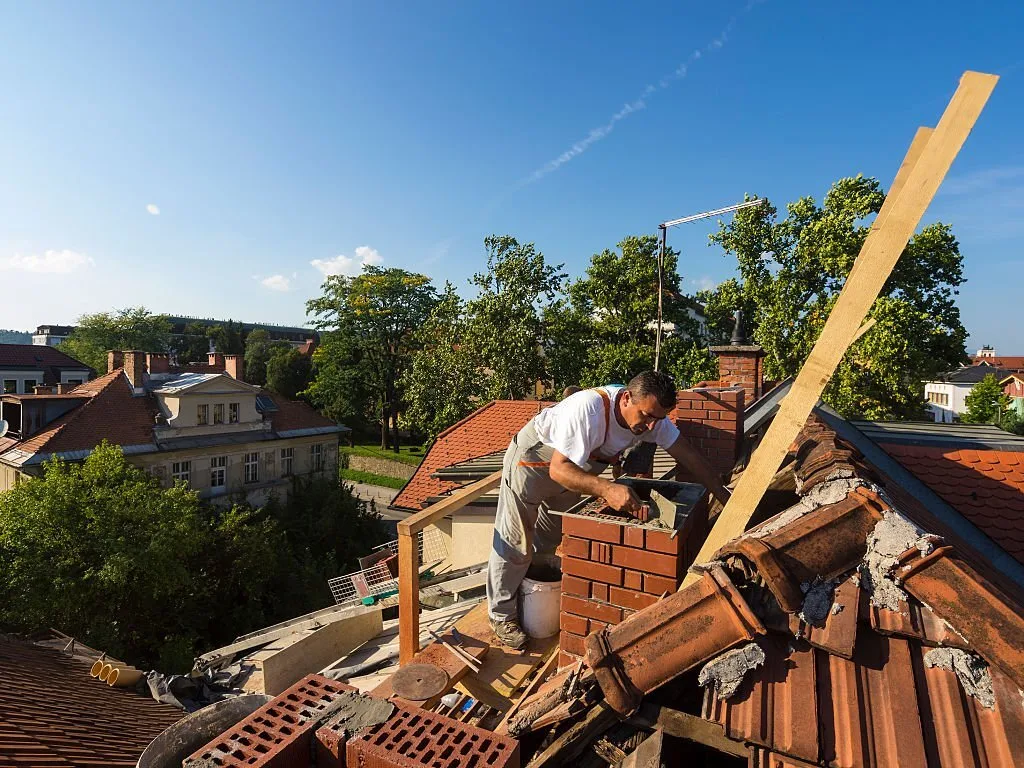
Chimney Waterproofing in action
Protect Your Chimney Before the Next Wet Season
Call 206-207-3974 or email info@jameschimneysweep.com to request a quote for chimney inspection and waterproofing anywhere in King, Pierce or Snohomish County.
☎ (206) 207-3974 Request ServiceQuestions
Chimney Waterproofing FAQ
Will waterproofing stop my chimney from leaking?
Usually not. Most chimney leaks come through a cracked crown, a missing cap, or failed flashing, not through the brick itself. Waterproofing is a preventive coating for sound masonry. We inspect first and fix the actual entry point before treating the chimney.
How long does chimney waterproofing last?
Manufacturers of penetrating siloxane repellents generally describe a multi-year service life, with exposure and the condition of the masonry affecting it. We note the treatment date in your report so it can be checked at your annual inspection and reapplied when water stops beading.
Why does it matter that the product is breathable?
Masonry always holds some moisture. A vapor-permeable repellent lets that moisture escape as vapor while blocking liquid rain. A film-forming sealer can trap water inside the brick, and in a freeze-thaw climate that trapped water is what breaks the brick apart.
Can it be applied in the rain or on a damp chimney?
No. The masonry needs to be dry for the repellent to soak in and bond. In the Puget Sound area that means we plan around dry stretches and may reschedule if the chimney has not dried out.
Do I need tuckpointing before waterproofing?
Only if the mortar joints are recessed, sandy or cracked. Repellent cannot bridge open joints, so damaged mortar is repointed first and allowed to cure before treatment. If your joints are sound, we go straight to cleaning and application.
What does chimney waterproofing cost?
It depends on the chimney's size and height, how the exterior is reached, how much moss and staining must be cleaned off, and whether any crown, cap or mortar repairs come first. A technician gives you a written quote after looking at the chimney, with repairs and the repellent itemized separately.
Related services
Service areas
Helpful reading