
Home › Services › Gas Fireplace Conversion
Gas Fireplace Conversion Seattle, WA
Converting existing wood-burning fireplaces to gas log sets or gas inserts across Seattle, Tacoma and King, Pierce and Snohomish counties.
- 25+ years in business
- CSIA certified
- Licensed, bonded & insured
Request Gas Fireplace Conversion
Tell us what's going on — we'll confirm a time by phone or text.
Scope note: a conversion is the whole project of turning a wood-burning fireplace into a gas one — evaluating the fireplace and flue, choosing between a vented log set or a sealed insert, coordinating the gas line with a licensed gas fitter, permits, and final safety checks. The two installation methods are described in detail on the gas log installation and gas fireplace insert pages.
A gas fireplace conversion takes the wood-burning fireplace you already have and turns it into a gas-fueled one, either with a vented gas log set that sits in the open firebox or with a sealed gas insert that slides into the masonry opening. The masonry, the hearth and the chimney stay. What changes is the fuel, the venting and how the fireplace is controlled. James Chimney Sweep has handled Seattle fireplaces for 25 years or more, and our job in a conversion is to confirm the existing chimney and firebox are sound, make the flue and damper right for gas, and coordinate with a licensed gas fitter for the line itself.
This page is about the conversion decision: what your chimney needs before gas goes in, how the damper is handled, who runs the gas line, what permits apply and whether you can go back to wood later. If you are starting from scratch with no fireplace, that is gas fireplace installation, a different job with a new factory-built unit and its own venting. And if you already know you want the sealed-unit route, our gas fireplace insert page covers that product in depth; here we compare it against a log set so you can choose.
We are CSIA certified and licensed, bonded and insured in Washington, and we will tell you plainly when a fireplace is a poor candidate for conversion rather than sell you a job that will not perform.
Symptoms & Problems
Signs a conversion makes sense for your home
- You rarely burn wood because hauling, storing and cleaning up after it is a chore
- Burn bans and Puget Sound air-quality rules keep the fireplace idle for weeks at a time
- The open wood fireplace pulls heat out of the room instead of warming it
- You want a fire that starts with a switch or remote and shuts off just as fast
- A gas line already serves the home or a nearby appliance, shortening the run
- Smoke in the room or draft problems make wood fires unpleasant to live with
- You are remodeling and want the fireplace to work without a full rebuild
- Creosote and frequent sweeping are pushing you toward a cleaner fuel
How It Works
How a conversion is handled
Inspection and candidate check
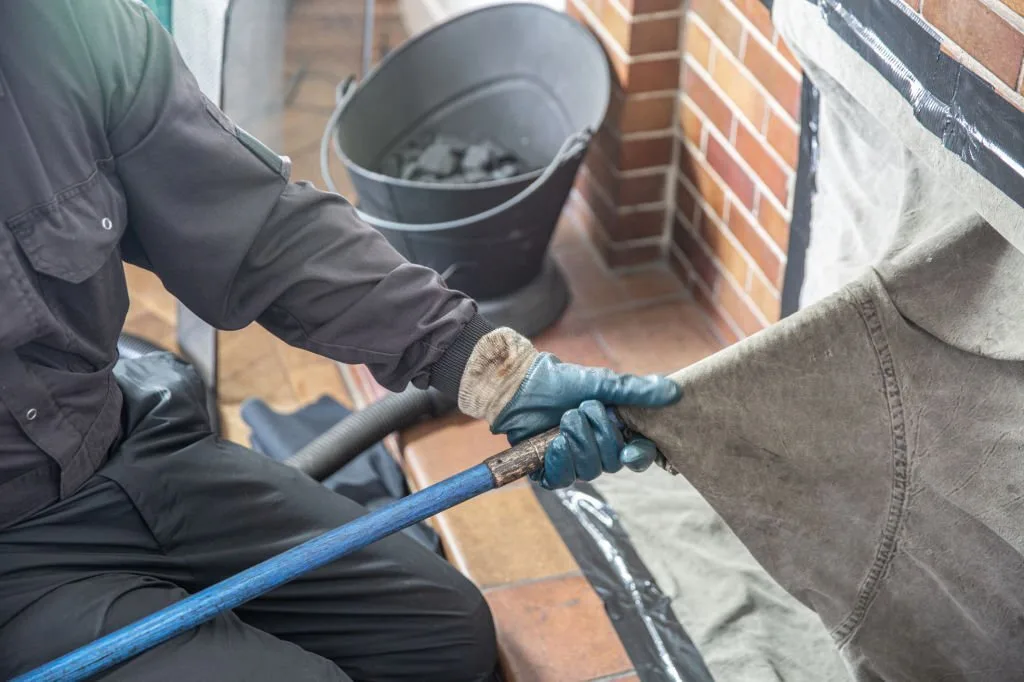
We start with a Level 2 style inspection of the firebox, smoke chamber, flue liner and chimney cap, including a camera scan of the flue. Gas exhaust is cooler and wetter than wood smoke, so an unlined or cracked flue that limps along with wood can fail with gas. We also confirm clearances, firebox dimensions and where a gas line could enter the hearth, then give you a written quote for a log set or an insert.
Chimney prep, damper and appliance set
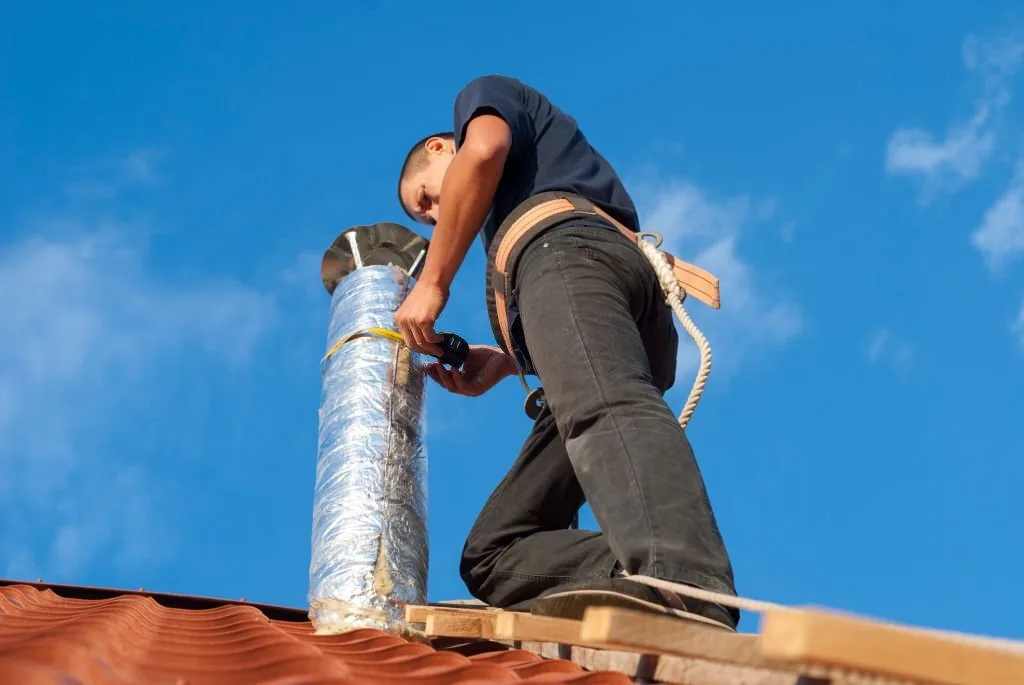
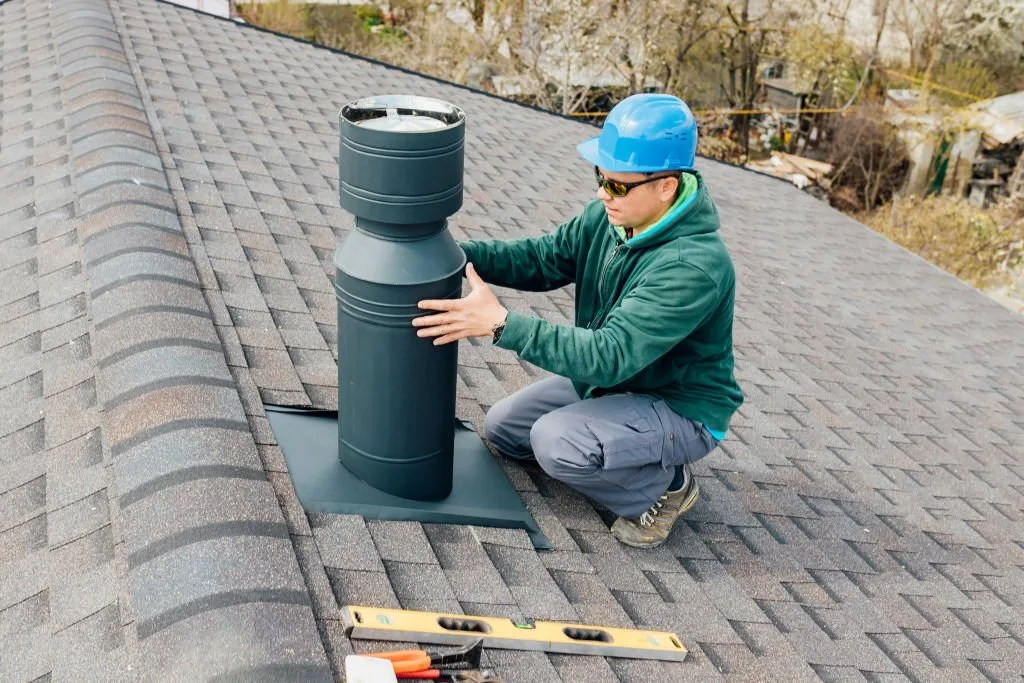
Depending on findings, we repair or reline the flue, clean out creosote so it is not sitting above a gas flame, and fit the damper clamp or vent assembly. For a vented log set the damper is fixed partly open with a clamp so the flue is never fully closed on a burning appliance. For an insert, a dedicated liner runs up the chimney and connects to the unit. A licensed gas fitter routes and pressure-tests the gas line and installs the shutoff valve under the local permit.
Lighting, permit sign-off and handover
Once the line is approved, the appliance is connected, leak-checked at every joint, lit and tuned for a proper flame. We walk you through the controls, the shutoff location and what to watch for, and leave you a record of the work for the permit file and your own records.
Options
Conversion options
- Vented gas log set in the open firebox — the simplest conversion. Keeps the look of an open wood fire, uses the existing chimney with the damper clamped open, and is mostly about ambiance rather than heat. Best when the chimney is already in good shape.
- Sealed gas insert with a new liner — a steel firebox with a glass front that slides into the masonry opening and vents through a dedicated liner. Far more heat into the room and far less heat up the chimney. Best when you actually want to heat the space or the old flue needs a liner anyway.
- Conversion with chimney repair first — when the inspection finds a cracked liner, damaged smoke chamber or failing crown, those repairs come before any gas appliance goes in. We price this as its own step so you can decide with full information.
- Natural gas or propane — homes off the gas grid in parts of Pierce and Snohomish counties can convert using propane; the appliance is ordered or set up for that fuel and the tank and line are the fitter's scope.
- Electric instead of gas — if running a gas line is impractical, an electric insert can give the look without any flue work. Not our focus on this page, but worth asking about during the inspection.
Pricing
What affects the price
- Whether you choose a vented log set or a sealed insert with its own liner
- Condition of the existing flue and whether it needs cleaning, repair or a full reline
- Length and difficulty of the gas line run from the meter or nearest branch to the hearth
- Firebox size and whether the surround or hearth needs modification to fit an insert
- Permit and inspection fees in your city or county
- Chimney height and roof pitch, which affect liner length and labor
- Controls and extras such as remote thermostats, blowers or decorative media
We don't publish flat prices because every chimney is different. You'll get a written quote after we look at the system — no surprises.
Timing & Safety
When conversion is the right move, and when it is not
Conversion is usually the right call when:
- The masonry fireplace and chimney are structurally sound or can be made sound with reasonable repair
- Gas service is available at the home or propane is a workable option
- You want convenience, cleaner air indoors and, with an insert, real heat output
- A full tear-out and new installation would be far more disruptive than using what you have
Think twice when:
- The chimney is badly deteriorated and the cost of making it safe for gas approaches the cost of a new direct-vent installation
- You still want the option to burn wood regularly (a log set can be removed, but an insert and liner are a bigger commitment to undo)
- The firebox is unusually small or shallow, which limits insert choices
- There is no practical path for a gas line without opening finished walls or floors
Note that a conversion is not a repair. If your fireplace is already gas and misbehaving, that is gas fireplace repair, pilot light repair or gas valve repair, not a conversion.
Safety considerations
If you smell gas, leave the house immediately and call your gas utility or 911 from outside. Do not operate switches or the fireplace. Gas lines and valves are only serviced by a qualified, licensed technician, never as a DIY project.
- Vented gas logs must never run with the damper closed; the clamp exists to keep the flue open and carbon monoxide out of the room.
- A working carbon monoxide alarm near the fireplace and on each sleeping level is part of every conversion we do.
- Creosote left in a flue above a gas flame is a fire hazard. The chimney is cleaned before gas goes in.
- The glass on a sealed insert gets extremely hot; a barrier screen matters in homes with children or pets.
- NFPA 211 recommends an annual inspection of chimneys and vents even after converting to gas.
Seattle & Puget Sound conditions
Seattle and Puget Sound homes have a couple of conditions that shape a conversion. First, our wet climate and older brick chimneys mean a lot of unlined or partially lined flues. Gas exhaust condenses readily in a cold, damp masonry flue, and that acidic moisture eats mortar joints from the inside, which is why we so often recommend a proper liner with the conversion rather than relying on bare brick. Second, our frequent burn bans and regional air-quality rules make a gas fireplace the one you can actually use on a cold inversion day in Tacoma or Everett when wood burning is restricted. Third, coastal homes near the Sound see salt air accelerate corrosion on caps and terminations, so stainless components are worth specifying. And in the foothill parts of Snohomish and Pierce counties, freeze-thaw cycles on a damaged crown let water into the flue, which is something we want fixed before a new liner goes in.
Real Work
Gas Fireplace Conversion in action
Find out if your fireplace is a good conversion candidate
Call 206-207-3974 or request a quote online and we will inspect the chimney, explain log set versus insert and map out the gas-line and permit steps for your home.
☎ (206) 207-3974 Request ServiceQuestions
Gas Fireplace Conversion FAQ
Can I convert my wood fireplace to gas without touching the chimney?
Sometimes, for a vented log set in a chimney that passes inspection. But many Seattle-area chimneys are unlined, cracked or holding creosote, and those need cleaning, repair or a liner before gas is a safe fuel in them. The inspection tells us which case you are in.
Why does the damper get clamped open?
Vented gas logs produce carbon monoxide and need an open flue at all times. The clamp keeps the damper from being closed accidentally while the logs are lit. The trade-off is that the fireplace loses some house heat up the chimney when not in use, which is one reason people choose a sealed insert instead.
Can my existing wood fireplace be converted, or are some not suitable?
Most sound masonry fireplaces can take a vented log set or a sealed insert. The firebox has to be structurally sound, the flue must be inspected and usually relined for an insert, and the damper is fixed open for vented logs. A prefab (factory-built) fireplace is more limited and must use parts listed for that model.
Do I need a permit to convert to gas in Seattle?
Gas piping and most fuel-burning appliance installations require permits and inspection in Seattle and in the surrounding cities and counties. Exact requirements vary by jurisdiction, so we confirm the rules for your address during the quote and build the inspection into the schedule.
Is a gas conversion reversible if I want wood again later?
A vented log set is the most reversible option: the logs and burner come out, the gas line is capped by a fitter, the clamp is removed, and the fireplace is inspected before you burn wood. An insert with a dedicated liner can also be removed, but it is more work and the masonry fireplace would need a fresh inspection to confirm it is still fit for wood. If keeping wood as an option matters, tell us up front.
Log set or insert, which gives more heat?
An insert, by a wide margin. Vented logs are mainly about the look of a fire and send most of their heat up the open flue. A sealed insert with a blower can warm a living area and is the better choice if heating is part of the goal.
Related services
Service areas
Helpful reading