
Home › Services › Gas Fireplace Insert
Gas Fireplace Insert Seattle, WA
Sealed, direct-vent gas inserts fitted into existing masonry fireplaces across Seattle, Tacoma and King, Pierce and Snohomish counties.
- 25+ years in business
- CSIA certified
- Licensed, bonded & insured
Request Gas Fireplace Insert
Tell us what's going on — we'll confirm a time by phone or text.
A gas fireplace insert is a sealed, factory-built gas firebox that slides into the opening of an existing masonry (or older factory-built) fireplace. It gets its own metal liner run up the old chimney, a glass front, and a real heat output you can control with a thermostat or remote. If you have a drafty brick fireplace you rarely light because it pulls more heat out of the room than it puts in, an insert is usually the answer. James Chimney Sweep has served Seattle, Tacoma and the Puget Sound for 25+ years, and we are CSIA certified, licensed, bonded and insured in Washington.
An insert is not the same as a full gas fireplace installation. That sibling service covers building a brand-new gas fireplace where none exists, including framing, a new vent path and finish work. An insert reuses the fireplace and chimney you already have. It is also different from gas log installation, which simply places a burner and ceramic logs into an open firebox with the damper clamped open; logs keep the open-fireplace look but deliver very little usable heat. If you already have a working gas unit that needs attention, our gas fireplace repair and gas fireplace cleaning pages cover that scope.
Below we walk through how inserts are sized and vented, what happens to the old chimney, what drives the cost, and when an insert makes sense versus the other options.
Symptoms & Problems
Signs a gas insert is the right upgrade for your fireplace
- Your masonry fireplace is beautiful but you rarely use it because the room gets colder after the fire dies down
- You can feel cold air pouring down the chimney through the damper on winter nights
- You want real, controllable heat in one room without running the furnace for the whole house
- You are tired of buying, storing and hauling firewood in the rain
- Burn bans and smoke concerns in the Puget Sound make wood burning a hassle
- The old firebox or flue has issues that make wood fires unsafe, but the masonry structure is sound
- You already have a gas line near the fireplace or are planning to add one
- You want the fireplace to work during a power outage (most inserts can run on a battery backup or millivolt system)
How It Works
How a gas insert installation works
Inspect the fireplace and measure the opening
We start with a hands-on inspection of the existing firebox, damper, smoke chamber and flue, then take the opening's height, width and depth plus the flue's size and route. Inserts are sized to the opening, not the room alone, so these numbers decide which models will physically fit and which venting kit is needed. We also confirm where the gas supply and electrical connection will come from and look at the hearth extension and clearances to mantels and trim.
Install the insert, liners and surround
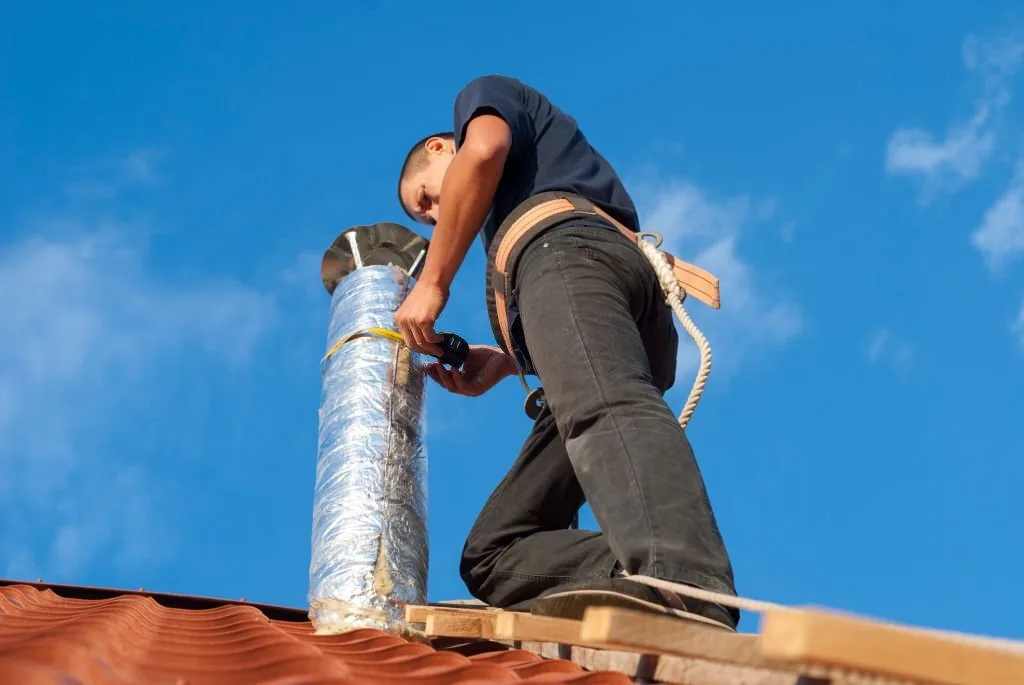
On installation day we prepare the firebox, run the direct-vent liner system (typically two flexible aluminum liners, one for exhaust and one for combustion air, or a co-linear kit) up the chimney to a termination cap on top, set and level the insert in the opening, seal the top of the flue so the old chimney is no longer open to the weather, and fit the decorative surround panel that closes the gap between the unit and the masonry. Gas connection and the final hookup are done only by a qualified technician.
Test, document and walk you through operation
We light the unit, check the flame pattern, verify draft and combustion-air flow, confirm the glass seals and safety switches work, and test the remote or thermostat. You get a written record of the model, venting configuration and what was done to the chimney, plus a plain-language rundown of operation and the maintenance schedule. We also tell you what, if anything, the old chimney still needs going forward.
Options
Gas insert options we install
- Direct-vent sealed insert — the standard choice for most Seattle homes. A sealed glass front, combustion air pulled from outdoors, exhaust sent out through the chimney liner. Best efficiency and no room-air draw.
- B-vent (natural-vent) insert — uses room air for combustion and a single exhaust liner. Less efficient than direct-vent and less common today; it applies mainly where a direct-vent kit cannot be routed or a homeowner wants the open-flame look with a screen.
- Vent-free insert — no liner at all. Washington building and fire codes and indoor-air-quality concerns limit where these can be used, and many Puget Sound jurisdictions do not allow them; we will tell you honestly whether it is an option at your address.
- Thermostat, remote and blower packages — most inserts accept a wall thermostat or handheld remote and a variable-speed blower that pushes convective heat into the room. A blower is worth it in larger living rooms.
- Surround and face styles — flush trim kits, oversized surrounds to cover a wide or tall opening, and traditional or contemporary fronts, so the insert matches the existing masonry rather than looking bolted on.
Pricing
What affects the price
- Insert size, heat output (BTU rating) and brand, plus blower, remote and thermostat add-ons
- Venting type and liner length: a tall two-story chimney needs far more liner than a single-story one
- Condition of the existing firebox, damper and flue, and whether any masonry repair or smoke-chamber work is needed before the insert can go in
- Whether a gas line already reaches the fireplace or a new run must be installed by a qualified technician
- Electrical access for the blower and ignition system, and whether a new outlet is required
- Surround, trim and hearth work needed to cover the opening cleanly and meet clearances
- Chimney cap and top-seal requirements, and how accessible the chimney top is for the install crew
We don't publish flat prices because every chimney is different. You'll get a written quote after we look at the system — no surprises.
Timing & Safety
When a gas insert is the right call, and when it is not
An insert makes the most sense when:
- You have an existing masonry fireplace with a structurally sound chimney and want real heat from it.
- You want to stop the heat loss an open damper and open firebox cause year-round.
- You want a clean, low-maintenance fire you can start with a button.
- Wood burning is impractical at your home because of smoke rules, storage or effort.
Consider a different service when:
- There is no existing fireplace. That is a full gas fireplace installation, a different and larger project.
- You mainly want the look of flames in an open hearth and do not care about heat. Gas log installation does that with less cost and no liners.
- Your existing gas unit just is not working right. Gas fireplace repair, pilot light repair, gas valve repair or gas burner replacement address that without replacing the unit.
- You want to convert a gas fireplace back to wood, or change a wood unit to gas without a sealed insert; that is covered under gas fireplace conversion.
Inserts are optional from a safety standpoint; nobody needs one. But if the old flue is deteriorated enough that wood fires are no longer safe, an insert with its own liner is one of the more practical ways to bring the fireplace back into use.
Safety considerations
A gas insert is a gas appliance, and the rules that apply to any gas appliance apply here.
- If you ever smell gas, leave the house immediately and call the gas utility or 911 from outside. Do not flip switches or try to find the source.
- Gas lines and valves are only serviced by a qualified technician. We do not ask homeowners to touch supply lines, shutoffs or connections.
- The old chimney must be inspected before an insert goes in. Running a liner past a damaged flue without knowing it is not something we will do.
- The sealed glass front gets very hot during and after operation. Most manufacturers now supply a protective screen; keep children and pets clear.
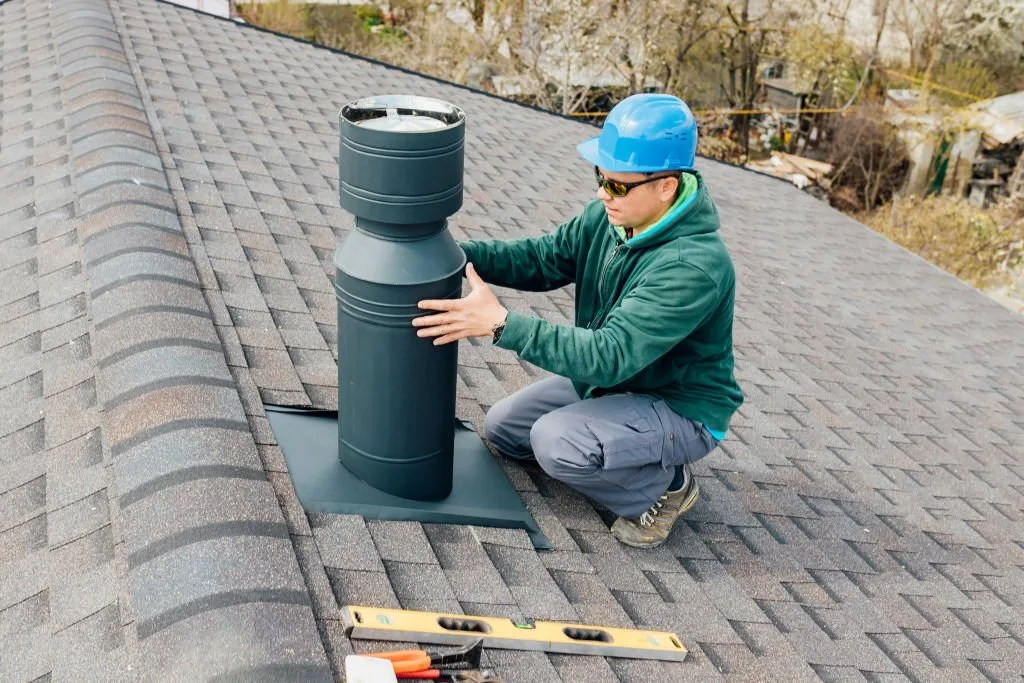
- The direct-vent termination at the top of the chimney needs to be protected from rain and debris and kept clear; let us handle anything on the roof.
- A carbon monoxide alarm on each level of the home is strongly recommended with any gas appliance, and NFPA 211 recommends an annual inspection of chimneys, fireplaces and vents.
Seattle & Puget Sound conditions
Seattle and Puget Sound homes give gas inserts a specific set of conditions. Our long, damp heating season means an open masonry fireplace is losing warm room air up the flue for most of the year, which is exactly the loss a sealed insert eliminates. Older brick chimneys in Seattle, Tacoma, Everett and the surrounding neighborhoods often show moss, spalled brick and freeze-thaw damage at the crown and top courses, so the top-seal plate and termination cap installed with an insert also help keep rain out of a chimney that may have been taking on water for decades. Homes near Puget Sound and the Strait see salt-laden air that corrodes steel components faster; we specify liner and cap materials with that in mind. Frequent winter burn bans across King, Pierce and Snohomish counties during air-stagnation events do not restrict gas inserts the way they restrict wood burning, which is one of the most common reasons local homeowners make the switch. Finally, many Puget Sound houses lose power in windstorms; we can point you toward insert models with battery backup or millivolt ignition so the fireplace still works when the lights go out.
Real Work
Gas Fireplace Insert in action
Turn your drafty masonry fireplace into real heat
Call 206-207-3974 or request a quote for a gas insert measured, vented and installed for your Seattle or Puget Sound home.
☎ (206) 207-3974 Request ServiceQuestions
Gas Fireplace Insert FAQ
How much more efficient is a gas insert than my open masonry fireplace?
An open wood fireplace typically sends most of its heat up the chimney and pulls already-heated room air with it, so net room heating is very low and can even be negative. A sealed direct-vent gas insert keeps combustion separate from room air and delivers a large share of its fuel energy as usable heat into the room. Exact figures depend on the model, and we can show you manufacturer efficiency ratings for the units that fit your opening.
What happens to my old chimney after the insert goes in?
The masonry chimney stays in place and becomes a chase for the new liners. We run the direct-vent liner system up through it, install a termination cap at the top, and seal the top of the flue so rain and cold air no longer come down the old chimney. The damper is usually locked open or removed to make room for the liners. The chimney itself still benefits from periodic inspection, especially the crown and exterior brick, because weather keeps acting on it.
Will the insert fit my fireplace opening?
Inserts come in a range of sizes and most masonry openings can take one, but the limiting factors are usually the depth of the firebox and the height of the opening, along with the size and straightness of the flue for the liners. That is why we measure the firebox and flue on site before recommending a model, and why a surround panel is used to cover the gap between a smaller unit and a larger opening.
Do I need a gas line already at the fireplace?
Not necessarily. Many Seattle homes have a gas stub near the fireplace from an earlier gas log set; if not, a line can be extended to the firebox by a qualified technician. The length of that run and the access to it is one of the main variables in the overall cost, so we look at it during the initial visit.
Can a gas insert go into a factory-built (prefab) wood fireplace instead of masonry?
Sometimes. Some inserts are listed for installation in specific factory-built fireplaces, but the combination must be approved by both manufacturers and the existing fireplace and chimney have to be in good condition. We check the fireplace's label and the insert's listing before saying yes. If the prefab unit is failing, a full gas fireplace installation may be the better route.
How often does a gas insert need service once it is installed?
An annual cleaning and inspection is the common recommendation: the glass, burner, logs and pilot assembly are cleaned, the vent is checked, and safety controls are tested. That ongoing work is covered by our gas fireplace cleaning service, and anything that stops working falls under gas fireplace repair. Regular service keeps the flame pattern correct and the glass clear.
Related services
Service areas
Helpful reading