
Home › Services › Gas Log Installation
Gas Log Installation Seattle, WA
Vented gas log sets sized, placed and safety-checked in existing wood-burning fireplaces across Seattle, Tacoma and the Puget Sound.
- 25+ years in business
- CSIA certified
- Licensed, bonded & insured
Request Gas Log Installation
Tell us what's going on — we'll confirm a time by phone or text.
Gas log installation means setting a vented gas log set into a fireplace you already have. Your masonry or factory-built wood fireplace stays exactly as it is; we add a burner, a grate, ceramic logs and the controls, connect the set to an existing gas stub, and leave you with a fire that lights at the turn of a key or the press of a button. It is the simplest way to go from a firebox you rarely use to one you use every rainy evening.
This is the right page if you already have a gas line at or near the fireplace and want an open, realistic-looking log fire without rebuilding anything. If you want a sealed, glass-fronted unit that puts real heat into the room, that is a gas fireplace insert, a different product with a different price point and a liner requirement. If you need new gas piping run to the hearth, that work is covered under gas fireplace conversion and is done by a licensed gas fitter before the logs go in.
James Chimney Sweep has served the Puget Sound for more than 25 years. We are CSIA certified and licensed, bonded and insured in Washington, so the same technician who checks that your chimney can safely vent the logs is the one who sets and tests them.
Symptoms & Problems
Signs a gas log set makes sense for your fireplace
- You have a working wood fireplace but rarely light it because of the hassle, smoke or wet firewood
- A gas stub or capped line already sits inside or next to the firebox
- You want the look of an open flame and burning logs rather than a glass-fronted unit
- Your old gas logs are cracked, crumbling, soot-streaked or missing pieces
- The existing log set was never sized to the firebox and looks lost or crammed in
- Someone removed the damper clamp and you are not sure the set is safe to run
- You want a simple, low-maintenance fire in a guest room, basement or rental
- A home inspection flagged a gas log set as unlisted, unvented or improperly installed
How It Works
How a gas log installation goes with us
Inspect the fireplace and chimney
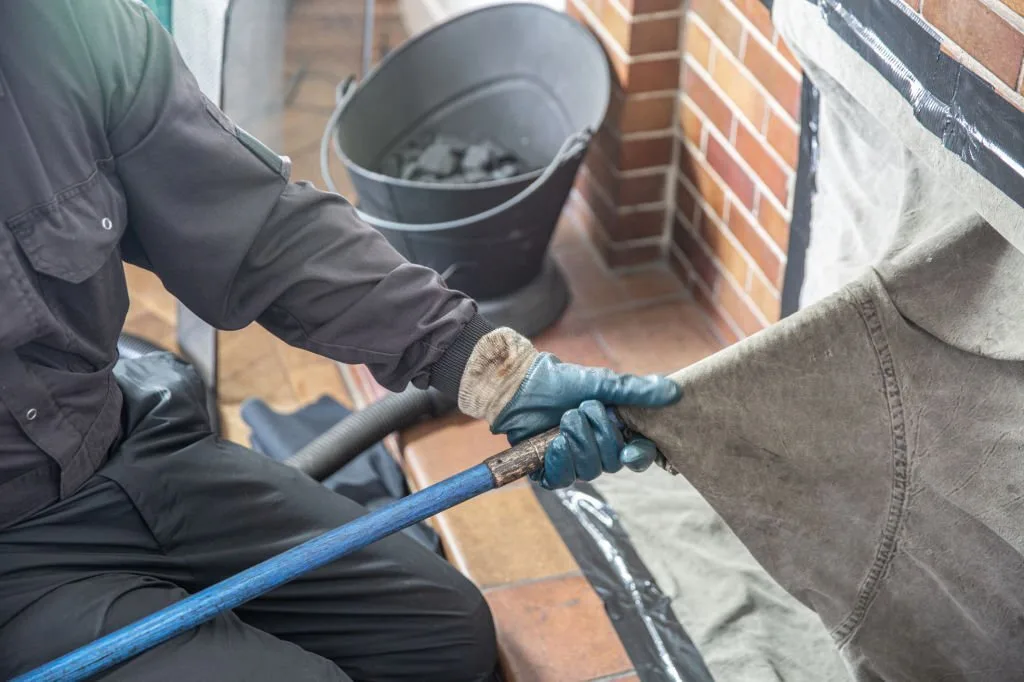
Before any gas appliance goes into a fireplace, the fireplace has to be fit to vent it. We check the firebox, smoke chamber and flue for damage, blockages and creosote, confirm the damper opens fully, and measure the firebox opening, depth and height. We confirm where the existing gas stub is, that it is capped and tested, and whether the fireplace is masonry or a factory-built unit whose listing allows gas logs.
Size, set and connect the log set
We match the burner and log set to your firebox dimensions and the manufacturer's clearances, then assemble the grate, burner pan and logs in the arrangement the manufacturer specifies so flames do not impinge on the logs and produce soot. The damper is fitted with a permanent clamp or stop so it cannot be closed while the set is in use. The set is connected to the gas stub, the connection is leak-tested, and the pilot, valve and any remote or wall switch are set up.
Test, explain and document
We run the set through a full burn, check flame pattern and ignition, verify draft up the flue, and walk you through lighting, shutdown and what a healthy flame looks like. You receive a written summary of the chimney condition, the set installed and any follow-up we recommend, such as a future flue repair or a cleaning interval.
Options
Gas log options and which one fits
- Vented gas logs (our standard recommendation) — The most realistic flame, designed to burn with the damper locked open and exhaust going up the chimney. Best for homeowners who want ambiance and an open hearth in a fireplace with a sound flue. They produce modest room heat because most of it goes up the chimney, like a wood fire.
- Vent-free gas logs — Burn with the damper closed and push heat and combustion byproducts into the room. They are not our first recommendation for the Puget Sound's tightly sealed, damp homes, and some jurisdictions restrict them. We will discuss whether they are permitted and sensible for your situation rather than installing them by default.
- Match-lit or safety-pilot burner — Match-lit is the simplest valve setup and lights with a long match or lighter; a safety-pilot kit adds a standing pilot and thermocouple that shuts gas off if the flame goes out. Most customers choose the safety pilot.
- Remote or wall-switch control — Added on top of a safety-pilot valve so the fire lights from the couch. Useful for anyone who wants the fire on a schedule or finds the firebox hard to reach.
- Replacement log set on an existing burner — When the burner and valve are sound but the ceramic logs are broken or ugly, we can often replace only the logs, provided a matching listed set is available for that burner.
Pricing
What affects the price
- Size of the firebox and the length of the log set needed to fill it properly
- Vented versus vent-free set and the burner style chosen
- Match-lit, safety-pilot or remote-controlled valve package
- Condition of the existing gas stub and whether it needs a new shutoff or flex connector
- Condition of the chimney and whether a cleaning or flue repair is needed before the logs can be run safely
- Whether a damper clamp, new grate or firebox floor repair is required
- Natural gas versus propane, which changes the orifice and burner specification
We don't publish flat prices because every chimney is different. You'll get a written quote after we look at the system — no surprises.
Timing & Safety
When gas log installation is the right call, and when it is not
Gas logs are a strong choice when:
- The chimney and damper are sound, or can be made sound with a cleaning or modest repair.
- A gas line already reaches the fireplace area.
- You want an open-hearth look and are not relying on the fireplace to heat the house.
- You want to stop dealing with firewood, smoke and ash.
Consider a different route when:
- Your main goal is heat. A vented log set loses most of its warmth up the flue; a gas fireplace insert with a liner is the heating product.
- The flue is cracked, the smoke chamber is failing or the chimney is unlined. Those problems must be corrected first, because a gas appliance still needs a safe chimney to exhaust through.
- There is no gas at the hearth. Running a line is gas fireplace conversion work and comes before any log set.
- Your factory-built fireplace's listing does not permit gas logs. We will check the label rather than guess.
Safety considerations
Gas logs are safe when they are listed, sized, placed and vented correctly. Most of the problems we see come from skipping one of those steps.
- The damper must stay open with vented logs. We install a permanent clamp or stop. Closing the damper on a vented set sends carbon monoxide into the room.
- Log placement is not decorative. Logs that sit in the flame path produce soot, smell and carbon monoxide. We set them exactly as the manufacturer's diagram shows and explain why they should not be rearranged.
- Carbon monoxide alarms. Every home with a gas appliance should have working CO alarms near sleeping areas and on the fireplace level.
- Gas lines and valves are only serviced by a qualified technician. Do not attempt to connect, move or tighten gas fittings yourself.
- If you ever smell gas, leave the house and call the gas utility or 911 from outside. Do not operate switches or light anything.
- NFPA 211 recommends an annual chimney inspection even for gas-burning fireplaces. Gas exhaust is wet and can deteriorate mortar and flue tile over time.
Seattle & Puget Sound conditions
Puget Sound weather shapes this work in two ways. First, our long wet season means a lot of Seattle and Tacoma fireplaces have flues with moisture damage, spalled tile or a damper rusted partly shut from years of rain coming down an uncapped chimney, so the chimney inspection before a log set is not a formality. Second, our homes tend to be tightly weatherized, which is one reason we steer most customers toward vented logs with a good chimney cap rather than vent-free sets that dump moisture and combustion byproducts into an already humid house. A properly capped flue also keeps moss, leaves and nesting birds from blocking the path your gas exhaust needs.
Real Work
Gas Log Installation in action
Turn Your Unused Fireplace Into a One-Touch Fire
Call 206-207-3974 or request a quote online and we will inspect your fireplace, size the right vented log set and install it safely anywhere in King, Pierce or Snohomish County.
☎ (206) 207-3974 Request ServiceQuestions
Gas Log Installation FAQ
Do I need a chimney inspection before installing gas logs?
Yes. Vented gas logs exhaust up the chimney just like a wood fire, so the flue, smoke chamber and damper need to be clear and structurally sound. We inspect before we install, and if a cleaning or repair is needed, we tell you before any log set is ordered.
Can I close the damper to keep the heat in with vented gas logs?
No. Vented logs must burn with the damper open, which is why we install a permanent damper clamp. If holding heat in the room is the goal, a sealed gas fireplace insert is the product designed for that.
How do you choose the right size log set?
We measure the front width, rear width, depth and height of the firebox and compare those to the manufacturer's minimum firebox dimensions for each set size. A set that is too large violates clearances; one that is too small looks wrong and can have a poor flame pattern.
Why do my old gas logs leave black soot on the logs and the firebox?
Usually because the logs were moved into the flame path, the burner is dirty or misadjusted, or the set is undersized and the flames are hitting ceramic. During installation we place the logs to the diagram and show you how they should sit so this does not start again.
Can gas logs go into a prefab, zero-clearance fireplace?
Sometimes. Many factory-built fireplaces are listed for specific gas log sets; others are not. We read the rating label inside the firebox and confirm what the manufacturer allows before recommending anything.
Do you run new gas lines to the fireplace?
Gas log installation assumes a stub already exists at the hearth. If you need piping extended or a new line run, that is part of a gas fireplace conversion and is handled by a licensed gas fitter first; we then size and install the log set once the stub is tested and capped.
Related services
Service areas
Helpful reading