
Home › Services › Chimney Brick Replacement
Chimney Brick Replacement Seattle, WA
Individual spalled, cracked or missing chimney bricks cut out and replaced with matched units across Seattle, Tacoma and the Puget Sound.
- 25+ years in business
- CSIA certified
- Licensed, bonded & insured
Request Chimney Brick Replacement
Tell us what's going on — we'll confirm a time by phone or text.
Chimney brick replacement is the targeted repair of individual bricks that have failed while the rest of the chimney is still sound. We cut out the damaged units, clean the pocket, set a matched replacement brick in fresh mortar and tool the joints to blend with the surrounding wall. It is the right fix when you can count the bad bricks on one or two hands: a few faces flaking off near the cap, a cracked unit at a corner, a brick that has fallen out of the stack entirely.
This is different from a chimney rebuild, where a larger section or the whole structure above the roof is taken down and relaid. Brick replacement keeps the chimney standing and treats only the units that have failed. It also differs from chimney restoration, which is a broader program of tuckpointing, cleaning, sealing and crown work across the entire chimney. If the damage is scattered and limited, replacement is usually the sensible, lower-cost answer. If it is widespread, we will tell you honestly and explain where the line falls.
James Chimney Sweep has served King, Pierce and Snohomish counties for more than 25 years. We are CSIA certified and licensed, bonded and insured in Washington.
Symptoms & Problems
Signs your chimney needs brick replacement
- Brick faces flaking or peeling off in thin layers (spalling)
- Pieces of brick found on the roof, in the gutters or on the ground
- A single brick or small cluster that is visibly cracked through
- A brick missing from the stack, leaving a dark pocket
- Bricks that look powdery, pitted or rounded at the edges
- Green moss or dark staining concentrated on a few bricks
- Loose bricks that shift when touched near the top of the chimney
- Damage limited to the exposed top courses while the lower chimney looks fine
How It Works
How we replace chimney bricks
Inspect and count the damage
We examine the chimney from the roof and from inside the attic where accessible, map every failed brick and check whether water is still entering through the crown, cap or flashing. If the count is low and the surrounding masonry is solid, brick replacement is the recommendation. If the damage runs deeper, we explain why a rebuild or restoration would serve you better.
Cut out and replace the units
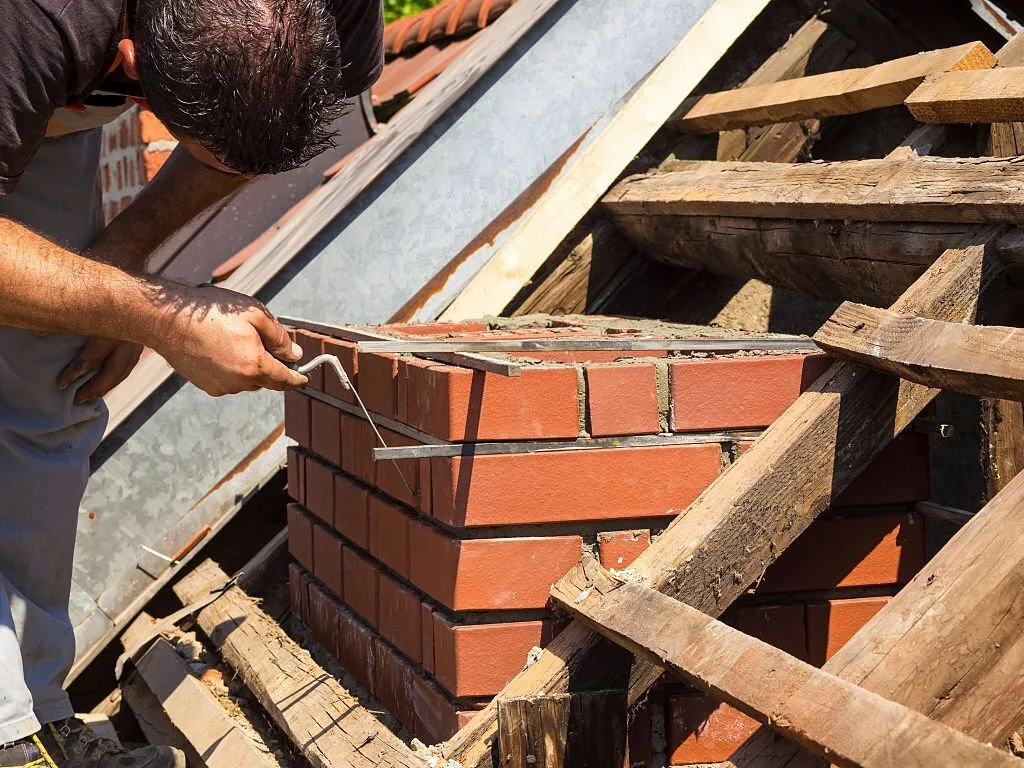
Each damaged brick is cut free with the mortar removed on all sides, the pocket is cleaned and dampened, and a matched replacement brick is bedded in mortar blended to the existing joints. We match size, color and texture as closely as available supply allows, and point and tool the joints so the repair does not stand out.
Report and stop the water
You receive photos of the finished work and a clear note on what caused the spalling in the first place. Replacement bricks will fail again if water keeps getting in, so we flag crown cracks, missing caps or open joints that should be addressed so the repair lasts.
Options
Brick replacement options
- Single-brick replacement — one or two failed units in an otherwise sound chimney, often at a corner or just below the crown.
- Scattered replacement — a handful of spalled bricks spread across different faces, each cut out and replaced individually.
- Top-course replacement — the top one or two rows where weather exposure is highest, relaid as a small section without touching the rest of the stack.
- Replacement plus repointing — new bricks combined with fresh mortar in the joints immediately around them when the surrounding mortar has also eroded.
- Referral to rebuild — when the failed-brick count is too high for unit replacement to make sense, we recommend a chimney rebuild instead and explain the difference.
Pricing
What affects the price
- Number of bricks that need to be cut out and replaced
- Location on the chimney, especially height above the roofline and roof pitch
- Availability of a close match for the existing brick size, color and texture
- Condition of the mortar joints around the damaged units
- Whether the crown, cap or flashing also needs attention to stop the water source
- Access and setup required for safe work on the roof
- Whether any water damage is found behind the bricks once they are removed
We don't publish flat prices because every chimney is different. You'll get a written quote after we look at the system — no surprises.
Timing & Safety
When brick replacement is the right call, and when it is not
Brick replacement is the right fix when the damage is limited and the chimney underneath is structurally sound. A rough guide we use in the field:
- A few bricks up to roughly a dozen — unit replacement is almost always the best value. The chimney keeps its original look and you are paying only for the units that failed.
- A larger cluster or an entire face — replacement starts to cost more per brick than simply relaying the section. At this point we usually recommend a partial chimney rebuild of the affected courses.
- Damage on every face, leaning, or a crumbling crown on top — this is no longer a brick problem but a chimney problem, and a full chimney rebuild above the roofline is the honest answer.
Replacement is optional, at least for a short while, when one or two bricks show light surface flaking but are still tight in the wall. It becomes necessary when a brick is loose, missing, or cracked through, because each open pocket lets in more rain and the damage spreads to the neighbors. Bricks that have already fallen should be addressed before the next wet season.
Safety considerations
A missing or loose brick near the top of a chimney can fall without warning onto the roof, a walkway or a vehicle. Spalling also lets water reach the inside of the chimney, where it can rust a damper, deteriorate a liner and stain ceilings and walls below. Please do not climb onto the roof to pull or reset bricks yourself; let a trained technician handle it with proper fall protection.
- Keep people and parked cars clear of the area below a chimney that is dropping brick fragments.
- Ask for an interior inspection at the same time. Water that damages outer bricks often damages the flue and smoke chamber too.
- NFPA 211 recommends an annual chimney inspection, which is where most spalling is caught early.
Seattle & Puget Sound conditions
Spalling is a water problem before it is a brick problem, and Seattle and the Puget Sound deliver plenty of water. Brick is porous. In a wet season that runs from October into spring, the exposed top courses stay saturated for weeks. When a cold snap arrives, that trapped water freezes, expands and pushes the face of the brick off, then thaws and lets more water in behind. A few of these cycles each winter is all it takes for the top rows to start shedding. Moss adds to the problem on the shaded north side of a chimney by holding moisture against the surface and by sending roots into weak joints. Closer to the Sound, salt in the air accelerates the breakdown of softer brick and older mortar. That is why the bricks that fail on a Puget Sound chimney are so often the ones just under the crown and on the weather side, and why we check the crown and cap on every replacement job rather than just swapping the bricks.
Real Work
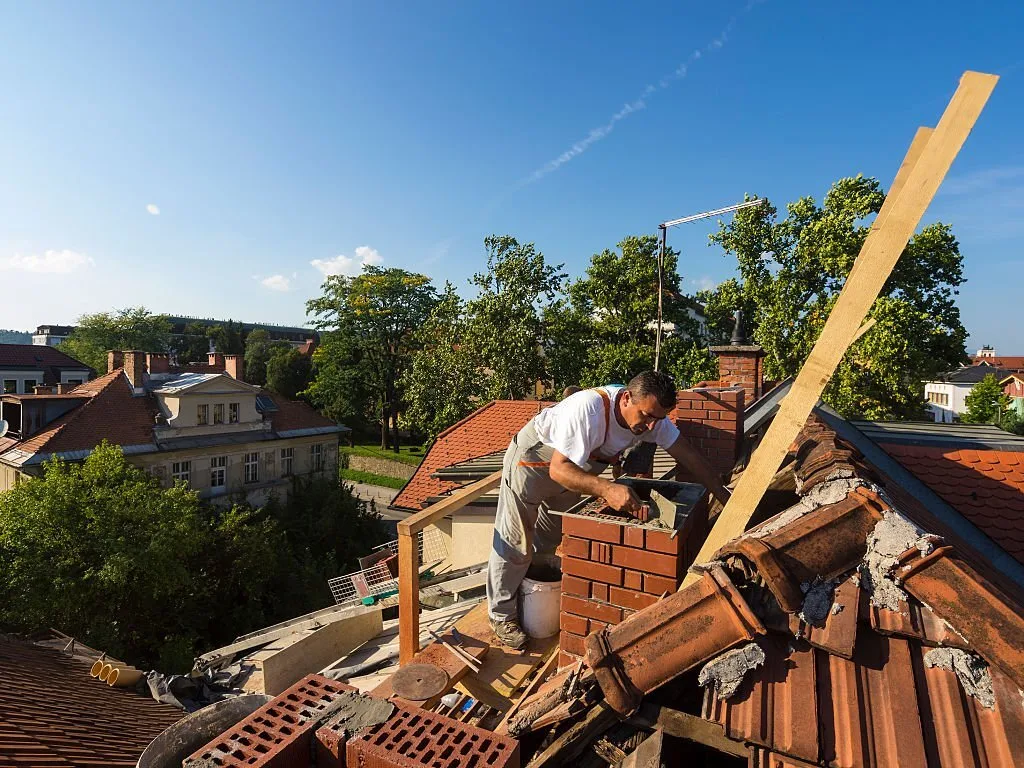
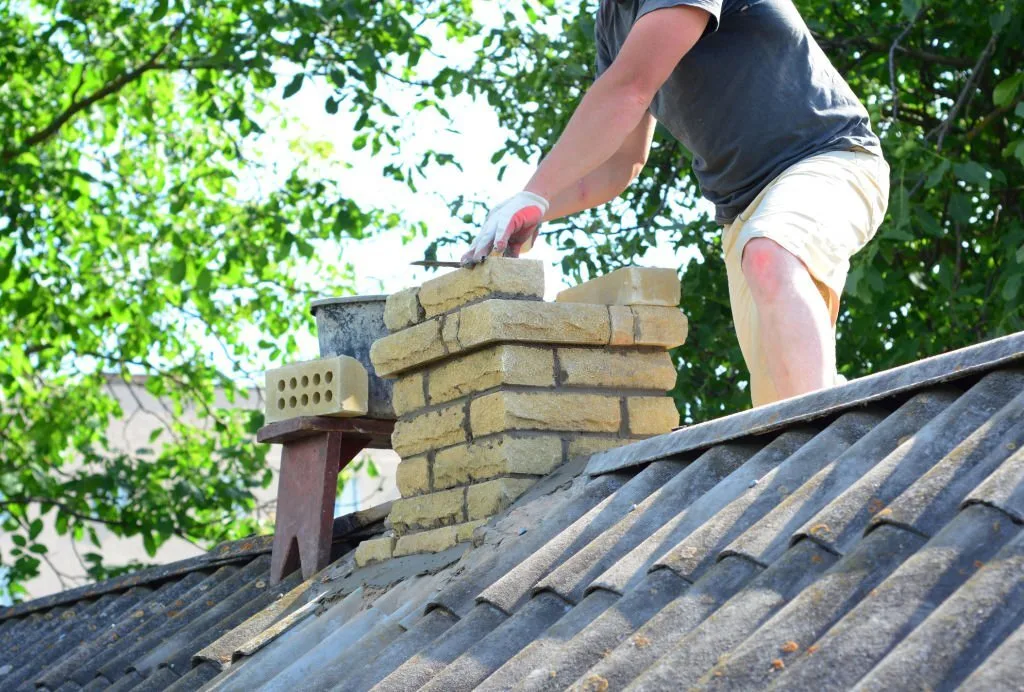
Chimney Brick Replacement in action
Have a few bad bricks? Let us replace just those.
Call 206-207-3974 or request a quote and we will count the damage, match the brick and tell you honestly whether replacement or a rebuild is the right move.
☎ (206) 207-3974 Request ServiceQuestions
Chimney Brick Replacement FAQ
Can you match my existing brick exactly?
We match size, color and texture as closely as the supply allows. Older Seattle chimneys often used brick that is no longer made, so we select the nearest match and blend the mortar color so the repair reads as part of the wall. We will show you a sample before we set it.
Why did my bricks spall in the first place?
Almost always water plus freeze-thaw. Rain soaks into the brick, freezes on cold nights, and the expanding ice breaks the face off. A cracked crown, missing cap or eroded joints let in far more water than an intact chimney would, which is why we check those sources on every job.
How many bricks can be replaced before it makes more sense to rebuild?
There is no fixed number, but once the damage covers an entire face or a large cluster, relaying the section as a partial chimney rebuild is usually cheaper and longer-lasting than replacing units one by one. We give you that comparison after inspecting the chimney.
Will the replaced bricks spall again?
Not if the water source is fixed. A new brick in a chimney with an open crown crack will eventually suffer the same fate. That is why our report notes what needs to be addressed alongside the replacement so the repair holds.
Do you replace bricks on the inside of the chimney too?
Damaged firebox brick and flue tile are separate repairs handled during a fireplace or liner service. This page covers the exterior chimney structure. If we find interior damage during the inspection we will tell you and quote it separately.
Can this be done in the rainy season?
Mortar needs time to cure without being washed out or frozen, so we schedule around weather windows. Short jobs can often be completed between storms, and we will protect fresh work where needed.
Related services
Service areas
Helpful reading