
Home › Services › Chimney Construction
Chimney Construction Seattle, WA
New masonry chimneys designed and built from the footing up for homes across Seattle, Tacoma and King, Pierce and Snohomish counties.
- 25+ years in business
- CSIA certified
- Licensed, bonded & insured
Request Chimney Construction
Tell us what's going on — we'll confirm a time by phone or text.
Chimney construction is the design and building of a brand-new masonry chimney where none exists today: for a new fireplace in a new home, a fireplace added to an addition or remodel, or a full replacement where an old chimney was taken down to the roofline or the ground and you want a proper one back. James Chimney Sweep handles the whole sequence in Seattle and across the Puget Sound: sizing and design, footing, firebox and smoke chamber, the flue liner, clearances to framing, crown, cap and flashing, plus the permit and inspection steps that go with it.
This page is about new construction only. If you already have a chimney and it is crumbling, leaning or failing above the roof, that is a chimney rebuild (or a chimney stack rebuild when only the above-roof section is replaced), and those are covered on their own pages. Construction starts from nothing, or from a cleared footprint, and has to answer design questions a rebuild never faces: where the chimney goes, how deep the footing needs to be, how tall the stack must run, and what appliance it will actually serve.
We have been building and servicing chimneys in Washington for more than 25 years. We are CSIA certified, and licensed, bonded and insured in the state, which matters on a job that involves structural footings, fire clearances and a permit.
Symptoms & Problems
Signs you need a new chimney built, not repaired
- You are adding a wood-burning fireplace to a new home, addition or ADU
- An old chimney was removed during a previous remodel and you want a real fireplace back
- Your existing chimney was demolished below the roofline or to the foundation
- A new masonry fireplace is planned and the chimney has to be designed around it
- An engineer or inspector found the old chimney has no footing and cannot be saved
- You want a wood stove or insert but the house has no flue of any kind
- A factory-built (metal) fireplace is being replaced with true masonry
- Your plans call for a chimney serving two appliances on separate flues
How It Works
How a new chimney is built
Site visit, design and permit
We look at the fireplace or appliance the chimney will serve, the framing it has to pass through, the roof it will exit, and the soil and foundation where the footing will sit. From that we size the flue to the firebox opening, set the height to clear the roof and nearby obstructions, and draw up what the city or county needs for a building permit. You will know the design, the materials and the sequence before anything is poured.
Footing, masonry and liner
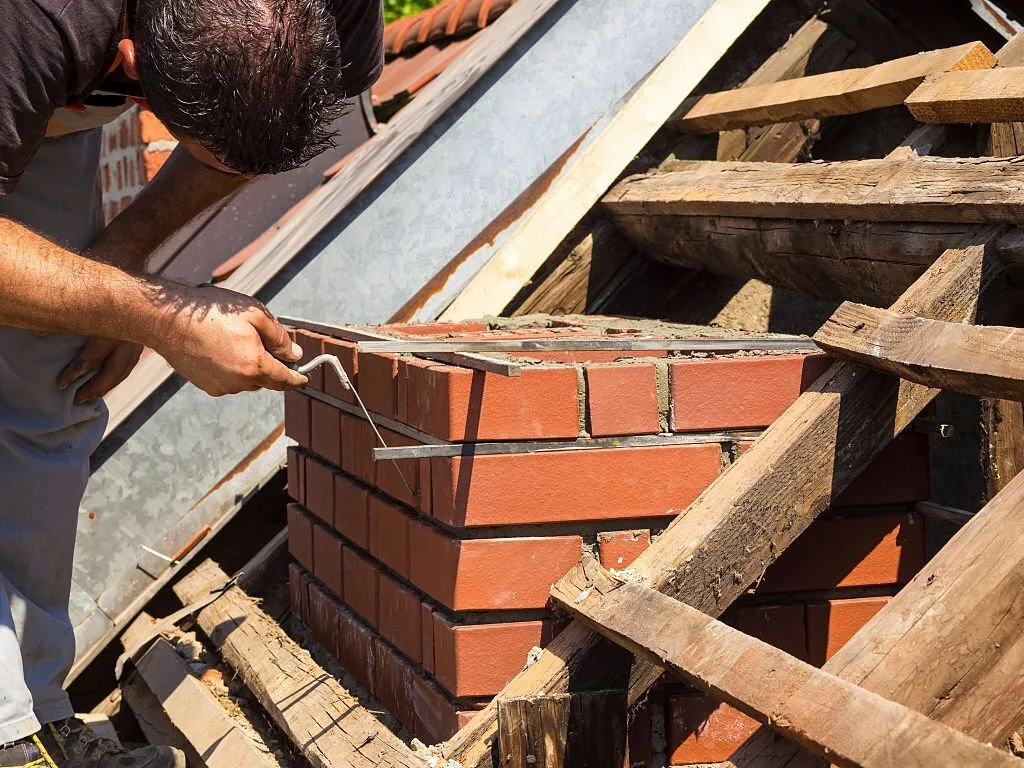
Work starts below grade with a reinforced concrete footing sized for the weight of a masonry chimney. The firebox, throat, smoke shelf and smoke chamber are laid in firebrick and refractory mortar, then the stack rises with a clay tile or stainless liner set in place as each course goes up, keeping the required air gap to wood framing the whole way. Where the chimney passes through floors and the roof, we frame the clearances and set the flashing and counterflashing.
Crown, cap, inspection and first fire
The stack is finished with a poured, overhanging concrete crown, a cap and spark arrestor, and a water repellent on the masonry. We schedule the inspections your jurisdiction calls for, walk you through the curing period before the first fire, and hand over a written record of the flue size, height and materials so whoever services the chimney in the future knows exactly what was built.
Options
New chimney options
- Full masonry chimney with clay tile liner — the traditional build for a masonry fireplace; heavy, long-lived, and the usual choice when the look and mass of real brick or block is the point.
- Masonry chimney with a stainless steel liner — the same exterior, but a listed stainless flue inside; often chosen when the chimney will serve a wood stove or insert that needs a specific flue diameter.
- Block core with brick or stone veneer — a concrete-block structure faced in the brick or stone that matches the house; faster to lay than solid brick and common on additions.
- Multi-flue chimney — one chimney carrying separate flues for, say, a living-room fireplace and a basement stove, each with its own liner and cap.
- Exterior versus interior placement — an exterior chimney on an outside wall is simpler to frame around; an interior chimney stays warmer, drafts better and sheds less heat to the Puget Sound weather.
Pricing
What affects the price
- Height of the chimney from footing to cap and how many stories it passes through
- Whether a new footing must be excavated and poured, and the soil conditions at the site
- Firebox size and the flue diameter the appliance requires
- Number of flues the chimney will carry
- Material choice: solid brick, block with veneer, stone, and the liner type
- Roof pitch, roofing material and the complexity of the flashing at the exit point
- Permit, engineering and inspection requirements in your city or county
We don't publish flat prices because every chimney is different. You'll get a written quote after we look at the system — no surprises.
Timing & Safety
When new construction is the right call
Construction is necessary when there is no chimney to repair: a new fireplace, an addition, an ADU, or a house where the old chimney was already removed or cut off below the roof. It is also the answer when an existing chimney has no footing or has settled so badly that rebuilding on top of it would just move the problem up.
- If the chimney is standing but deteriorated, a chimney rebuild or a chimney stack rebuild reuses the sound portion and is usually the smaller job.
- If the bricks are mostly sound and the problem is weathering, spalling faces and failing mortar, chimney restoration or chimney brick replacement keeps the original structure.
- If you mainly want a fire and are not set on masonry, a factory-built fireplace with a metal chimney may be an option to discuss; we will tell you honestly which fits your home and budget.
Construction is optional when the appliance could be served another way, for example a direct-vent gas unit that does not need a masonry flue at all. We will lay out the choices rather than push the biggest job.
Safety considerations
A masonry chimney is a structural element and a fire barrier at the same time, so the details matter more than the appearance. Every new chimney we build keeps the required clearance between the masonry and combustible framing, uses firebrick and refractory mortar in the firebox, carries a continuous liner, and exits the roof at a height that clears the ridge and nearby surfaces so it drafts properly. We follow Washington building code and the practices NFPA 211 recommends for new masonry chimneys.
- Permits and inspections are part of the job, not a formality; an uninspected chimney can be a problem at resale and with your insurer.
- New masonry needs a curing period before the first full fire; we will tell you how long.
- If the chimney will serve a gas appliance: gas lines and valves are connected only by a qualified technician. If you ever smell gas, leave the house and call the gas utility or 911.
- Please leave roof and scaffold access to us; there is nothing on a construction site a homeowner needs to climb to check.
Seattle & Puget Sound conditions
Building a chimney in Seattle, Tacoma or anywhere around the Sound means building for nine months of rain. We pour crowns with a real overhang and drip edge so water is thrown clear of the brick, use a cap from day one, and apply a breathable water repellent after the masonry cures, because a new chimney that soaks up water will start spalling in the first hard freeze-thaw week. Flashing is layered and counterflashed rather than caulked, since caulk is what fails first under our wet winters. On the north and shaded sides we expect moss, so the crown and cap are detailed to keep standing water off the top of the stack. Near the water in places like West Seattle, Edmonds or Tacoma's waterfront, salt air works on mortar and metal, so we pick the cap and fasteners with that in mind. Footings are sized for local soils and drainage, which vary a lot between a glacial-till hillside and a low wet lot.
Real Work
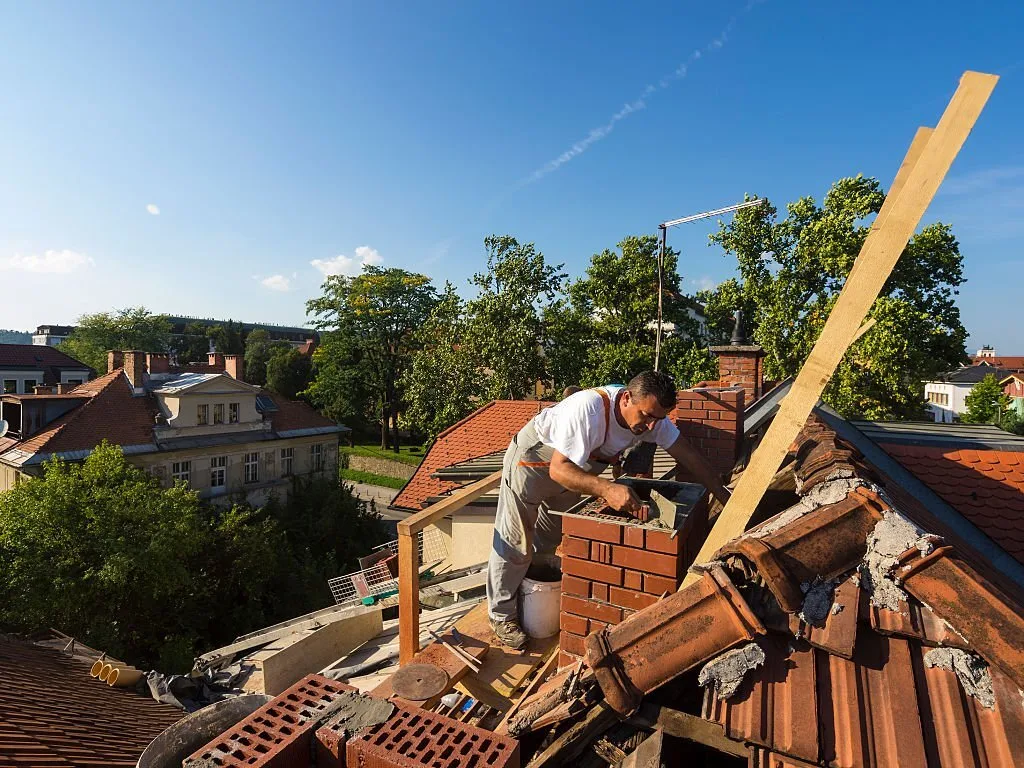
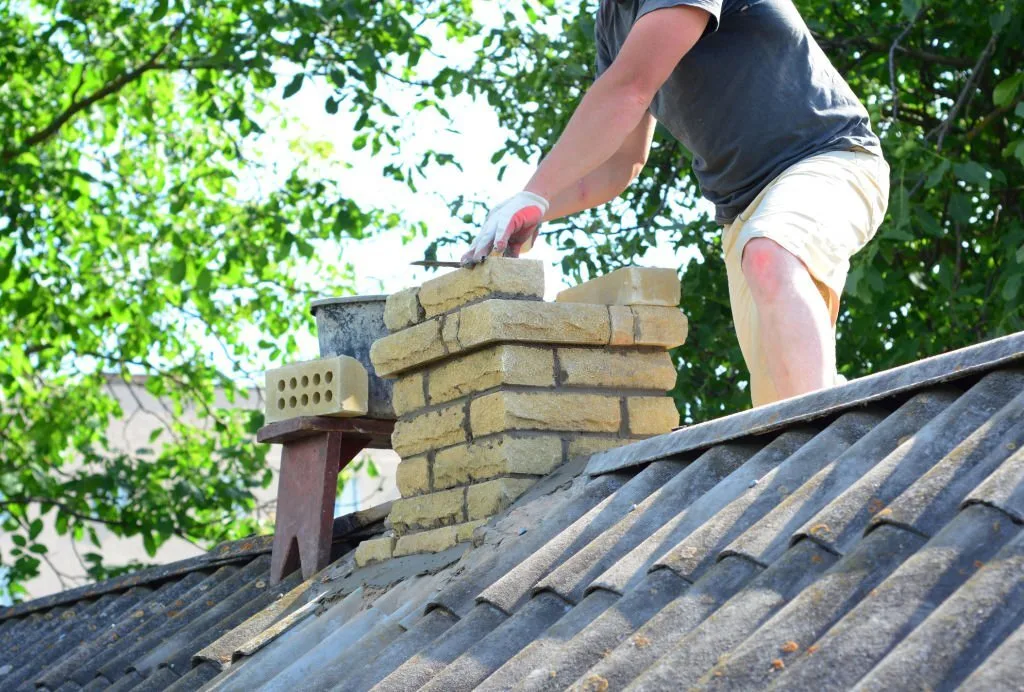
Chimney Construction in action
Planning a new fireplace or chimney? Start with the design.
Call 206-207-3974 or request a quote and we will come out, look at the site and lay out what a properly built masonry chimney involves for your home.
☎ (206) 207-3974 Request ServiceQuestions
Chimney Construction FAQ
Do I need a permit to build a new chimney in Seattle or King County?
Usually. A new masonry chimney and fireplace is typically permitted work in Seattle and across King, Pierce and Snohomish counties; we confirm the requirements for your address, and it is inspected at stages such as the footing and the completed flue. We prepare what the jurisdiction asks for and schedule the inspections as part of the job.
How is chimney construction different from a chimney rebuild?
A rebuild replaces part or all of a chimney that already exists, typically on its existing footing and footprint. Construction starts with no chimney, or a cleared site, and includes design decisions a rebuild never touches: location, footing depth, flue sizing for the new appliance and the permit for new structure.
Can you build a chimney onto an existing house, not just new construction?
Yes. Most of the new chimneys we build go onto existing homes, usually on an exterior wall for an added fireplace or wood stove. The main questions are where the footing can go, how the chimney passes the eave and roof, and whether the framing needs reinforcement around the opening.
How tall does a new chimney have to be?
Code and NFPA 211 recommend the flue exit at least three feet above the point where it passes the roof and at least two feet higher than anything within ten feet, including the ridge. Tall trees and neighboring structures can call for more height for good draft. We work this out in the design before the footing is poured.
Clay tile liner or stainless steel liner in a new chimney?
Both are sound choices. Clay tile is the traditional liner for an open masonry fireplace. Stainless steel is usually the better fit when the chimney will serve a wood stove or insert that needs a specific flue diameter, or when you want the option to change appliances later. We will recommend one based on what the chimney will actually serve.
How long does it take to build a masonry chimney?
It depends on height, the footing, weather and the inspection schedule, but expect it to run over several weeks rather than days, with a curing period before the first fire. We will give you a realistic timeline when we quote the job, and Puget Sound rain can stretch it.
Related services
Service areas
Helpful reading