
Home › Services › Chimney Rebuild
Chimney Rebuild Seattle, WA
Partial and full masonry chimney rebuilds for homes across Seattle, Tacoma and the Puget Sound when repair is no longer the honest answer.
- 25+ years in business
- CSIA certified
- Licensed, bonded & insured
Request Chimney Rebuild
Tell us what's going on — we'll confirm a time by phone or text.
Scope note: this page covers rebuilding a chimney from below the roofline — partial rebuilds down into the attic or wall, and full tear-down-and-rebuild. If only the exposed stack above the roof has failed, that is a stack rebuild, which we describe on its own page.
A chimney rebuild is the service you need when a masonry chimney has gone past the point where patching makes sense. The damaged section is taken down course by course (often from the roofline up, sometimes all the way to the foundation) and rebuilt with new brick, mortar, a new crown and a properly sized flue. It is the right call for chimneys that lean, show cracks that run through the structure, or have brick faces popping off (spalling) deep enough to reach the inside of the wall.
It is not the same as chimney restoration, which is our page for bringing a sound chimney back to good condition with tuckpointing, crown work and waterproofing while keeping the original masonry in place. It is also different from chimney brick replacement, which swaps out a handful of bad bricks in an otherwise stable structure. A rebuild starts when those approaches would only hide a problem that the structure itself has.
James Chimney Sweep has served King, Pierce and Snohomish counties for more than 25 years. We are CSIA certified and licensed, bonded and insured in Washington. Our inspection tells you plainly whether you need a rebuild or whether a smaller repair will actually hold.
Symptoms & Problems
Signs a chimney needs a rebuild, not a repair
- The chimney visibly leans or has pulled away from the house wall
- Stair-step or vertical cracks that run through multiple courses of brick
- Spalling so deep the inside of the brick or the flue liner is exposed
- Loose bricks you can shift by hand, or bricks found on the roof or ground
- Mortar joints washed out deeper than the face of the brick across a whole section
- A crown that has broken apart and let water soak the top courses for years
- A previous repair that failed within a few seasons
- Bulging or bowed sides where the flue tiles have pushed the masonry outward
How It Works
How a chimney rebuild works
Structural inspection and honest scope
We examine the chimney from the ground, the roof and the inside of the flue, check how far the damage goes, and tell you whether you need a partial rebuild from the roofline, a full tear-down, or whether restoration would be the smarter choice. You get a written scope before any work begins.
Tear-down and rebuild
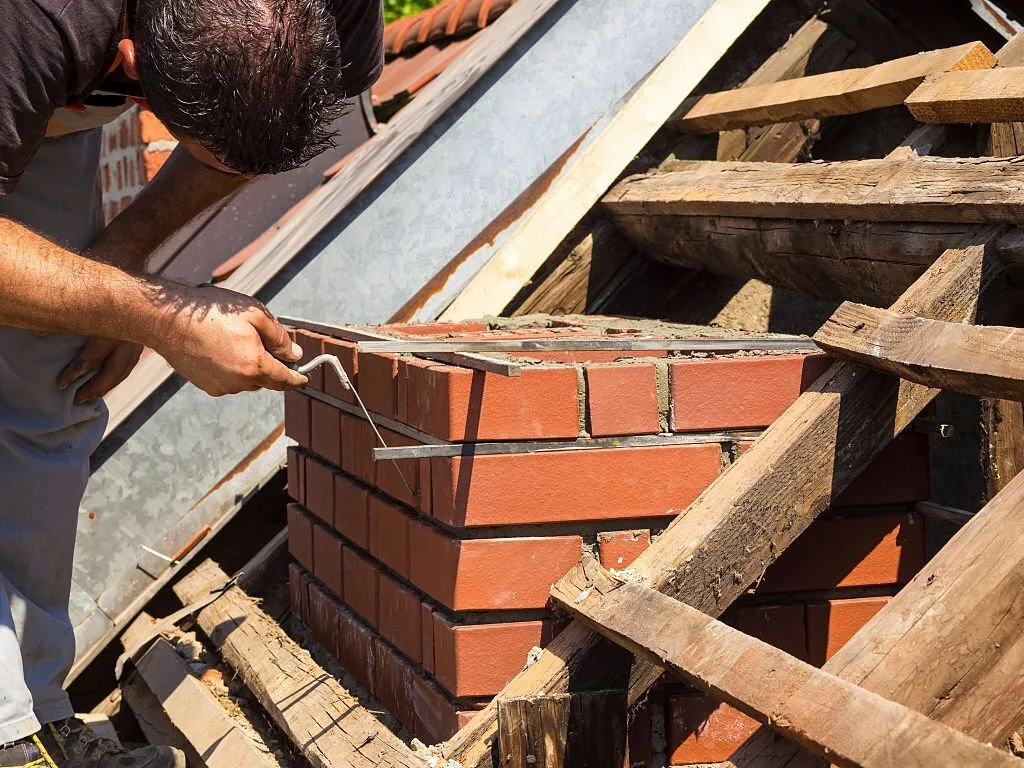
The damaged masonry is removed to sound brick (or to the foundation on a full rebuild), the roof and surrounding areas are protected, and the chimney is rebuilt with new brick, mortar matched for Northwest weather, a correctly sized flue liner, a sloped cast crown, flashing and a cap.
Final check and documentation
We verify the flue draws correctly, confirm clearances and the crown drainage, clean up the site, and give you photos and a summary of what was rebuilt so you have a record for insurance or a future sale.
Options
Rebuild options we offer
- Partial rebuild to a sound course — when damage extends below the roofline but stops at a clear point; we remove to solid brick wherever that is and rebuild from there.
- Full tear-down and rebuild — when cracking, leaning or water damage runs the full height, or when the chimney was never built on an adequate footing.
- Rebuild with a new flue liner — almost every rebuild includes a new clay or stainless liner, since the old one is usually cracked or undersized for the appliance.
- Rebuild with a crown, cap and flashing package — recommended on every rebuild so the new masonry is protected from the first rainy season onward.
Pricing
What affects the price
- How much of the chimney has to come down: roofline only, partial, or to the foundation
- Overall height of the chimney and the number of flues inside it
- Roof pitch, access and whether scaffolding or staging is needed
- Whether the flue liner needs replacement and what type is right for your appliance
- Brick type and whether we are matching an existing color, size or historic style
- Condition of the footing or foundation on a full tear-down
- Roofing and flashing repairs that become necessary once the chimney is removed
We don't publish flat prices because every chimney is different. You'll get a written quote after we look at the system — no surprises.
Timing & Safety
When a rebuild is necessary and when it is optional
A rebuild is necessary when the chimney is a structural or safety problem rather than a cosmetic one:
- The chimney leans or has separated from the house.
- Cracks run through the structure rather than along a few joints.
- Spalling has eaten through the brick to the flue.
- Bricks are loose enough to fall, putting people, the roof and cars at risk.
- The flue has shifted and can no longer be relined safely inside the existing masonry.
A rebuild may be optional when damage is limited and the structure is plumb and solid. In those cases chimney restoration (tuckpointing, a new crown and waterproofing) or chimney brick replacement may give you many more years at a lower cost. If only the stack above the roof is failing and the rest is sound, a chimney stack rebuild is the narrower service to look at. We will tell you which applies rather than sell you the larger job.
Safety considerations
A chimney that is leaning or shedding brick should be treated as an active hazard. Do not climb onto the roof to look, and keep children and parked vehicles away from the side of the house until it has been inspected. Do not use the fireplace or any appliance venting into a chimney that shows structural cracks, because a damaged flue can let heat and combustion gases reach framing.
- We protect roofing, gutters, landscaping and interior spaces before demolition begins.
- Every rebuild includes a correctly sized liner and the clearances to combustibles that NFPA 211 recommends.
- If a gas appliance vents into the chimney, gas lines and valves are only handled by a qualified technician. If you ever smell gas, leave the house and call your gas utility or 911.
- Our work is performed by a licensed, bonded and insured Washington contractor with CSIA certification.
Seattle & Puget Sound conditions
Puget Sound weather is the reason most local chimneys end up needing a rebuild rather than a repair. Eight months of rain keeps masonry saturated, moss and algae hold that moisture against the brick, and the handful of hard freezes each winter turn it into ice that shears brick faces off. Older Seattle and Tacoma homes often have chimneys built with softer brick and lime-rich mortar that absorbed decades of this cycle, and many were never capped. Closer to the water, salt air accelerates the breakdown of mortar joints. When we rebuild, we choose brick and mortar suited to wet-climate exposure, cast a sloped crown with a drip edge, and finish with a cap so the new chimney does not start the same cycle over again.
Real Work
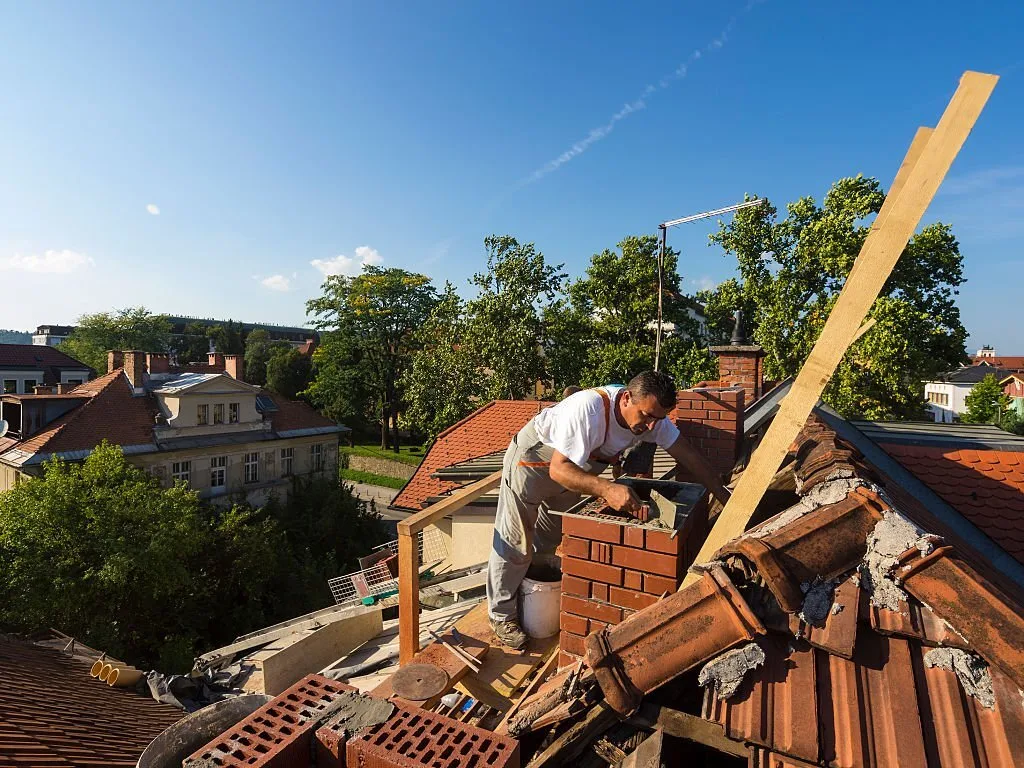
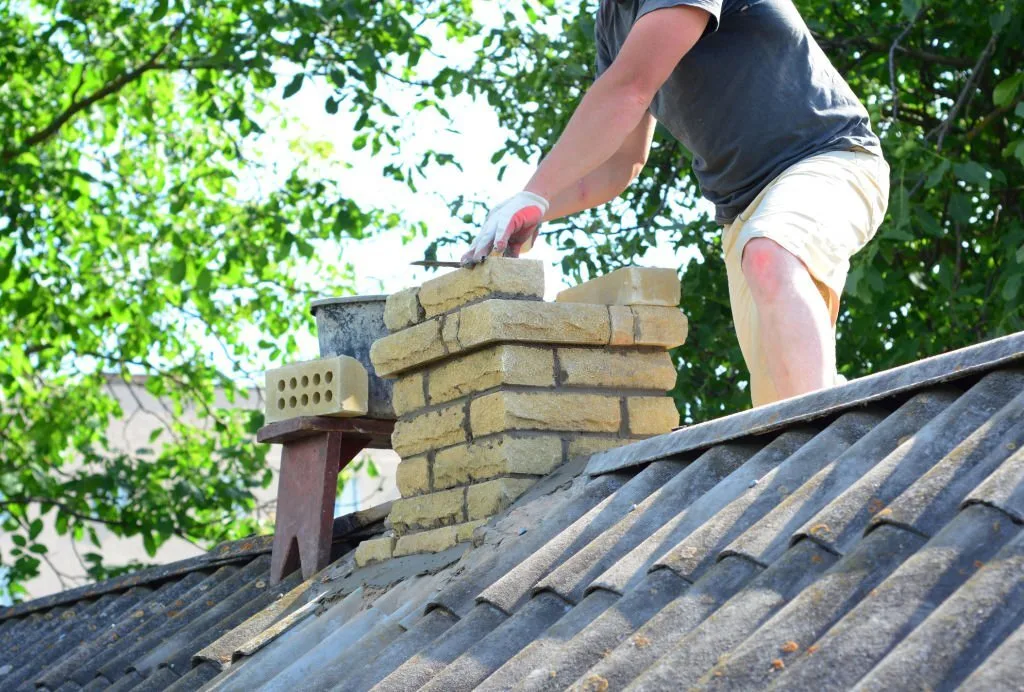
Chimney Rebuild in action
Find out if your chimney can be saved or needs to come down
Request a quote from James Chimney Sweep and get a straight answer on repair versus rebuild, anywhere in King, Pierce or Snohomish county.
☎ (206) 207-3974 Request ServiceQuestions
Chimney Rebuild FAQ
How do I know if I need a rebuild or just a repair?
The deciding factors are whether the chimney is plumb, whether cracks go through the structure, and how deep the spalling runs. Surface joint erosion and a few bad bricks can usually be repaired. Leaning, through-cracks and brick damage that reaches the flue generally cannot. Our inspection gives you a clear answer either way.
Can I keep using my fireplace until the rebuild?
If the chimney has structural cracks, a shifted flue or loose brick, we recommend not using it until the work is done. A rebuild is usually scheduled because the chimney is no longer safe to vent through, and waiting to use it is the cautious choice.
Will the new chimney match the rest of my house?
We match brick color, size and coursing as closely as available materials allow, and we can often reuse the original style of crown or corbelling. On historic homes we talk through the options before ordering material.
Does a rebuild include a new liner?
Nearly always. Once the masonry is opened up, the old liner is usually found cracked, shifted or undersized. Installing a new clay or stainless liner during the rebuild is far simpler than doing it later.
Will my homeowner's insurance cover a chimney rebuild?
That depends on your policy and the cause of the damage. We document the condition with photos and a written summary so you have what you need to file a claim, but we cannot tell you in advance what your insurer will approve.
Related services
Service areas
Helpful reading