
Home › Services › Chimney Brick Repointing
Chimney Brick Repointing Seattle, WA
Brick-compatible repointing for Seattle, Tacoma and Puget Sound chimneys, with mortar matched to the age, softness and color of your brick.
- 25+ years in business
- CSIA certified
- Licensed, bonded & insured
Request Chimney Brick Repointing
Tell us what's going on — we'll confirm a time by phone or text.
Chimney brick repointing is the removal of failed mortar joints on a brick chimney and their replacement with new mortar that is chosen to suit the brick itself. It is the right service for any brick chimney with crumbling, recessed or missing joints, but it matters most on older homes, because old brick is softer than modern brick and can be damaged by the wrong mortar. James Chimney Sweep has served King, Pierce and Snohomish counties for more than 25 years, and our technicians are CSIA certified and licensed, bonded and insured in Washington.
This page is about the brick-compatibility side of the job. Our general Chimney Repointing page covers the standard joint-grinding and repacking process for chimneys of any material. Chimney Tuckpointing covers the decorative two-tone finish that creates the look of fine, straight joints. Chimney Mortar Repair covers patching isolated cracks and small failures. Brick repointing is about selecting and matching the mortar correctly, which is what separates a repair that protects an old chimney from one that slowly destroys it.
If your chimney was built before about 1940, or you have seen brick faces flaking off after an earlier repair, this is the page for you.
Symptoms & Problems
Signs your brick chimney needs compatible repointing
- Mortar joints recessed more than a quarter inch behind the brick face
- Sandy mortar that crumbles when touched or washes out in rain
- Brick faces flaking or peeling (spalling) next to hard grey mortar from a past repair
- Hairline cracks running through the brick rather than along the joints
- Mortar color that clearly does not match the original, often bright grey patches on a buff or red chimney
- Moss or algae rooted in open joints on the weather side of the stack
- Small piles of mortar grit on the roof, in the gutter or inside the firebox
- A previous repointing that is already failing after only a few years
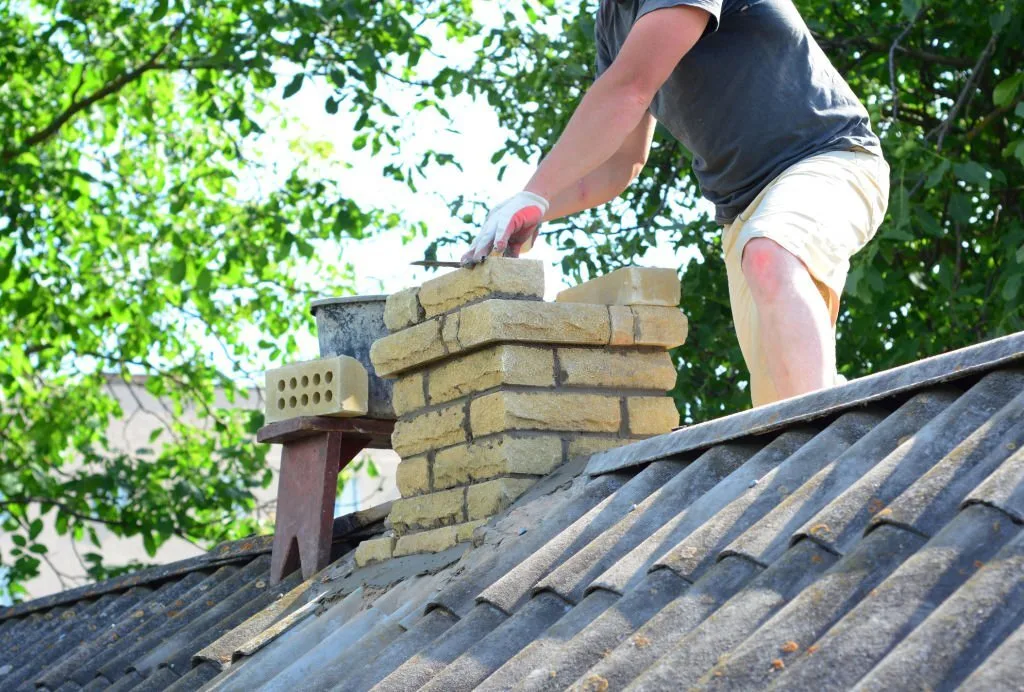
How It Works
How we repoint brick chimneys
Assess the brick and the existing mortar
We examine the chimney from the ground and from the roof, check how soft the brick is, test the old mortar for lime versus cement content, and note the joint style, color and tooling of the original work. This tells us what mortar the chimney was built with and what it can safely accept.
Remove failed joints and repoint with a matched mortar
Deteriorated mortar is cut back to a sound depth without widening the joints or chipping brick edges. We then pack a mortar that is softer than the brick, mixed and tinted to match the original, in lifts, and finish the joints to match the original profile. Joints are kept damp as they cure so lime-based mixes harden properly.
Cure check and written summary
Once the work has set, we confirm the joints are full and the finish is consistent, clean the brick faces, and give you a plain written summary of what was replaced, the mortar used, and anything else on the chimney worth watching, such as the crown or flashing.
Options
Mortar and scope options for brick chimneys
- Lime-based mortar (Type O or natural hydraulic lime) — for pre-1940s chimneys built with soft, hand-made or early machine brick. It stays slightly softer than the brick and lets moisture escape through the joint instead of through the brick face.
- Type N mortar — the usual choice for mid-century and later brick that is harder and denser. Strong enough for weather, still more forgiving than a Portland-heavy mix.
- Custom color matching — pigments and sand selection so new joints blend with the aged original mortar rather than standing out as fresh grey lines.
- Spot repointing — only the failed joints, usually on the weather face or the top few courses, when the rest of the chimney is sound.
- Full repointing with brick replacement — when spalled or cracked brick must be swapped for matched salvaged or reproduction brick before the joints are refilled.
Pricing
What affects the price
- Age and softness of the brick, which dictates the mortar type and how carefully joints must be cut
- Whether the chimney needs lime mortar, which cures more slowly and may need weather protection
- How much of the chimney needs repointing: the top few courses versus the full stack
- Number of brick that must be replaced alongside the joints
- Degree of color and profile matching required to blend with original work
- Chimney height, roof pitch and access or staging needs
- Any related work found on inspection, such as a cracked crown or lifted flashing
We don't publish flat prices because every chimney is different. You'll get a written quote after we look at the system — no surprises.
Timing & Safety
When brick repointing is necessary and when it can wait
Necessary now:
- Joints are open deep enough that water can sit in them through a Puget Sound winter.
- Brick faces are spalling beside a hard mortar repair, which will keep spreading until the incompatible mortar is removed.
- Mortar is loose enough that pieces are falling, or brick can be shifted by hand.
- Water staining is appearing on the chimney breast or ceiling near the stack.
Can usually be scheduled, not rushed:
- Shallow weathering of joints with no loose material and no water entry.
- Cosmetic color mismatch from an earlier repair on a chimney that is otherwise sound.
- Light moss on the surface of joints that are still full and firm.
If you are unsure which column you are in, a chimney inspection settles it. NFPA 211 recommends an annual inspection of chimneys and vents, and that visit is the natural time to catch joint deterioration early.
Safety considerations
Please leave the close-up inspection to us. Roof work on a wet or mossy Seattle roof is hazardous, and pressing on mortar or brick from a ladder can dislodge material. From the ground, you can safely note crumbling joints, grit in the gutter, and any lean or gap at the top of the stack, and tell us what you see when you call.
- Do not apply sealers or caulk to open joints. Trapping moisture in soft brick makes spalling worse.
- Do not patch soft old brick with hardware-store cement mortar. It is usually far harder than the brick and transfers stress into the brick face.
- If a chimney is visibly leaning, cracked through several courses, or shedding brick, keep people away from the area below it and call us.
Seattle & Puget Sound conditions
Western Washington is hard on brick chimneys in a specific way. Our long wet season keeps masonry damp for months, and when a joint is open, that moisture moves into the brick. On the colder nights we get in Seattle, Tacoma and the Snohomish foothills, that water freezes, expands and pushes the brick face off a little at a time. Soft pre-war brick is far more vulnerable to this than modern brick, and a hard Portland-cement repair makes it worse by forcing the moisture to exit through the brick rather than the joint. Moss takes hold in the same open joints and holds water against the masonry. Near the Sound, salt in the air adds another slow attack on exposed mortar. A mortar that is softer than the brick, breathable and properly cured is the right answer to all of these, which is why we treat mortar selection as the core of a brick repointing job rather than an afterthought.
Real Work
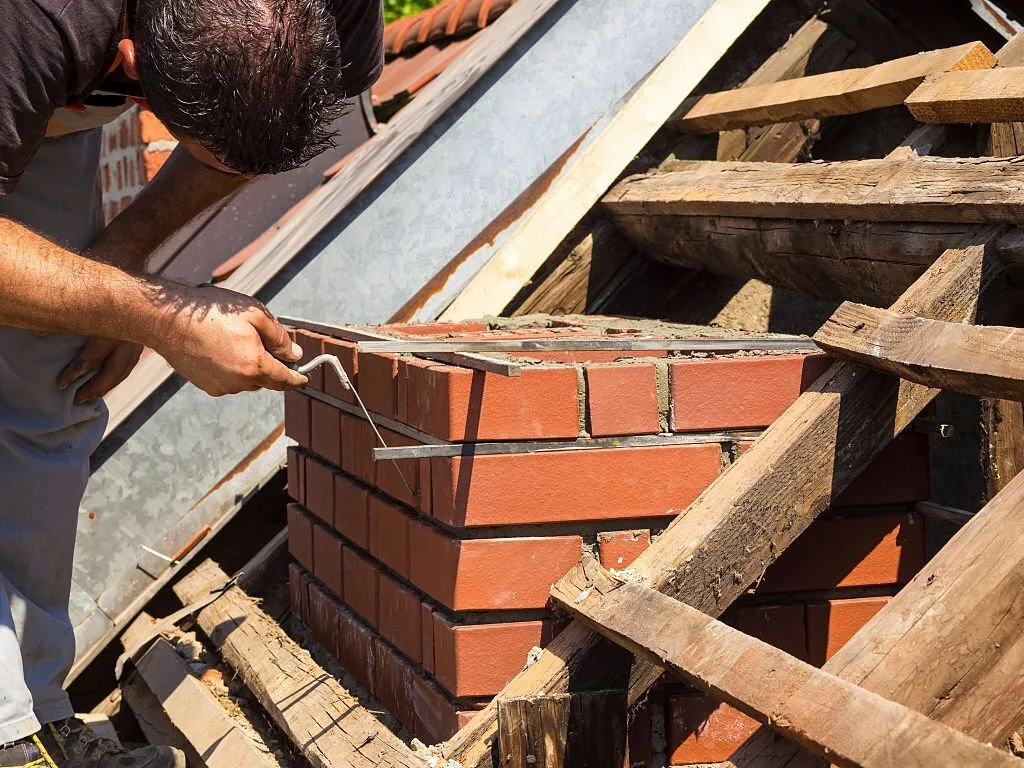
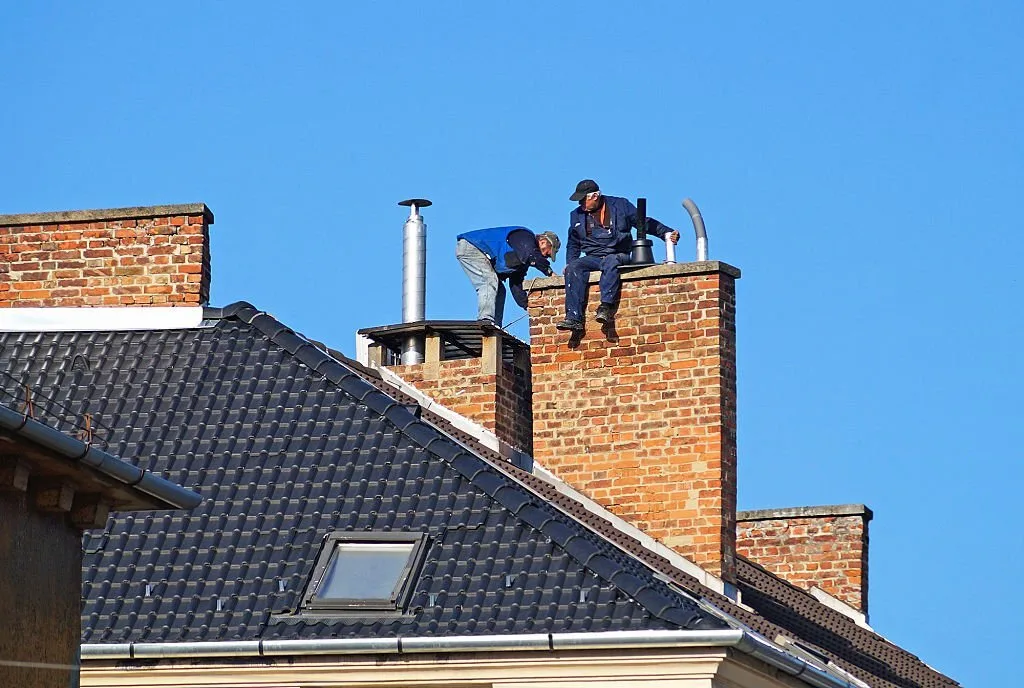
Chimney Brick Repointing in action
Give your old brick chimney the mortar it was built with
Call 206-207-3974 or request a quote, and we will assess your brick and recommend a mortar that protects it instead of harming it.
☎ (206) 207-3974 Request ServiceQuestions
Chimney Brick Repointing FAQ
Why does the mortar need to be softer than the brick?
Masonry moves a little with temperature and moisture. When the mortar is softer than the brick, the joint absorbs that movement and any cracking or weathering happens in the replaceable mortar. When the mortar is harder, the brick takes the stress instead and its face begins to flake. Repointing a joint is routine; replacing spalled brick is not.
How do you know whether my chimney needs lime mortar?
We look at the age of the house, the type of brick, and the original mortar. Pre-1940s homes in Seattle and Tacoma were usually built with lime-rich mortar and softer brick. We can also test a sample of the old mortar to confirm its makeup before choosing a mix.
Can you match the color of my existing mortar?
In most cases, yes. Color comes mostly from the sand and the binder, so we select sand and add pigment as needed, then compare cured samples against your chimney. Fresh mortar looks a shade different for a few weeks and blends in as it weathers.
A previous contractor repointed with grey cement mortar and now the brick is flaking. Can that be fixed?
Usually. We carefully remove the hard mortar without damaging the surrounding brick, replace any brick that has already lost its face, and repoint with a compatible mix. The earlier the incompatible mortar comes out, the fewer brick need replacing.
Is brick repointing the same as tuckpointing?
No. Tuckpointing is a decorative technique that uses a fine contrasting line over a color-matched base joint to create the look of thin, precise joints. Brick repointing is a structural repair focused on choosing the right mortar for the brick. We cover tuckpointing on a separate page.
What time of year is best for repointing a brick chimney in the Puget Sound area?
Mortar, and lime mortar in particular, cures best in mild, damp-but-not-pouring weather, roughly late spring through early fall. We can work outside that window with protection in place, but we will tell you honestly if waiting a few weeks will give a better result.
Related services
Service areas
Helpful reading