
Home › Services › Chimney Masonry Repair
Chimney Masonry Repair Seattle, WA
Brick and mortar restoration for chimneys across Seattle, Tacoma and the I-5 corridor, from spalled brick replacement and tuckpointing to partial rebuilds.
- 25+ years in business
- CSIA certified
- Licensed, bonded & insured
Request Chimney Masonry Repair
Tell us what's going on — we'll confirm a time by phone or text.
Chimney masonry repair restores the brick and mortar that hold your chimney together. Over time, rain soaks into the masonry, the mortar joints erode, and individual bricks begin to crack, flake and fall apart. James Chimney Sweep repairs that damage: we replace spalled brick, tuckpoint deteriorated mortar joints, seal cracks and, when the damage has gone too far for spot repairs, rebuild the worst sections of the stack. Our team serves homeowners throughout King, Pierce and Snohomish counties.
Masonry repair is for any homeowner who has noticed brick faces peeling off, crumbling mortar, white staining, or pieces of brick on the roof or in the yard. It is also for anyone whose annual chimney inspection turned up cracked or missing mortar joints. The earlier masonry problems are addressed, the smaller the repair tends to be. A few failing joints can be tuckpointed in a visit; a chimney that has been left to soak for years may need a section rebuilt.
Masonry is the outer shell of the chimney system. When it fails, water reaches the liner, the framing and the interior of your home. Keeping the brick and mortar sound protects everything behind it.
Symptoms & Problems
Signs Your Chimney Masonry Needs Repair
- Brick faces flaking, peeling or popping off (spalling)
- Crumbling, recessed or missing mortar between bricks
- Visible cracks running through bricks or along joints
- White, chalky staining on the brick (efflorescence)
- Chunks of brick or mortar on the roof, in the gutters or on the ground
- Moss or dark algae growth clinging to the chimney face
- Chimney leaning, bulging or looking out of plumb
- Water stains on the ceiling or wall around the chimney
How It Works
How We Repair Chimney Masonry
Inspection and diagnosis
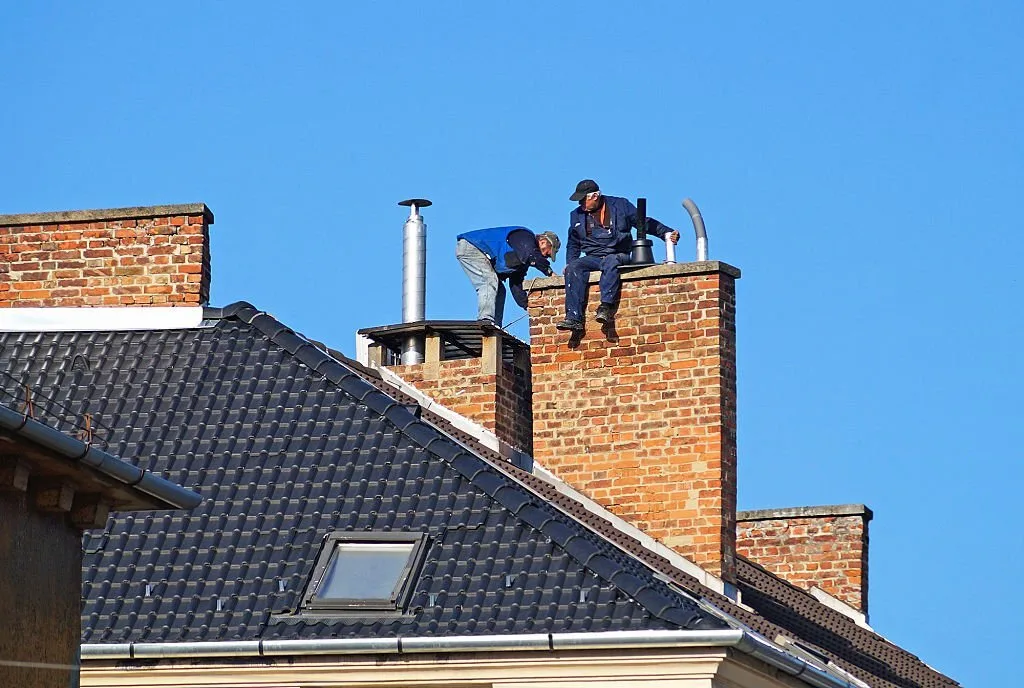
A technician examines the chimney from the ground and the roof, checks the crown, flashing and cap, and probes mortar joints to find out how deep the deterioration goes. Water is almost always the root cause, so we look for where it is getting in, not just where the damage shows.
Repair work
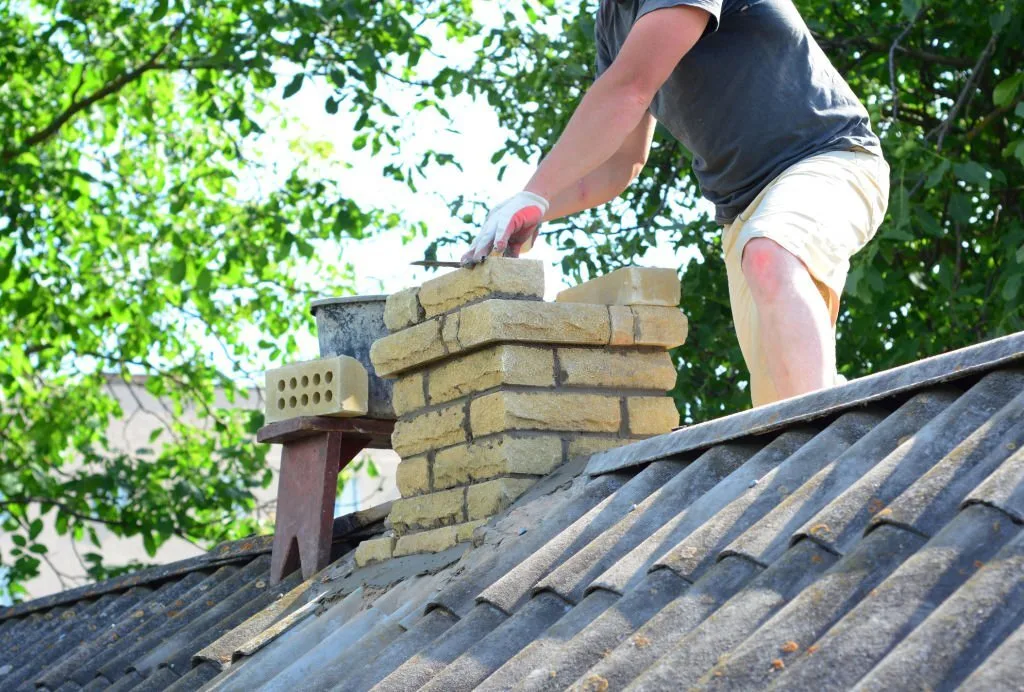
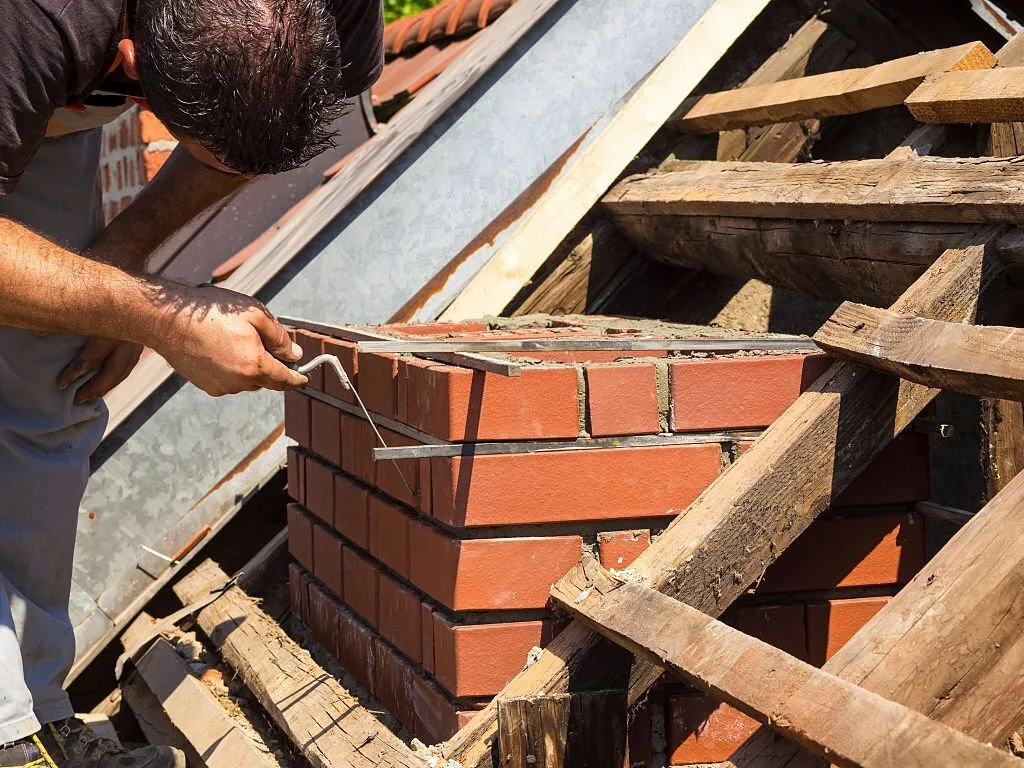
Depending on what we find, the work may include tuckpointing (grinding out failed mortar and repacking the joints with fresh mortar), cutting out and replacing spalled bricks, sealing cracks, or dismantling and rebuilding a damaged section of the stack. Matching mortar and brick is part of the job so the repair blends in and ages with the original.
Report and next steps
You receive a clear summary of what was repaired, what condition the rest of the chimney is in, and whether follow-up work such as a new crown, cap or water repellent would help keep the masonry dry going forward.
Options
Masonry Repair Options
- Tuckpointing (repointing) — when the bricks are sound but the mortar joints have eroded, cracked or fallen out. Old mortar is ground out to a proper depth and replaced with new mortar.
- Spalled brick replacement — when individual bricks have lost their faces or crumbled. The damaged units are cut out and replaced with matching brick set in fresh mortar.
- Crack repair — for isolated cracks in brick or joints where the surrounding masonry is still solid.
- Partial rebuild — when the upper courses of the chimney have deteriorated beyond spot repair, are loose, or are leaning. The failed section is taken down to sound masonry and rebuilt.
- Crown repair and water repellent — often paired with masonry repair to stop the water that caused the damage in the first place.
Pricing
What affects the price
- Extent of the damage: a few joints versus an entire face or section
- Type of repair needed: tuckpointing, brick replacement, or a partial rebuild
- Chimney height and roof pitch, which affect access and staging
- How closely the existing brick and mortar need to be matched
- Whether the crown, cap or flashing also need attention
- Amount of moss, staining or loose material that must be cleaned off first
- Condition of the flue liner discovered during inspection
We don't publish flat prices because every chimney is different. You'll get a written quote after we look at the system — no surprises.
Timing & Safety
When Masonry Repair Is Necessary
Some masonry problems can wait for a convenient season. Others should not.
- Necessary now: loose or falling brick, a leaning or bulging stack, cracks wide enough to see daylight through, water actively coming into the house around the chimney, or an inspection that found mortar joints open to the flue.
- Schedule soon: widespread spalling, mortar recessed well behind the brick face, or efflorescence that keeps returning. These signs mean water is inside the masonry and the damage will accelerate through the next wet season.
- Optional or preventive: minor surface weathering on an otherwise sound chimney, or applying a breathable water repellent after repairs to slow future absorption.
NFPA 211 recommends that chimneys be inspected annually. That inspection is the best way to catch masonry deterioration while it is still a tuckpointing job rather than a rebuild.
Safety considerations
Deteriorated masonry is more than a cosmetic issue.
- Loose brick can fall from the stack onto the roof, walkways or people below.
- Open mortar joints can let heat and combustion gases escape the flue toward wood framing and the interior of the home.
- Water that reaches the liner can cause it to crack or corrode, and water in the framing leads to rot and mold.
- A chimney that is leaning or separating from the house should not be used until a technician has evaluated it.
Please do not climb onto the roof to inspect or patch masonry yourself. Our team handles roof access with proper equipment, and a proper assessment is done in person, never from photos alone.
Seattle & Puget Sound conditions
Puget Sound weather is hard on chimney masonry. Brick and mortar are porous, and our long wet season keeps them saturated for months. When temperatures drop below freezing overnight, as they do in Seattle, Tacoma and especially the Snohomish County foothills, the water inside the masonry expands. Repeated freeze-thaw cycles push brick faces off and break mortar apart. Moss and algae make it worse by holding moisture against the brick, and their roots work into the joints. North-facing chimney faces and shaded stacks under big firs tend to show damage first. Getting masonry repaired before the fall rains arrive gives the new mortar time to cure and keeps water out through the coldest part of the year.
Real Work
Chimney Masonry Repair in action
Stop the Water Before It Takes the Chimney
Call 206-207-3974 or email info@jameschimneysweep.com to request a quote for chimney masonry repair anywhere in King, Pierce or Snohomish County.
☎ (206) 207-3974 Request ServiceQuestions
Chimney Masonry Repair FAQ
What is tuckpointing and how is it different from just patching mortar?
Tuckpointing means grinding the failed mortar out of the joints to a proper depth and repacking them with new mortar. Smearing fresh mortar over the surface of old, crumbling joints looks fine for a season but fails quickly because it has nothing solid to bond to. Done correctly, tuckpointing restores the strength and weather seal of the joint.
Can you replace just the damaged bricks, or does the whole chimney need rebuilding?
In most cases individual spalled bricks can be cut out and replaced while the surrounding masonry stays in place. A rebuild is only recommended when a section is loose, leaning, or so deteriorated that there is no sound brick left to tie into. A technician will tell you which situation you have after inspecting the chimney.
Why is my chimney brick flaking off?
Flaking, called spalling, happens when water soaks into the brick and then freezes and expands, breaking the face off. It is common in the Puget Sound area because the masonry stays wet for so long. Older or softer brick, a cracked crown, missing cap or failed mortar joints all speed it up.
Will the new brick and mortar match my existing chimney?
We make an effort to match brick color, size and texture and to tint and tool the mortar to blend with the original. New material will look slightly fresher at first and weathers in over time. On older homes a perfect match is not always possible, and we will be honest about that before work starts.
What time of year is best for chimney masonry repair?
Mortar cures best in mild, dry weather, which in western Washington usually means late spring through early fall. Urgent repairs such as loose brick or active leaks can be handled in other seasons with appropriate precautions, but planned work is easiest to schedule before the rains return.
Does masonry repair fix chimney leaks?
Often it is part of the fix, but not always all of it. Leaks frequently come from a cracked crown, failed flashing or a missing cap rather than the brick itself. That is why the repair starts with an inspection that looks at the whole top of the chimney, so you are not paying to repair brick while the real entry point keeps letting water in.
Related services
Service areas
Helpful reading