
Home › Services › Chimney Repointing
Chimney Repointing Seattle, WA
Grinding out and repacking deteriorated mortar joints on chimneys across Seattle, Tacoma and King, Pierce and Snohomish counties.
- 25+ years in business
- CSIA certified
- Licensed, bonded & insured
Request Chimney Repointing
Tell us what's going on — we'll confirm a time by phone or text.
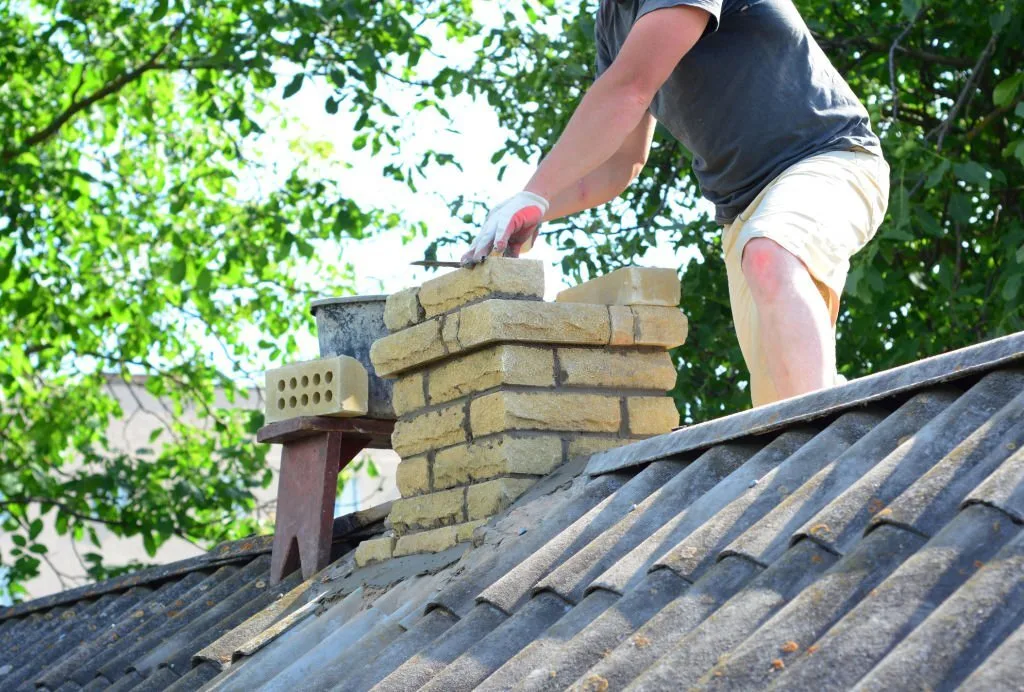
Chimney repointing is the renewal of worn-out mortar joints between the bricks or stone of a chimney. The old, crumbling mortar is ground or raked out to a set depth, the joints are cleaned, and fresh mortar is packed in and tooled to shed water. It is the standard fix for a chimney whose bricks are still sound but whose joints have eroded, cracked or washed out, and it is the main way to stop rain from soaking into the masonry before the bricks themselves start to fail.
This page covers repointing as a whole-chimney decision: how much of the stack actually needs work, and whether a full repoint or spot repointing makes sense. Our chimney tuckpointing page covers the related technique where a contrasting fillet is struck into the joint for a finer visual line; tuckpointing starts with the same grind-and-repack work but adds a decorative finishing step. Our chimney mortar repair page is for smaller, localized problems such as a few cracked joints or a loose cap bed, and our chimney brick repointing page goes deeper on the brick-specific side, including matching mortar to older soft brick.
James Chimney Sweep has served Seattle and the Puget Sound for more than 25 years. We are CSIA certified and licensed, bonded and insured in Washington, and we can tell you honestly whether your chimney needs repointing, how much of it, or whether something else is going on.
Symptoms & Problems
Signs your chimney needs repointing
- Mortar joints recessed well behind the brick face, especially on the weather side
- Sand or mortar crumbs collecting on the roof, flashing or ground below the chimney
- Joints that scratch out easily with a key or fingernail
- Hairline or stepped cracks running through the joints
- Green moss or black algae rooted in the joints rather than just on the brick
- White mineral staining (efflorescence) on the exterior brick
- Damp patches or staining on interior walls or ceiling near the chimney
- Bricks that have shifted slightly or feel loose near the top of the stack
How It Works
How we repoint a chimney
Inspect and map the joints
We examine the whole exposed stack, not just the obvious bad spot. We probe joints on every face, check the crown, flashing and cap, and note which areas are soft, which are merely weathered, and which are still sound. That map is what lets us recommend full or spot repointing rather than guessing.
Grind out, clean and repack
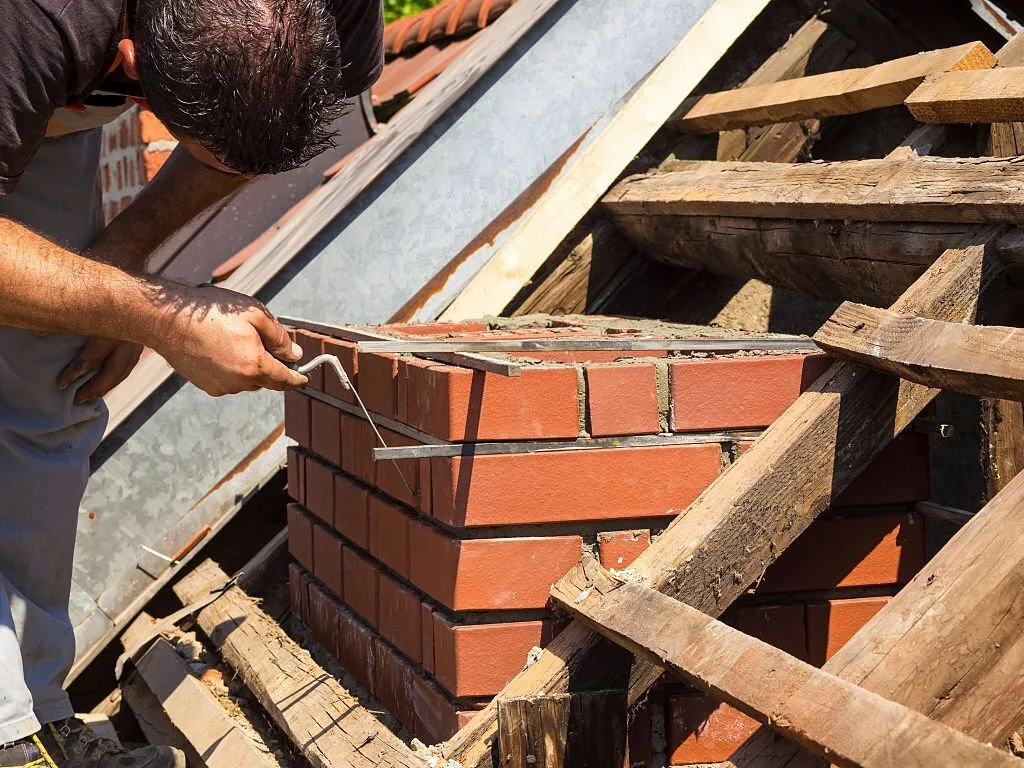
Failed mortar is ground or raked out to a consistent depth, typically to where sound material begins. Joints are brushed and dampened so the new mortar bonds instead of drying out too fast. We pack the joints in lifts, then tool them to a profile that matches the original and sheds water.
Cure, review and report
New mortar needs time and protection to cure properly, which matters in our wet climate. We review the finished work with you, point out anything else we observed such as crown cracks or flashing gaps, and give you a written summary so you know what was done and what, if anything, to plan for next.
Options
Full repointing vs spot repointing
- Full repointing — every joint on the exposed chimney is ground out and repacked. This applies when deterioration is widespread, when the mortar is consistently soft across several faces, or when previous patch jobs have left a mix of different mortars that are now failing at different rates.
- Spot repointing — only the failed joints are renewed, usually a section on the weather-facing side or the top few courses near the crown. This is the right call when the rest of the joints are still hard and well-bonded and the damage is clearly concentrated.
- Repointing above the roofline only — the portion of the chimney exposed to rain and wind takes most of the punishment. When the interior and below-roof sections are protected and sound, limiting the work to the exposed stack is often sensible.
- Repointing with crown or cap work — if the crown is cracked or the cap is missing, repointing alone will not stop water entry. We will recommend pairing the joint work with crown repair so the new mortar is not undermined from above.
- Tuckpointing finish — if you want the repaired joints to carry a defined, contrasting line for appearance, that is the tuckpointing approach covered on its own page. It is an add-on to repointing, not a replacement for it.
Pricing
What affects the price
- How much of the chimney needs work: spot repairs on one face versus a full repoint of every joint
- Height of the stack above the roofline and the roof pitch, which determine the staging and access required
- Depth of mortar loss, since deeper grinding and more lifts of new mortar take longer
- Brick or stone type and age, which affects the mortar mix we need to match for a sound bond
- Condition of the crown, cap and flashing and whether those need to be addressed at the same time
- Number of chimney faces exposed to weather and whether all sides are accessible from the roof
- Whether a tuckpointing finish or color-matched mortar is requested
We don't publish flat prices because every chimney is different. You'll get a written quote after we look at the system — no surprises.
Timing & Safety
When repointing is necessary, and when it can wait
Repointing is necessary when the mortar has lost its ability to keep water out of the masonry. Once joints are recessed, cracked or crumbling, rain enters the brick, and in the Puget Sound that water rarely gets a chance to dry out before the next storm. Left alone, the bricks spall, the stack can lean, and the repair turns from repointing into a partial rebuild. If joints are soft enough to scratch out or you see mortar debris accumulating, it is time.
- Necessary: joints recessed or missing on any face, mortar that crumbles under light pressure, loose bricks near the top, water staining inside the home traced to the chimney.
- Recommended soon: widespread hairline cracking in the joints, moss rooted in the joints, efflorescence that keeps returning after cleaning.
- Optional for now: light surface weathering where the joints are still hard and flush, or a single shallow crack in an otherwise sound stack. This is usually a mortar repair rather than a repoint, and we will say so.
NFPA 211 recommends an annual chimney inspection. Catching soft joints during that inspection is the cheapest point at which to deal with them.
Safety considerations
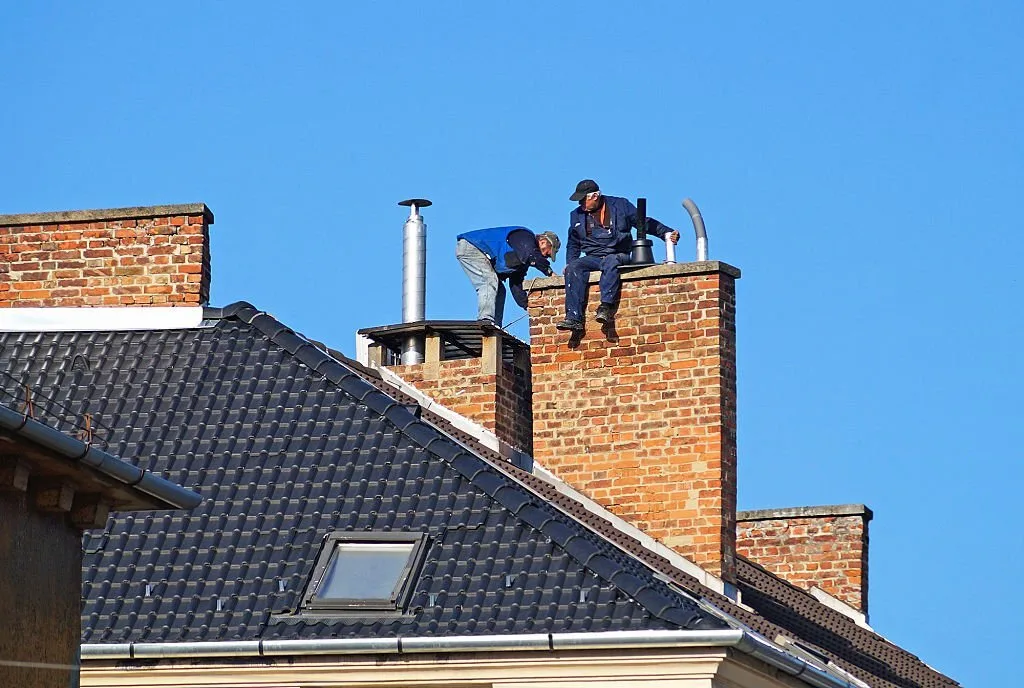
Repointing is roof work on a structure that may already be weakened, so it is not a good candidate for DIY. Please do not climb onto the roof to check the joints yourself; we can assess them from the ground and from the roof with proper fall protection. A few more things worth knowing:
- Mortar that is too hard for old brick can do more harm than good, forcing moisture to exit through the brick face and causing it to flake. Matching the mix to the masonry matters.
- Loose bricks near the top of a stack can fall during a storm or during unskilled prying. If you notice shifted bricks, keep people and vehicles clear of the area below until it is assessed.
- If the chimney serves a gas appliance, the venting must remain intact. If you ever smell gas, leave the house and call the gas utility or 911. Gas lines and valves are only serviced by a qualified technician.
- Repointing the outside does not fix a damaged flue liner. If the inspection shows liner problems, we will tell you, since that affects whether the chimney is safe to use.
Seattle & Puget Sound conditions
Seattle and the Puget Sound are hard on mortar joints in a specific way. Our rain is not heavy but it is relentless, so joints stay damp for months at a stretch and moss takes root in any recess it finds, holding even more moisture against the masonry. A few hard freezes each winter then expand that trapped water and push the joints apart a little more each year. Chimneys near the Sound, in West Seattle, Tacoma and the island communities, also pick up salt from the air, which accelerates the breakdown of weaker mortar. The south and southwest faces that take the prevailing weather usually fail first, which is exactly why the full-versus-spot question comes up so often here: it is common for one side of a stack to need a complete repoint while the lee side is still fine. Timing matters too. New mortar cures best in dry, mild weather, so late spring through early fall is the preferred window, though we can work around our weather with protection when the job cannot wait.
Real Work
Chimney Repointing in action
Find out how much of your chimney actually needs repointing
Call 206-207-3974 or request a quote and we will map the joints, show you what is sound and what is not, and recommend full or spot repointing honestly.
☎ (206) 207-3974 Request ServiceQuestions
Chimney Repointing FAQ
How do I know if my chimney needs full or spot repointing?
It comes down to how widespread the soft joints are. If probing shows failure on most faces or across many courses, a full repoint gives you a uniform, durable result. If the damage is limited to one weather-facing side or the top few courses and the rest is hard and flush, spot repointing is the honest recommendation. We map the joints during the inspection and show you what we found.
What is the difference between repointing and tuckpointing?
Repointing is the structural work of removing failed mortar and packing in new mortar. Tuckpointing starts the same way but finishes with a thin, contrasting line struck into the joint for a crisp appearance. If your goal is to stop water and stabilize the masonry, you need repointing. Tuckpointing is a cosmetic finish on top of that, and we cover it on a separate page.
How deep do you grind out the old mortar?
Deep enough to reach sound material and give the new mortar enough bite to bond, generally a depth of at least two to two and a half times the joint width. Grinding too shallow is the most common reason a repoint fails early, because the new skim of mortar has nothing to hold onto.
Can you repoint a chimney in the rain?
Fresh mortar needs to cure without being washed out or frozen, so we prefer dry, mild days and we schedule around forecasts. If a chimney is actively leaking and cannot wait, we can tent or cover the work area, but we will tell you if conditions make it better to hold off a few days.
Will repointing stop my chimney leak?
Only if the joints are where the water is getting in. Leaks often come from a cracked crown, a missing cap or failed flashing, sometimes in combination with bad joints. Our inspection looks at all of those so you are not paying to repoint a chimney that is actually leaking at the flashing.
How long does repointing take?
A spot repoint of one face can often be done in a day. A full repoint of a tall stack with deep grinding and multiple faces can take several days, including cure time between stages. We give you a schedule when we quote the job.
Related services
Service areas
Helpful reading