
Home › Services › Chimney Mortar Repair
Chimney Mortar Repair Seattle, WA
Targeted repair of cracked, crumbling or missing mortar on chimneys across Seattle, Tacoma and King, Pierce and Snohomish counties.
- 25+ years in business
- CSIA certified
- Licensed, bonded & insured
Request Chimney Mortar Repair
Tell us what's going on — we'll confirm a time by phone or text.
Chimney mortar repair is the localized fix for a chimney whose masonry is mostly sound but has a few problem spots: a handful of cracked joints, a brick or two that has worked loose, a patch near the cap where mortar has crumbled out. We grind out the failed joints, re-mortar the loose units and fill the gaps with a mortar matched to the original, stopping a small problem before rain turns it into a big one.
This is deliberately the smaller-scope option. Chimney repointing, covered on its own page, means cutting out and replacing the joints across the whole chimney or an entire face; tuckpointing adds a decorative two-tone finish on top of that. Mortar repair addresses specific failed areas only, which is why it costs less and takes far less time, and also why it is only the right answer when the rest of the mortar is genuinely still sound.
James Chimney Sweep has served Seattle, Tacoma and the Puget Sound for more than 25 years. We are CSIA certified and licensed, bonded and insured in Washington, and we will tell you honestly whether a spot repair will hold or whether you would be paying twice by avoiding a larger job.
Symptoms & Problems
Signs Your Chimney Needs Mortar Repair
- Hairline or open cracks in a few mortar joints, usually near the top of the stack
- Mortar that crumbles or powders when touched, but only in isolated spots
- One or two bricks that rock, shift or have slipped out of line
- Small chunks of mortar on the roof, in the gutter or at the base of the chimney
- A single joint that stays damp long after the rest of the chimney has dried
- Moss or small plants rooting in a joint where mortar has fallen out
- A gap opening where the chimney meets the crown or the flashing line
- A visible hole in a joint on an otherwise tight, clean-looking chimney
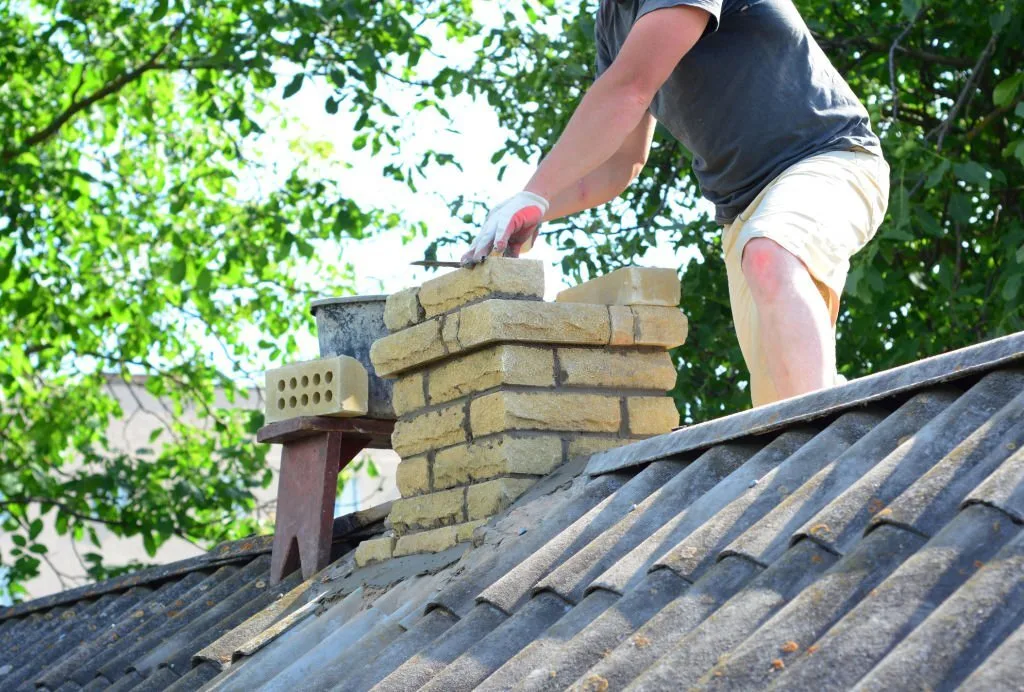
How It Works
How We Repair Chimney Mortar
Inspect and map the failed areas
We examine every face of the chimney, probe the joints to find which are actually soft versus just weathered on the surface, and check the crown, cap and flashing, since a leak above is often what washed the mortar out. If the soft joints add up to a large share of the chimney, we tell you at this stage that repointing is the honest recommendation.
Remove the failed mortar and rebuild the joint
Damaged mortar is ground or raked out to a sound depth so the new material has something to bond to; smearing fresh mortar over a crumbling joint fails within a season. Loose bricks are pulled, cleaned and reset in a full bed. We match the new mortar's color, texture and hardness to the existing joints so the repair blends in and does not damage the brick around it.
Cure, check and report
Joints are tooled to match the original profile and protected while they cure. You receive a written summary with photos of what was repaired, what we saw elsewhere on the chimney, and a realistic note on when the rest of the mortar will need attention.
Options
Mortar Repair Options
- Crack filling and joint patching — for a small number of cracked or hollow joints on a chimney where most of the mortar is still hard and well bonded.
- Re-mortaring loose bricks — when individual bricks have shifted or come loose but are intact and can be cleaned and reset in place.
- Localized area repair — for a concentrated failed patch, often the top few courses or the weather-facing corner, repaired as one section while the rest is left alone.
- Crown and cap edge sealing — when the failing mortar is at the junction with the crown; addressing the water source at the same time keeps the repair from being undone.
- Upgrade to repointing — if our inspection finds widespread soft joints, we quote full repointing instead, because a scattered series of patches on a failing chimney is money spent twice.
Pricing
What affects the price
- Number and size of the failed areas that need to be cut out and rebuilt
- Whether loose bricks need to be reset or only joints need filling
- Chimney height, roof pitch and how the work area is safely reached
- Depth of mortar removal required to reach sound material
- Matching a specialty or historic mortar mix versus a standard blend
- Whether the crown, cap or flashing needs attention at the same time
- Access difficulty on steep, multi-story or hard-to-reach chimneys common in older Seattle neighborhoods
We don't publish flat prices because every chimney is different. You'll get a written quote after we look at the system — no surprises.
Timing & Safety
When Spot Repair Is Enough — and When It Is a False Economy
Mortar repair is the right scope when the damage is genuinely local: the failed joints are confined to a small, identifiable part of the chimney and the surrounding mortar is hard when probed.
- Spot repair makes sense when: only a few joints have failed; loose bricks are isolated and undamaged; the problem is clearly traced to one cause such as a crown crack; or the chimney was repointed in the last couple of decades and has simply developed a weak spot.
- Spot repair becomes a false economy when: soft joints are scattered across multiple faces; mortar is sandy and recessed almost everywhere you look; bricks are spalling as well as loose; or you have already had patches done more than once. Each patch then bonds to failing mortar beside it, and you pay for repeated visits before paying for full chimney repointing anyway.
- Call sooner rather than later: a cracked joint is a cheap fix this year. Left open through a wet Puget Sound winter, water gets behind the brick, the crack widens, the neighboring joints go, and next year's job is repointing.
We tell you which side of that line your chimney is on before any work starts.
Safety considerations
Deteriorated mortar is more than a cosmetic issue. Open joints let rain into the chimney body, where it saturates the brick and the liner behind it; in a freeze, that water expands and breaks the masonry apart from the inside. Loose bricks near the top of a stack can fall, and a chimney that loses enough mortar can lean or partially collapse.
- Please do not climb onto the roof to inspect or patch joints yourself. Wet, mossy Seattle roofs are a serious fall hazard, and surface patching with the wrong product usually traps water rather than keeping it out.
- Stop using the fireplace if bricks are loose or you see daylight through a joint until the chimney has been inspected.
- NFPA 211 recommends an annual chimney inspection; that is when most mortar problems are caught while a spot repair is still enough.
- We only use mortar compatible with your brick, since a mix that is too hard can crack the brick faces over time.
Seattle & Puget Sound conditions
Mortar in the Puget Sound fails in a particular way. Our long wet season keeps joints damp for months, and moss and lichen root into any joint that has gone slightly soft, holding water against it and prying it open. The weather-facing side of a chimney, usually south or southwest toward the prevailing rain, tends to go first while the sheltered side still looks fine, which is exactly the pattern that makes localized repair worthwhile here. Cold snaps are not constant here, but when they come after weeks of rain the freeze-thaw damage to a saturated joint is rapid. Many older homes across King, Pierce and Snohomish counties also have chimneys built with softer lime-based mortar, and repairing those with a modern hard mix can do more harm than good, so matching the mortar is part of every repair we do.
Real Work
Chimney Mortar Repair in action
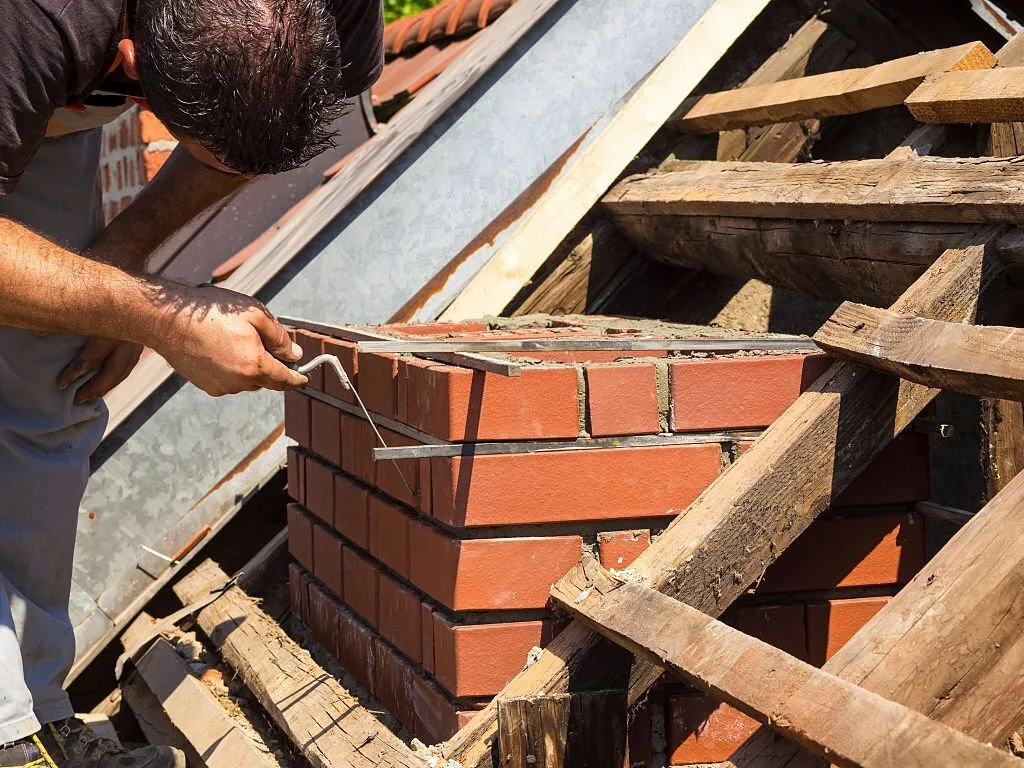
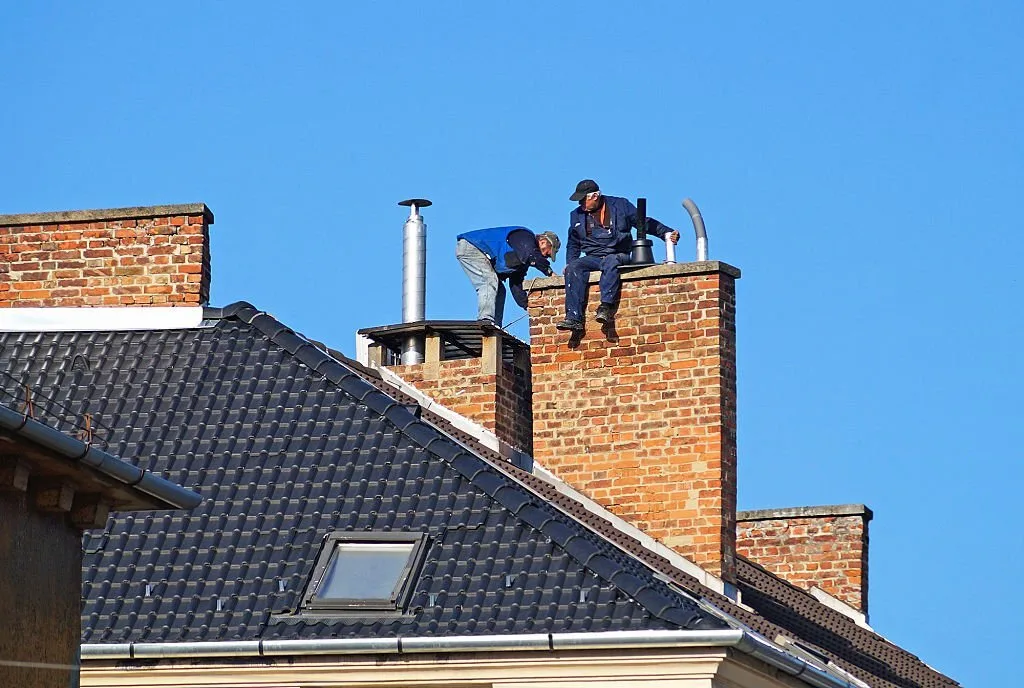
Fix the Cracked Joints Before the Rain Finds Them
Request a quote for chimney mortar repair anywhere in Seattle, Tacoma or the Puget Sound by calling 206-207-3974, Sunday through Friday, 7am to 8pm.
☎ (206) 207-3974 Request ServiceQuestions
Chimney Mortar Repair FAQ
What is the difference between chimney mortar repair and repointing?
Mortar repair fixes specific failed joints or loose bricks and leaves the sound mortar alone. Repointing removes and replaces the joints across the whole chimney or a full face. Repair is smaller, faster and less expensive, but it only works when the rest of the chimney's mortar is still in good condition.
Can a few cracked joints really cause a leak inside the house?
Yes. A single open joint above the roofline can channel rain into the chimney body, where it runs down behind the brick and shows up as staining on the ceiling or a damp smell near the fireplace. Fixing the joint early is far cheaper than repairing the interior damage later.
Will the new mortar match my existing chimney?
We match color, texture and joint profile as closely as possible, and more importantly we match hardness so the repair does not damage the surrounding brick. A fresh repair is usually visible for a few months and weathers in over time.
Can you repair mortar in the rain?
Mortar needs protection from heavy rain while it sets, so we schedule around the forecast and cover fresh work when showers are possible. Because our Sun to Fri hours run 7am to 8pm, we can usually find a dry window even in the wetter months.
How long does a chimney mortar repair take?
Most localized repairs are finished in a single visit. The exact time depends on how many joints are cut out, whether bricks are being reset and how the chimney is accessed. We tell you the expected duration when we quote the job.
Do I need a full inspection before a mortar repair?
We inspect the entire exterior of the chimney before quoting, because the point of a spot repair is confirming the rest of the mortar is sound. A flue inspection can be added to the same visit if you want one.
Related services
Service areas
Helpful reading