Home › Services › Chimney Cap Repair
Chimney Cap Repair Seattle, WA
Repair of bent, loose, clogged or damaged chimney caps for homeowners across Seattle, Tacoma and King, Pierce and Snohomish counties.
- 25+ years in business
- CSIA certified
- Licensed, bonded & insured
Request Chimney Cap Repair
Tell us what's going on — we'll confirm a time by phone or text.
Chimney cap repair is the fix for a cap that is still basically sound but no longer doing its job: a lid bent by wind or a fallen branch, mesh that has torn or rusted open in one spot, a screen so packed with creosote and debris that smoke backs up, or a cap that has worked loose and rattles, tilts or slides on the flue. If the body of your cap is intact and only one part has failed, we can usually fix that part on the spot rather than sell you a new cap.
This page is about repairing the cap you already have. If your chimney has no cap at all, that is Chimney Cap Installation. If the cap is rusted through, crushed or missing pieces that cannot be sourced, that is Chimney Cap Replacement, where the whole unit is swapped out. Most calls we get for a "broken cap" in Seattle fall somewhere between those two, and the honest answer depends on what we find when we look at it.
James Chimney Sweep has served the Puget Sound for more than 25 years. We are CSIA certified and licensed, bonded and insured in Washington. Our technicians inspect the cap, the flue tile or liner it sits on, and the crown around it, then tell you plainly whether a repair will hold or whether you are better off replacing.
Symptoms & Problems
Signs your chimney cap needs repair
- Cap rattles, clanks or shifts in the wind
- Lid is visibly bent, dented or tilted to one side
- Mesh screen has a tear, a rusted-out hole or a pushed-in section
- Smoke drifts back into the room because the screen is clogged
- Birds, squirrels or raccoons have gotten in despite the cap
- Water drips or stains appear near the top of the firebox or damper after rain
- Screws or clamp bolts are missing, stripped or badly rusted
- Cap has slid down or is sitting crooked on the flue tile
How It Works
How we repair a chimney cap
Inspect the cap and what it sits on
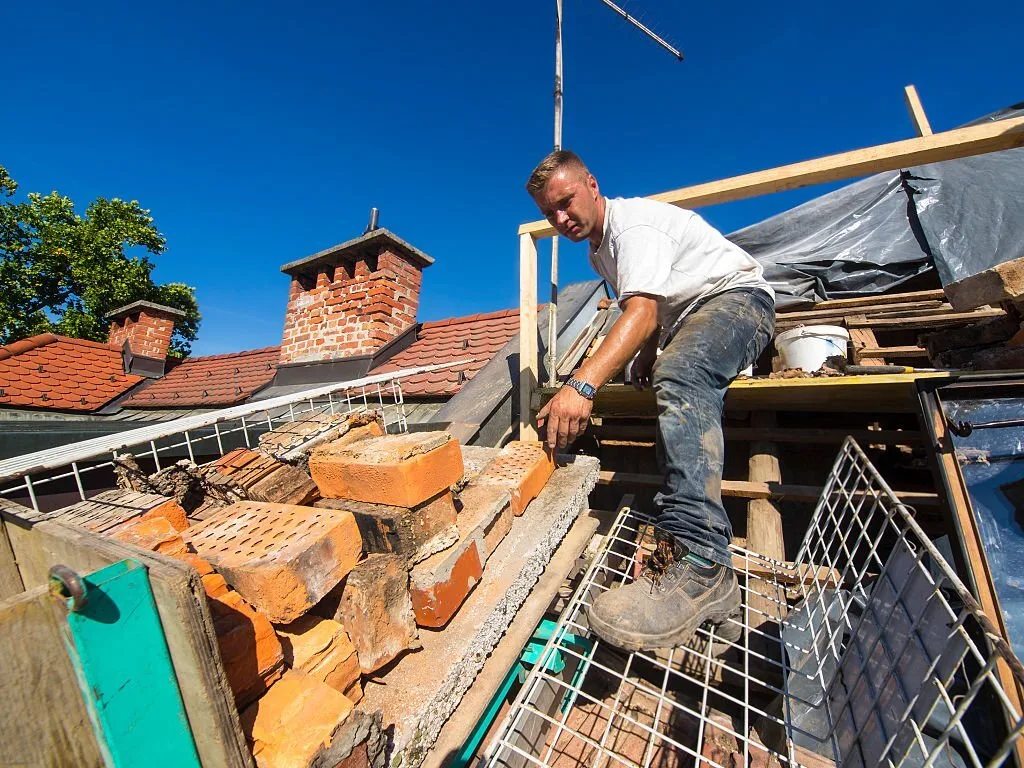
We examine the cap from the roof: the lid, the mesh, the base or collar, and every fastener. We also check the flue tile, liner top and crown, because a cap that keeps loosening often points to a cracked tile or a crumbling crown rather than a bad cap. We photograph what we find and show you before any work starts.
Make the repair
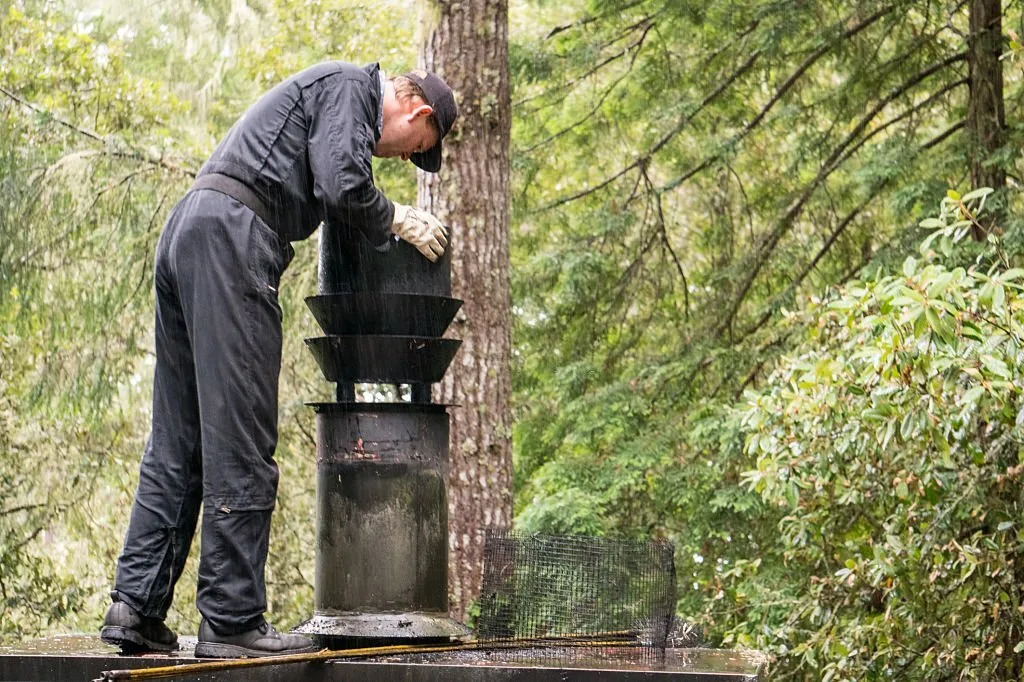
Depending on the damage, we straighten or reshape a bent lid, cut out and patch or re-screen damaged mesh, clear a clogged screen and brush the creosote off it, replace stripped or rusted fasteners with stainless hardware, and re-seat and re-tighten the cap so it sits square and locked on the flue. If the cap is attached to a damaged tile we will discuss the tile before we tighten anything onto it.
Test, report and recommend
We confirm the cap is secure, the mesh is clear and the lid sheds water properly, then walk you through what was done. If we saw anything that suggests the cap is nearing the end of its life, we say so now so you are not surprised by a replacement call next year.
Options
Common chimney cap repairs
- Lid straightening or re-attachment — when the hood has been bent by wind, a branch or a ladder but the metal is not cracked. We reshape it and re-fasten it so water runs off instead of pooling.
- Mesh patch or re-screen — when the body is fine but the screen has a hole or a pushed-in section. We patch small areas or fit new mesh to the existing frame so animals and embers stay where they belong.
- Screen cleaning and de-clogging — when creosote, soot, leaves or fir needles have choked the mesh and smoke is backing up. Often paired with a sweep because a clogged cap usually means a dirty flue.
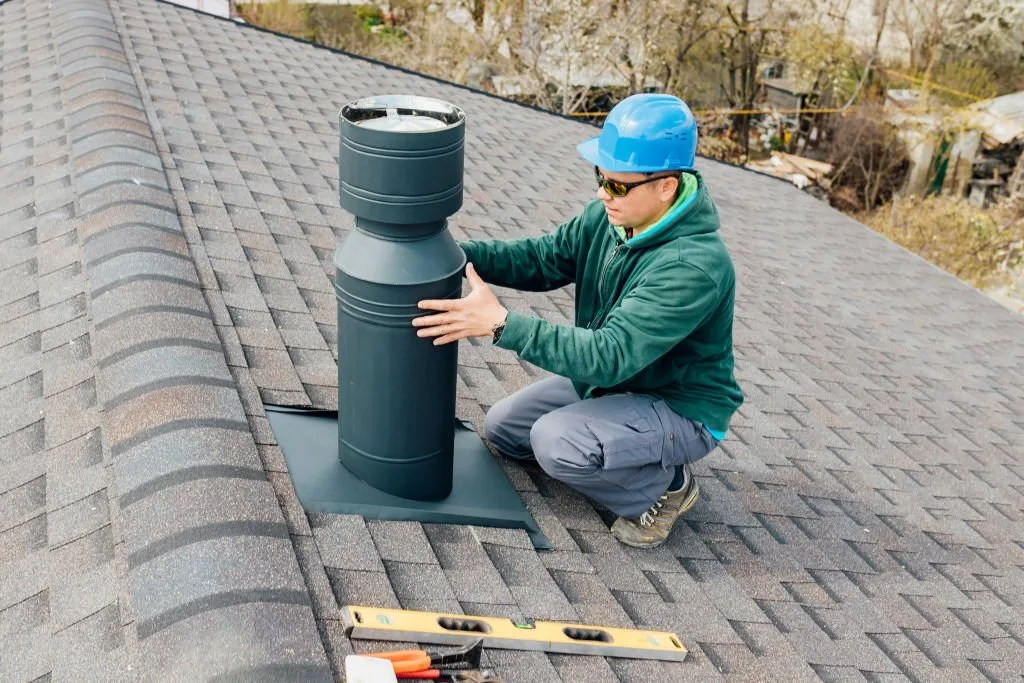
- Fastener replacement and re-seating — when the cap is loose, rattling or crooked. We replace stripped or rusted screws and clamps and set the cap square on the tile or liner.
- Sealant and collar touch-up — when a cap's base has a small gap letting water in. We clean and reseal the joint where that is appropriate for the cap style.
Pricing
What affects the price
- Type of repair: tightening fasteners is quick, re-screening or reshaping a lid takes longer
- Cap size and style: single-flue caps versus multi-flue or top-mount units
- Material: galvanized, stainless or copper caps need different hardware and handling
- Roof pitch, chimney height and how safely the cap can be reached
- Whether the flue tile or crown under the cap also needs attention
- Whether the screen is clogged badly enough to warrant a full chimney sweep at the same visit
- Number of caps on the chimney
We don't publish flat prices because every chimney is different. You'll get a written quote after we look at the system — no surprises.
Timing & Safety
Repair or replace? Where we draw the line
Repair makes sense when the cap's body and base are solid and the problem is isolated. A bent lid, one torn mesh panel, missing screws or a cap that simply slid out of place are all good repair candidates, and a repair usually costs a fraction of a new unit.
- Repair is the right call when: the metal is sound, rust is surface-only, the damage is in one area, the cap fits the flue correctly, and replacement parts or mesh are available for it.
- Replacement is the honest answer when: the cap is rusted through, the mesh is failing in several places, the lid is cracked rather than bent, the base has corroded so it can no longer clamp, or the cap was the wrong size for the flue to begin with. At that point we would point you to our Chimney Cap Replacement service rather than patch something that will fail again next winter.
- Sometimes neither is the fix: if the cap keeps loosening because the flue tile is cracked or the crown is crumbling, repairing the cap alone will not hold. We will tell you what the chimney actually needs.
A loose or damaged cap is not something to leave until spring. Every storm that comes through lets more water into the flue and gives animals another chance to move in.
Safety considerations
Chimney cap repair happens on the roof at the top of the flue, and we ask homeowners to leave it there. Wet Seattle roofs, moss-covered shingles and steep pitches make a slip far more likely than most people expect, and a cap that is forced back onto a cracked tile can do more harm than good.
- Do not climb onto the roof to check, tighten or remove a cap yourself; our technicians use proper roof access and fall protection.
- Do not use the fireplace if smoke is backing into the room. A clogged cap screen is one possible cause, but so is a flue blockage, and we need to see which before the next fire.
- If a cap has blown off or a piece has fallen, keep people and pets clear of the area below until it is secured.
- Clogged or damaged mesh can let sparks out; wait for the repair before burning again.
NFPA 211 recommends an annual chimney inspection, and the cap is checked as part of that visit. If it has been more than a year, ask us to combine the repair with an inspection.
Seattle & Puget Sound conditions
Seattle and Puget Sound caps take a beating that caps in drier climates never see. Months of wind-driven rain find every gap in a loose lid or a lifted collar, and a cap that is even slightly crooked funnels water straight down the flue. Moss and fir needles collect on the mesh and hold moisture against it, which is why galvanized screens rust through here faster than the manufacturer ever expected. Closer to the Sound and on Vashon, Bainbridge, West Seattle and Tacoma waterfront homes, salt air speeds that corrosion further. Winter freeze-thaw cycles work fasteners loose and crack the flue tiles a cap clamps onto, so a cap that was tight in October is often rattling by February. Our fall and winter windstorms are the other big driver of repair calls; a branch or a strong gust can fold a lid without damaging the rest of the cap. Raccoons and squirrels are active year-round in King, Pierce and Snohomish counties and will exploit a torn screen within days of it opening up.
Real Work
Chimney Cap Repair in action
Rattling, bent or leaking cap? Let us fix what you have.
Call 206-207-3974 or request a quote and a CSIA certified technician will inspect your cap and tell you honestly whether a repair will hold.
☎ (206) 207-3974 Request ServiceQuestions
Chimney Cap Repair FAQ
Can a bent chimney cap lid really be fixed, or does it need replacing?
In most cases a bent lid can be straightened and re-fastened, as long as the metal is not cracked and the rest of the cap is sound. If the lid has split at a fold or the hinge points are torn, we will recommend replacing the cap instead.
My cap screen is clogged and smoke is coming into the house. Is that a repair?
Yes. We clean the mesh and clear the creosote and debris from it, and we check whether the mesh itself has been damaged. A clogged cap screen usually goes along with a flue that needs sweeping, so we often do both on the same visit. Do not use the fireplace until it has been looked at.
Why does my chimney cap keep coming loose after I have had it tightened?
A cap that will not stay tight is usually telling you something about what it is attached to. A cracked or spalled flue tile, a crumbling crown, or a cap that was undersized for the flue will all cause repeat loosening. We inspect the tile and crown as part of every cap repair so we can fix the real cause.
Can you patch torn mesh or do you have to replace the whole screen?
Small tears and single rusted-out spots can often be patched. If the mesh is failing in several places, re-screening the whole frame is more reliable. If the frame itself has corroded, that becomes a replacement.
Will you repair a cap another company installed?
Yes. We repair caps of any brand or style, including custom and multi-flue units, as long as the body is sound and suitable parts or mesh are available for it.
How do I know if my cap is damaged if I cannot see it from the ground?
Listen for rattling in the wind, watch for water staining inside the firebox after rain, and note any animal noise or smoke backing up. If you have binoculars, a crooked or missing lid is often visible from the street. Rather than climbing up, call us and we will inspect it safely.
Related services
Service areas
Helpful reading