Home › Services › Custom-Made Chimney Cap
Custom-Made Chimney Cap Seattle, WA
Measured, fabricated and fitted chimney caps for multi-flue crowns, oversized flues, odd shapes and historic homes across Seattle, Tacoma and the Puget Sound.
- 25+ years in business
- CSIA certified
- Licensed, bonded & insured
Request Custom-Made Chimney Cap
Tell us what's going on — we'll confirm a time by phone or text.
A custom-made chimney cap is a cap built to the exact dimensions of your chimney when nothing off the shelf will fit or seal. That usually means a crown with two, three or four flues sitting close together, a flue that is oversized, oval or rectangular, a masonry chimney with an unusual footprint, or an older Seattle home where a stock stainless box would look wrong on the roofline. James Chimney Sweep measures the chimney top, designs the cap, has it fabricated, and fits it so it sheds rain, keeps animals out and actually looks like it belongs on the house.
This is different from our standard chimney cap installation, which covers a single round or square flue with a manufactured cap sized from a catalog. When one of those fits, it is the faster and less expensive route and we will tell you so. A custom cap is for the chimney where a catalog cap leaves gaps, cannot be anchored, or cannot cover all the flues together.
Most of the custom work we do in the Puget Sound falls into three groups: full-coverage top-mount caps that sit over the entire crown, multi-flue caps that shelter several flues under one roof, and decorative or period-matching caps for Craftsman, Tudor and brick homes in neighborhoods like Queen Anne, Capitol Hill, Ballard, Stadium District and Old Town Tacoma.
Symptoms & Problems
Signs your chimney needs a custom cap rather than a stock one
- Two or more flues sharing one crown, too close together for individual caps
- An oval, rectangular or oversized flue that no catalog cap will seat on
- A stock cap that was installed but rocks, gaps at the corners or has blown loose
- Water staining on the crown or inside the firebox even though a cap is in place
- A crown that is wider than the flue tiles with exposed masonry that takes rain directly
- A historic or architecturally detailed home where a plain steel box looks out of place
- Birds, squirrels or raccoons getting in around the edges of an ill-fitting cap
- A previous cap that was strapped or caulked in place because it could not be anchored properly
How It Works
How a custom cap project works
Measure and design
We inspect the chimney top, check the condition of the crown and flue tiles, and take precise measurements of every flue, the crown footprint and the clearances between them. From that we draw up the cap: footprint, height, mesh size, roof pitch, material and finish. You see and approve the design before anything is built.
Fabricate and fit
The cap is fabricated to those measurements, typically in stainless steel or copper, with a mesh screen sized to keep animals out while letting the fireplace or appliance draft properly. On install day we confirm the crown can hold the anchors, repair or seal minor crown issues if needed, then set, anchor and seal the cap.
Walk-through and documentation
We show you photos of the finished cap, explain what was done at the crown, and note anything else we saw up top that may need attention later, such as flashing wear or crown cracks. You get a clear record for your files and for any future inspection.
Options
Custom cap styles we build and fit
- Multi-flue cap — one cap covering two or more flues on a shared crown; the most common custom request on older Seattle and Tacoma homes with a fireplace and furnace flue side by side.
- Full-coverage top-mount cap — a cap that sits over the entire crown rather than just the flue, protecting the masonry from rain and slowing freeze-thaw damage; a good fit for wide crowns that already show weathering.
- Oversized or odd-shape cap — built for oval, rectangular or extra-large flues, and for chimneys that were built or repaired off-square.
- Decorative or period-matching cap — copper or stainless with a hip, pyramid or shrouded design chosen to suit Craftsman, Tudor, Colonial and historic brick homes.
- Shroud around an existing factory flue — a decorative enclosure for a prefab or metal chimney that keeps the required clearances while hiding the utility look.
Pricing
What affects the price
- Number of flues and the overall footprint of the cap
- Material choice: stainless steel versus copper, and gauge
- Design complexity: plain box, hip roof, full-coverage shroud or decorative profile
- Condition of the crown and whether it needs sealing or repair before anchoring
- Roof pitch, chimney height and how difficult the chimney is to access safely
- Mesh size and any spark-arrestor requirement for a wood-burning fireplace
- Fabrication lead time and whether a site template or second measuring visit is needed
We don't publish flat prices because every chimney is different. You'll get a written quote after we look at the system — no surprises.
Timing & Safety
When a custom cap is necessary and when it is optional
Necessary:
- Multiple flues are too close together for individual stock caps to anchor and seal.
- The flue is a size or shape that no manufactured cap fits, and a forced fit would leave gaps.
- A stock cap has repeatedly loosened or leaked because the crown or flue tiles give it nothing to grip.
- The crown is deteriorating and needs full coverage to stop water entry while you plan masonry work.
Optional but worthwhile:
- You want a cap that matches the architecture of a historic or high-visibility home.
- You are reroofing or repointing and want a single cap to tidy up several mismatched flues.
- You want copper or a decorative profile purely for appearance.
If a standard cap will do the job, we will recommend that instead. Our chimney cap installation service handles single-flue stock caps, our chimney cap repair service handles loose or damaged caps that can be saved, and our chimney cap replacement service swaps a worn cap for a like-for-like new one. A custom cap is the right call only when those three do not solve the fit.
Safety considerations
A chimney cap is a safety component, not just a rain hat. The screen keeps burning embers from landing on a cedar-shake or composition roof and keeps birds and animals from nesting in the flue, where they can block exhaust. A custom cap must still leave enough open area for the flue to draft; a cap that is too tight or has mesh that is too fine can cause smoke to back up into the room or allow creosote to build on the screen.
- We size screen openings to balance ember control with draft, and we check draft after installation.
- We never block a flue that serves a gas furnace, water heater or gas fireplace. If you ever smell gas in the house, leave immediately and call your gas utility or 911. Gas lines and valves are serviced only by a qualified technician.
- Chimney tops are slippery in Puget Sound weather and crowns can be unstable. Please leave measuring and installation to us rather than going onto the roof yourself.
- NFPA 211 recommends an annual chimney inspection; a cap fitting is a good time to have the flue looked at as well.
Seattle & Puget Sound conditions
Seattle, Tacoma and the surrounding counties see roughly eight months of steady rain, and an uncovered or poorly covered crown takes all of it. Water soaks into the masonry, freezes during our cold snaps, and opens hairline cracks that widen every winter. Moss takes hold on damp, shaded crowns and holds even more water against the brick. On older homes with two or three flues on one wide crown, a stock cap protects the flue but leaves the surrounding masonry exposed, which is why full-coverage custom caps are so popular here. Near the Sound and in waterfront neighborhoods, salt air accelerates corrosion, so we generally recommend stainless steel or copper over galvanized for any custom fabrication. Finally, our high winds off the water are hard on caps that were never anchored correctly; a custom cap with a proper footprint and mechanical anchors stays put.
Real Work
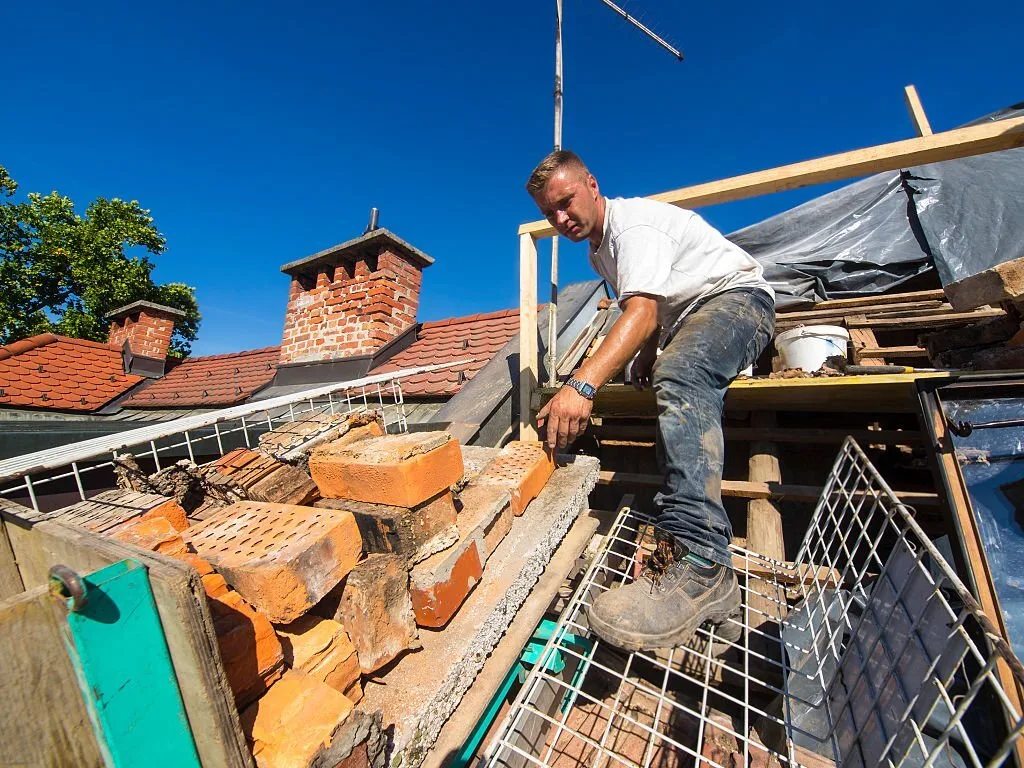
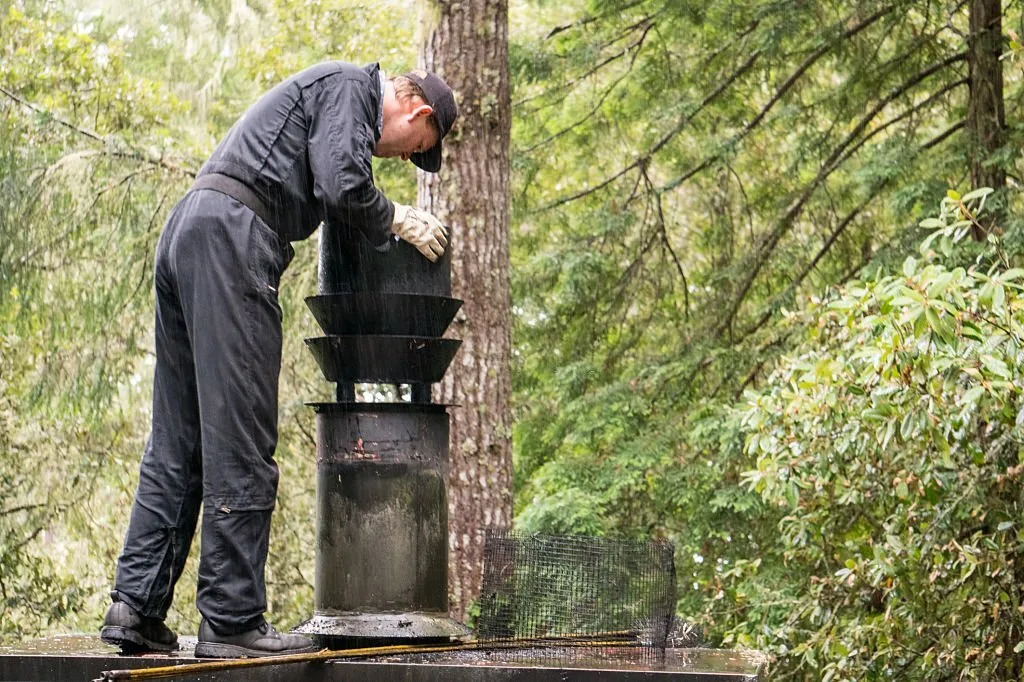
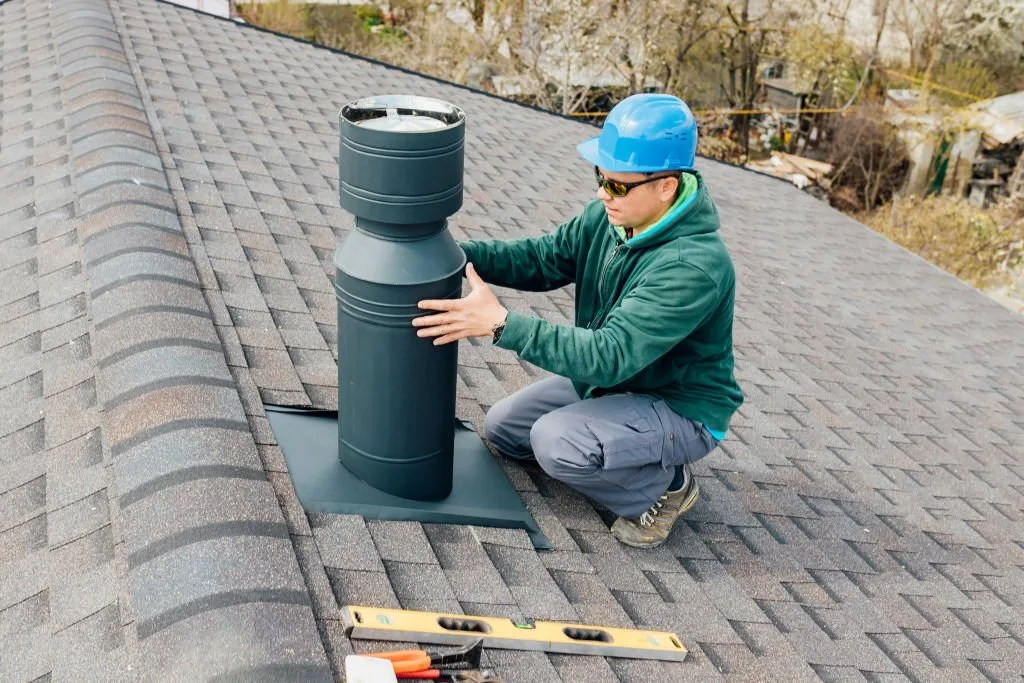
Custom-Made Chimney Cap in action
Get a chimney cap built to fit your chimney
Call 206-207-3974 or request a quote and we will measure your chimney top and design a cap that seals, drafts and looks right on your home.
☎ (206) 207-3974 Request ServiceQuestions
Custom-Made Chimney Cap FAQ
How do I know if my chimney needs a custom cap instead of a standard one?
If you have one round or square flue with solid clay tile sticking up from the crown, a standard cap usually fits. If you have several flues close together, an oval or oversized flue, a wide crown with exposed masonry, or a stock cap that has already failed to seal, a custom cap is likely the better answer. We confirm this during the measuring visit and will tell you honestly if a standard cap will work.
What materials do you use for custom chimney caps?
Stainless steel is the usual choice for the Puget Sound because it resists rust in our wet, salty air and holds up for decades. Copper is chosen for appearance on historic or high-end homes and develops a natural patina over time. We do not recommend galvanized steel for custom work in this climate.
Can a custom cap cover the whole crown, not just the flues?
Yes. A full-coverage top-mount cap is designed to shelter the entire crown, which is valuable when the crown is wide or already showing cracks. It reduces water entry into the masonry and can extend the time before crown repair or rebuilding is needed. It does not replace a badly damaged crown, and we will tell you if the crown needs work before a cap can be anchored.
Will a custom cap affect how my fireplace drafts?
A correctly designed cap will not. We size the open area and mesh so the flue can breathe and we check draft after installation. Problems usually come from caps with too little clearance above the flue or screens that are too fine, which is exactly what a custom design avoids.
How long does a custom cap take from measuring to installation?
It depends on the design and fabrication schedule. A straightforward multi-flue cap can often be built and installed within a couple of weeks; decorative copper work or a large full-coverage shroud can take longer. We give you a realistic timeline when you approve the design.
Can you match the look of the original cap on a historic home?
Often yes. If you have an old photo or a neighbor's original cap to reference, we can reproduce the profile and proportions in stainless or copper. Where no reference exists, we propose a design that suits the era and style of the house and show it to you before fabrication.
Related services
Service areas
Helpful reading