
Home › Services › Chimney Cap Replacement
Chimney Cap Replacement Seattle, WA
We remove worn-out, rusted or mismatched chimney caps and fit a correctly sized replacement across Seattle, Tacoma and the Puget Sound.
- 25+ years in business
- CSIA certified
- Licensed, bonded & insured
Request Chimney Cap Replacement
Tell us what's going on — we'll confirm a time by phone or text.
Chimney cap replacement is the removal of an existing cap that has failed and the fitting of a new one that is sized and built to last. Most Seattle-area caps that come off our roofs are galvanized steel that has rusted through after years of rain, a prefab cap that no longer seals to its chase cover, or a multi-flue cap whose screen has rotted away and is letting birds and water into the chimney. If your cap is rusted, loose, missing pieces or simply the wrong size for the flue it sits on, replacement is the honest fix.
This page is about swapping out a cap that is already there. If your chimney has never had a cap at all, that is the job our Chimney Cap Installation service handles. If your cap is structurally sound and only needs a new screen section or a re-anchored leg, our Chimney Cap Repair service covers that at lower cost. Replacement is the right call when the metal itself has gone, or when the cap was never the correct fit in the first place.
James Chimney Sweep has served King, Pierce and Snohomish counties for more than 25 years. We are CSIA certified, and licensed, bonded and insured in Washington. Call 206-207-3974 to request a quote.
Symptoms & Problems
Signs your chimney cap needs replacing, not repairing
- Orange rust streaks running down the chimney crown or siding below the cap
- Holes or flaking you can see in the cap hood or screen from the ground
- A cap that rattles, tilts or has visibly shifted in a windstorm
- Birds, squirrels or raccoons getting into the flue despite a cap being present
- Water in the firebox or on the smoke shelf after rain, with the cap still in place
- A prefab cap that is the wrong diameter for the pipe and has been wedged or wired on
- A multi-flue cap that no longer covers every flue opening or sits crooked on the crown
- A cap that was repaired once already and is failing again within a year or two
How It Works
How a cap replacement visit works
Measure and assess the old cap
We inspect the existing cap, the flue tile or pipe it mounts to, and the crown or chase cover around it. We measure the flue dimensions, note whether it is a single masonry flue, a multi-flue crown or a factory-built (prefab) system, and confirm whether the cap is a replacement candidate or whether a repair would genuinely hold.
Remove the old cap and fit the new one
The failed cap is taken off and disposed of. Rust residue and old sealant are cleaned from the mounting surface. The new cap is sized to the flue with proper clearance, anchored with the correct fasteners for the material, and sealed where the design calls for it. For prefab chimneys we match the manufacturer-listed cap for that pipe.
Walk you through it and note anything else
You get a clear explanation of what was replaced and why, photos of the finished cap, and a note on anything we spotted up there such as a cracked crown or a deteriorating chase cover that could shorten the life of the new cap if left alone.
Options
Replacement cap materials and which one fits your situation
- Galvanized steel — the lowest-cost option and the one most likely to be on your roof now. In the Puget Sound it tends to be the shortest-lived choice because constant wet weather works through the zinc coating. Sensible only if budget is the overriding concern or the home is a short-term hold.
- Stainless steel — the material we recommend for most replacements in Seattle, Tacoma and the surrounding counties. It does not rust through, holds its shape in wind and handles salt air near the Sound. If you want the full rundown of grades and styles, our Stainless Steel Cap Installation page goes deeper on that material specifically.
- Copper — the longest-lasting and most attractive option. It develops a green patina over time and suits older craftsman and Tudor homes where the chimney is a visible feature. It costs more and is usually chosen for appearance as much as longevity.
- Multi-flue cap — one hood that covers two or more flues on a shared crown. Replacing an old multi-flue cap means measuring the full crown footprint and the height of each flue tile so the new unit covers everything with correct clearance.
- Prefab (factory-built) cap — a listed cap that matches the brand and diameter of the metal pipe on a factory-built fireplace. These are not interchangeable; the right replacement is the one the manufacturer lists for that pipe, and a generic cap forced on is a common reason prefab caps fail early.
Pricing
What affects the price
- Cap material (galvanized, stainless or copper) and gauge
- Whether it is a single-flue, multi-flue or prefab cap and the size of the flue or crown
- How much rust, old sealant or damaged fastener hardware has to be removed first
- Roof pitch, chimney height and how safely the cap can be reached
- Whether the crown or chase cover also needs attention for the new cap to seat properly
- Whether a fully custom-fabricated cap is needed rather than a stock size
- Travel distance within King, Pierce and Snohomish counties
We don't publish flat prices because every chimney is different. You'll get a written quote after we look at the system — no surprises.
Timing & Safety
When replacement is necessary and when it can wait
Replacement is the right call when:
- The hood, base or screen has rusted through anywhere. Rust on galvanized steel does not stop once it starts, and patching one hole buys a season at most.
- The cap is the wrong size for the flue. An undersized cap restricts draft and an oversized one lets rain blow in sideways. No repair fixes a sizing mistake.
- A prefab cap does not match the pipe it sits on. Mismatched prefab caps can affect how the system vents and should be replaced with the listed part.
- The cap has already been repaired and failed again. A second repair is money spent on metal that has reached the end of its life.
- You are already paying for a roof visit for a crown repair or chase cover replacement, and the old cap is on borrowed time. Doing it in the same trip saves a second service call.
Replacement can usually wait when:
- The cap body is solid and only the screen mesh has a tear or a loose section. That is a Chimney Cap Repair job.
- One leg or fastener has worked loose but the metal is sound. Re-anchoring is quick and keeps the existing cap in service.
- The cap is discolored but not pitted or perforated. Surface staining on stainless or patina on copper is cosmetic.
If you are not sure which side of the line your cap falls on, send us a photo from the ground when you call and we will tell you honestly whether we think it is a repair or a replacement. A final answer still needs an on-site look.
Safety considerations
Please do not climb onto the roof to inspect or remove a chimney cap yourself. Wet Seattle roofs, moss and steep pitches make this one of the more dangerous home tasks, and a cap that has rusted can have sharp edges that cut through gloves. Everything on this page can be assessed from the ground or by a technician with proper fall protection.
- A missing or collapsed cap leaves the flue open to rain, animals and debris. If your cap has blown off, keep the fireplace out of use until it is inspected and replaced; a nest or debris in the flue can block exhaust.
- Prefab caps are part of a listed system. Using a generic cap can interfere with venting. We match the manufacturer's listed part.
- If you have a gas fireplace or gas insert that vents through the chimney and you ever smell gas, leave the house and call your gas utility or 911. Gas lines and valves are only serviced by a qualified technician; cap work does not involve them.
- NFPA 211 recommends an annual chimney inspection. A failing cap is one of the most common findings, and catching it early protects the flue liner below it.
Seattle & Puget Sound conditions
The Puget Sound is hard on chimney caps in a way that drier climates are not. Roughly nine months of rain a year keeps galvanized steel wet long enough for rust to start at the seams and screen welds, and once it starts it spreads fast. Homes near the water in West Seattle, Tacoma, Edmonds and Mukilteo add salt air, which eats zinc coatings even faster. Moss is another local issue: it grows on the cap screen and in the crown joints, holds moisture against the metal and traps debris that should blow clear. Winter freeze-thaw cycles, while milder here than east of the Cascades, still work water into hairline cracks in the crown, and a cap that no longer seats flat on a crumbling crown cannot do its job. This is why we steer most Seattle-area replacements toward stainless steel or copper: the extra cost is usually recovered by not having to do this job again in a few years.
Real Work
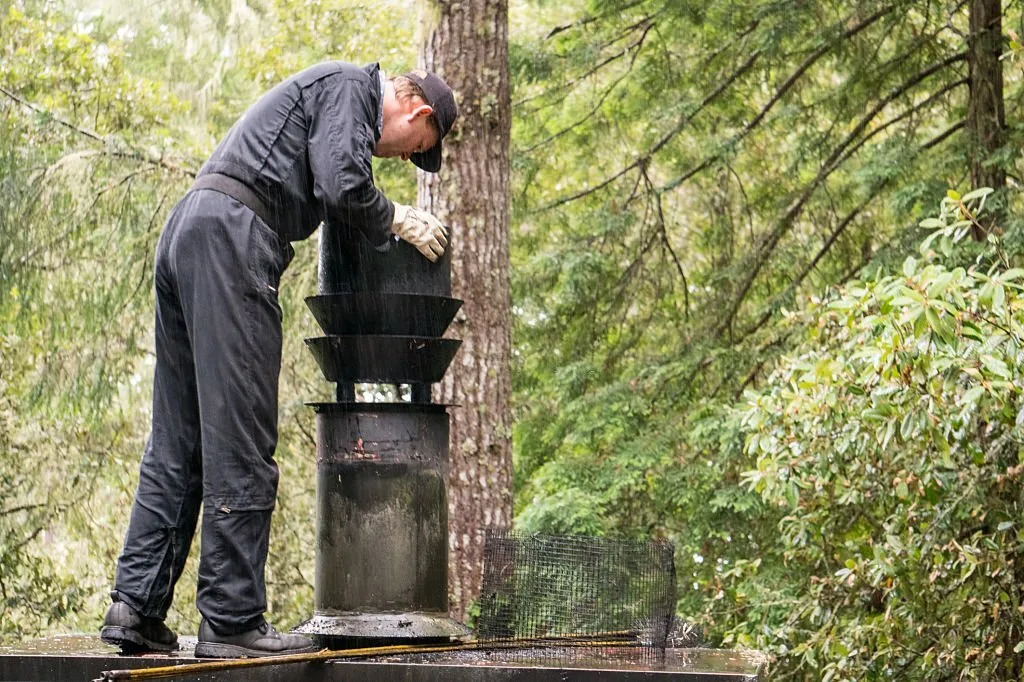
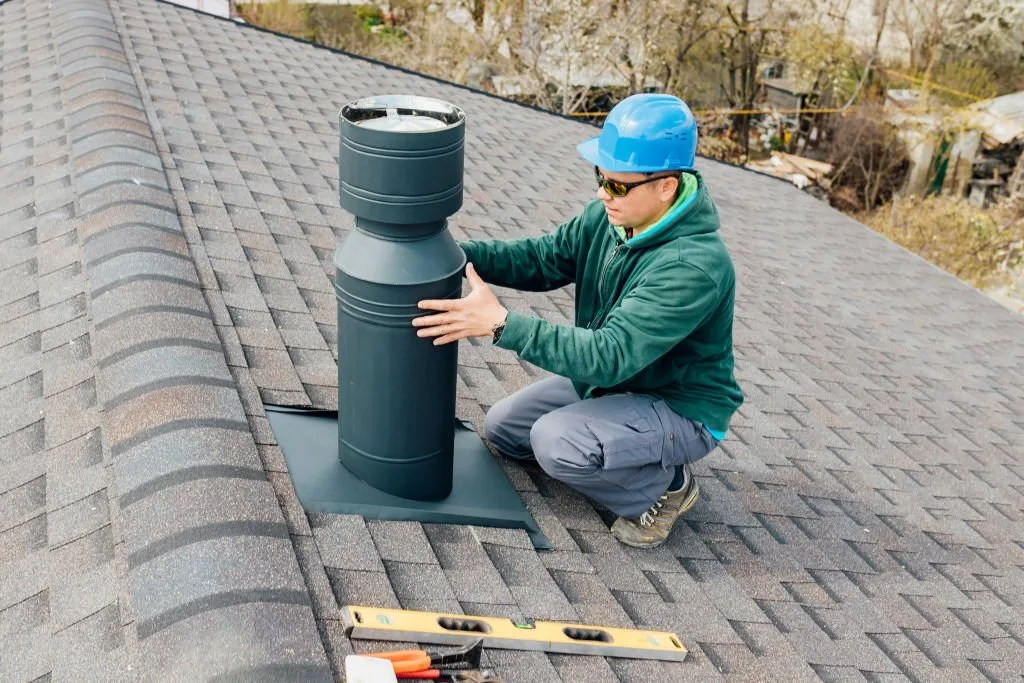
Chimney Cap Replacement in action
Replace the rusted cap once, with one that lasts
Call 206-207-3974 or request a quote online and we will size a replacement cap that stands up to Puget Sound weather.
☎ (206) 207-3974 Request ServiceQuestions
Chimney Cap Replacement FAQ
How do I know if my chimney cap needs to be replaced or just repaired?
Look at the metal itself. If the hood or base is rusted through, pitted, or has holes, replacement is the only lasting fix. If the body is solid and only the screen is torn or a leg is loose, repair is usually enough. Rust streaks on the masonry below the cap are the most reliable ground-level sign that the cap is past repair.
Can you reuse my old cap's mounting holes or base?
Sometimes, if the flue tile and crown are in good shape and the new cap uses a similar mounting style. Often the old fasteners have rusted into the masonry and we set fresh anchors. For prefab chimneys the new cap clamps or screws to the pipe itself, so the old hardware is replaced entirely.
My old cap was galvanized. Should the replacement be galvanized too?
We would not recommend it in the Puget Sound. Galvanized caps are the cheapest up front but are usually the first component on the chimney to fail here because of the constant wet. Stainless steel costs more at the time of the job and typically outlasts several galvanized caps.
I have two flues under one cap. Can you replace it with the same style?
Yes. We measure the full crown footprint and the height and spacing of each flue tile, then fit a multi-flue cap that covers all of them with correct clearance for draft. If the flues are unusually spaced or the crown is an odd shape, a stock multi-flue cap may not fit well and a custom-made cap becomes the better option.
Will a new cap fix the water I'm getting in the firebox?
If the old cap was rusted through, undersized or missing its hood, a correctly sized replacement usually stops rain coming straight down the flue. Water can also enter through a cracked crown, failed flashing or porous brick, so we check those while we are up there and tell you if the cap is only part of the problem.
How long does a chimney cap replacement take?
A straightforward single-flue or prefab replacement is typically done in a single visit once we have the correct cap on hand. Multi-flue caps and custom sizes may need a measuring visit first so the cap can be ordered or fabricated to fit, then a second visit to install.
Related services
Service areas
Helpful reading