Home › Services › Chimney Chase Cover Installation
Chimney Chase Cover Installation Seattle, WA
Custom-sized chase covers installed on framed and prefab chimney chases across Seattle, Tacoma and King, Pierce and Snohomish counties.
- 25+ years in business
- CSIA certified
- Licensed, bonded & insured
Request Chimney Chase Cover Installation
Tell us what's going on — we'll confirm a time by phone or text.
A chimney chase cover is the flat metal lid that closes off the top of a framed, sided chimney chase — the wood-and-siding box that houses a factory-built (prefab) fireplace flue. Chase cover installation is for homes where that lid is missing entirely, was never installed correctly, or was removed during a remodel, re-siding or roofing job and never put back. James Chimney Sweep measures the chase, fabricates or orders a cover with a proper drip edge and a cross-break, and installs it with a storm collar around the pipe so water goes off the sides instead of into the wall.
This page is about putting a cover on a chase that does not have a working one. If your chase already has a cover that is rusting, pitted or leaking at a seam, that is a different job: our Chimney Chase Cover Repair page covers patching and re-sealing a cover that is still sound, and our Chimney Chase Cover Replacement page covers swapping out a failed cover for a new one. Installation starts from an open or unprotected chase.
Homeowners in Seattle, Tacoma, Bellevue, Everett and the surrounding Puget Sound area most often call us for this after a home inspection notes "no chase cover present," after water stains appear on the ceiling near the fireplace, or after buying a house where the previous owner capped the pipe but never covered the chase. James Chimney Sweep has been doing this work for 25+ years, is CSIA certified, and is licensed, bonded and insured in Washington.
Symptoms & Problems
Signs your chase needs a cover installed
- A home inspection or chimney inspection reports no chase cover, or plywood/roofing felt exposed at the top of the chase
- Water stains or peeling paint on the ceiling or wall beside the fireplace
- A musty smell, soft drywall or visible mold in the chase or around the firebox
- Rust streaks running down the siding from the top of the chase
- Birds, squirrels or wasps getting into the chase or attic
- Daylight visible around the flue pipe when you look up inside the chase from the firebox area
- The chase was re-sided or the roof was replaced and the top was left open or covered with a temporary patch
- A chimney cap on the pipe but nothing protecting the framed box around it
How It Works
How we install a chase cover
Inspect and measure the chase
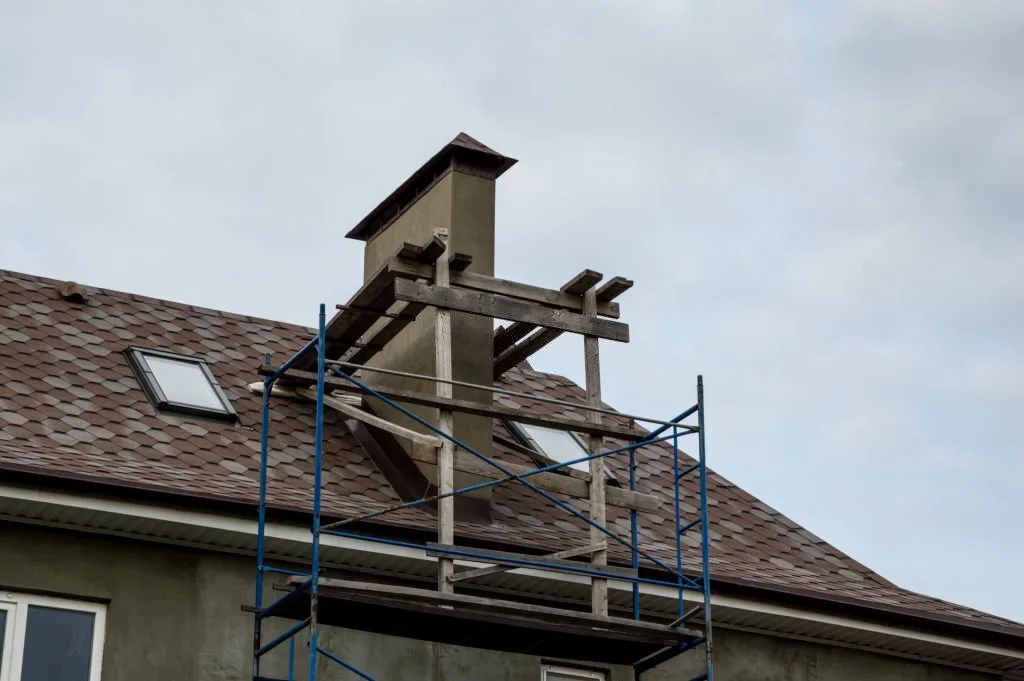
We check the top of the chase for rot, soft framing or water damage, confirm the flue pipe type and diameter, and take exact outside-to-outside measurements of the chase top, the pipe position and any offsets. If the framing or siding is damaged, we tell you before any cover goes on, because a new lid over rotten framing just hides the problem.
Fabricate and install the cover
The cover is sized to the chase with a turned-down drip edge (skirt) that overlaps the siding on all four sides, a cross-break so the top surface sheds water toward the edges rather than pooling, and a collar opening cut for the pipe. We set it, fasten it through the skirt into the chase, and install a storm collar around the pipe sealed with high-temperature sealant so the pipe penetration cannot take water.
Verify and report
We confirm the cover sits level with proper drainage, check the pipe cap is intact and clearances are maintained, photograph the finished installation and explain what you should look for each year. You get a clear summary of what was installed and any follow-up we recommend.
Options
Chase cover options
- Stainless steel chase cover — the standard recommendation in the Puget Sound; it resists rust in constant rain and near saltwater, and is the longest-lasting option for a chase that will be hard to access later.
- Galvanized steel chase cover — lower upfront cost; applies when budget is the main driver and the home is away from salt air, with the understanding it will need attention sooner than stainless.
- Copper chase cover — applies on homes where the chase is highly visible and the owner wants a cover that matches copper flashing or gutters and weathers to a patina.
- Cover with multiple pipe openings — applies when a single chase carries more than one flue (a fireplace plus a furnace or water heater vent), each needing its own collar.
- Cover plus chimney cap combination — applies when the pipe itself has no cap or the existing cap is damaged; the cover protects the chase and the cap protects the flue, and they are two separate parts.
Pricing
What affects the price
- Chase dimensions and whether a standard size works or custom fabrication is needed
- Metal choice: galvanized, stainless or copper
- Number and size of pipe openings and storm collars required
- Roof pitch, height and how the top of the chase can be safely reached
- Condition of the chase framing and top deck — rot or missing sheathing has to be addressed first
- Whether a new pipe cap is needed at the same time
- Travel distance within King, Pierce and Snohomish counties
We don't publish flat prices because every chimney is different. You'll get a written quote after we look at the system — no surprises.
Timing & Safety
When a chase cover installation is necessary
Necessary: any time a framed chase has no cover at all, or the "cover" is a piece of plywood, tar paper or a flat sheet of metal with no drip edge and no collar. An open chase is a funnel: rain runs straight down the inside of the box, onto the fireplace unit and into the wall framing. In the Seattle area that damage happens quickly and quietly.
- Inspection report lists the chase cover as missing or improvised
- Chase was opened for a remodel, roofing or siding project and never closed back up
- New construction or a new prefab fireplace where the builder left the chase top unfinished
- Water intrusion inside the chase with no other identified source
Optional or a different service: if a real cover is already there but rusting, dented or leaking at a seam, you are looking at repair or replacement, not installation. If the chase itself is leaning, rotted or the siding is failing, our Chimney Chase Repair and Chimney Chase Siding Repair pages describe that work, and a new cover would be the last step after the structure is sound.
Safety considerations
A chase cover is a roof-level job. We do not recommend that homeowners climb onto the roof to measure or inspect the chase; from the ground, look for rust streaks, visible gaps at the top of the chase, or staining on the siding and let us do the climbing.
- Never block, cover or reduce the pipe opening on a chase cover. The flue must stay fully open, and the pipe cap stays in place.
- Keep the required clearance between the metal flue pipe and any combustible framing; a cover installed too tight to the pipe is a fire hazard, which is why the collar opening is sized to the pipe, not guessed.
- If your prefab fireplace is gas-fueled and you ever smell gas, leave the house and call the gas utility or 911. Gas lines and valves are only serviced by a qualified technician; a chase cover installation never involves touching the gas supply.
- NFPA 211 recommends an annual chimney inspection; an open or missing chase cover is one of the most common findings on prefab systems and the reason we check it every visit.
Seattle & Puget Sound conditions
Framed chimney chases are everywhere in Puget Sound housing built from the 1970s onward, and the climate is hard on them. Seattle and Tacoma average well over 150 wet days a year, so an uncovered chase is not a "wait until summer" problem; the plywood top and framing stay saturated for months. Freeze-thaw cycles in the foothills and north Snohomish County split wet framing and pop fasteners. Near the Sound, Elliott Bay and the Tacoma waterfront, salt air eats galvanized metal, which is why we steer most coastal homes toward stainless. Moss grows readily on a flat, shaded chase top, which is another reason a cross-break that actively sheds water matters more here than in a dry climate: a flat cover that holds a puddle will grow moss, hold debris and rust from the top down.
Real Work
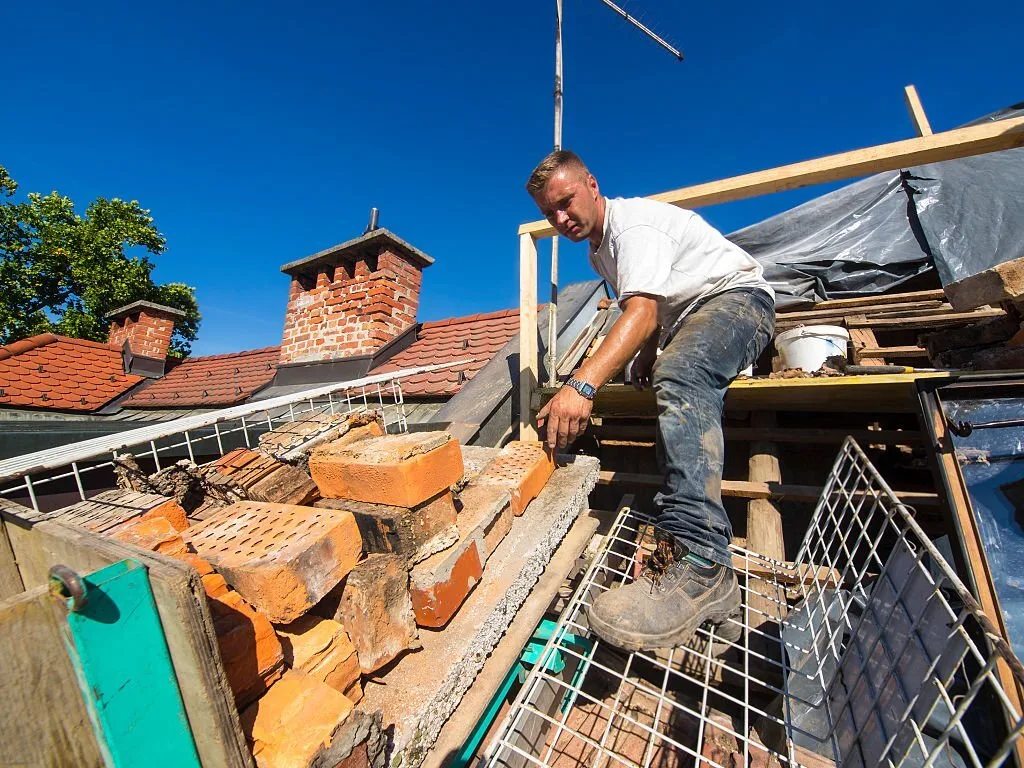
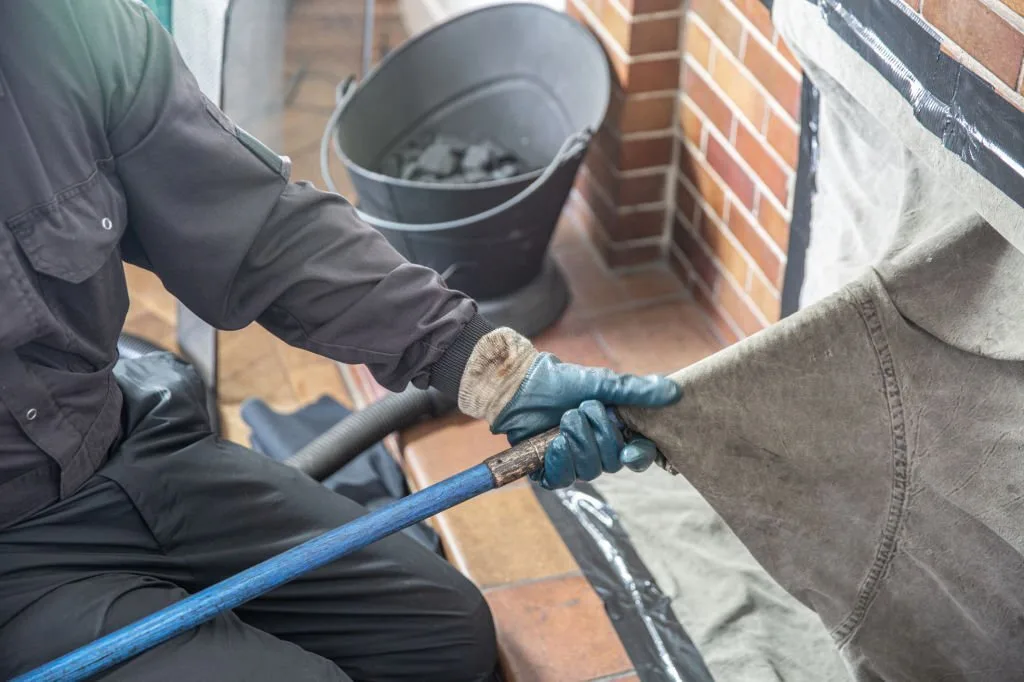
Chimney Chase Cover Installation in action
Close the top of your chase before the next storm
Call 206-207-3974 or request a quote and James Chimney Sweep will measure your chase and install a cover built to shed Puget Sound rain.
☎ (206) 207-3974 Request ServiceQuestions
Chimney Chase Cover Installation FAQ
What is the difference between a chimney cap and a chase cover?
A chimney cap sits on top of the flue pipe itself and keeps rain, animals and sparks from entering the flue. A chase cover is the large metal lid over the entire framed chase that the pipe passes through. A cap does nothing to protect the wood box around the pipe, and a cover does nothing to protect the inside of the flue. Most prefab chimneys need both.
My chase has a cap on the pipe. Do I still need a chase cover?
Yes, if the top of the chase is otherwise open. The cap protects the flue, but rain still lands on the chase top and runs inside the box, down onto the fireplace unit and into the wall. A missing cover is a structural and water-damage issue, not a flue issue.
Why does the cover need a cross-break?
A cross-break is a slight diagonal bend from the pipe collar out to each corner so the top surface is never flat. Water runs to the edges and off the drip edge instead of pooling around the collar, which is where flat covers rust through first. In the Seattle rain a flat cover without a cross-break can hold standing water most of the winter.
Can you install a chase cover on a brand-new prefab fireplace?
Yes. Builders sometimes leave the chase top unfinished or install a temporary patch. We measure the finished chase, confirm the pipe type and clearance, and install a cover with a collar sized to that pipe. If the chase framing is still open we coordinate with the contractor so the top deck and siding are done before the cover goes on.
Do you check the inside of the chase for damage before installing?
We inspect the top deck and accessible framing before fastening a cover. If we find rot or soft sheathing we tell you first, because a new cover over damaged framing will not fasten securely and hides a problem that keeps getting worse. Chase framing and siding repairs are separate services we can quote at the same visit.
How long does a chase cover installation take?
Most single-pipe installations are done in one visit once the cover is in hand. If a custom size or stainless fabrication is needed there is a short lead time between the measuring visit and the install. We give you the timeline when you request a quote.
Related services
Service areas
Helpful reading