Home › Services › Chimney Chase Repair
Chimney Chase Repair Seattle, WA
Targeted repair of rotted, loose or leaking sections of a framed chimney chase for homes across King, Pierce and Snohomish counties.
- 25+ years in business
- CSIA certified
- Licensed, bonded & insured
Request Chimney Chase Repair
Tell us what's going on — we'll confirm a time by phone or text.
Chimney chase repair fixes localized damage to the wood-framed box that encloses a factory-built (prefab) fireplace flue: a rotted top plate or cap framing, trim that has pulled away, soft sheathing at a corner, open seams where water gets in, or a few studs that have lost their strength. Most chases that look bad from the ground are not failed structures. They have one or two weak spots that can be cut out, replaced and sealed while the rest of the chase stays in service.
This page is about that middle ground. If the problem is only the metal cap on top, that is chimney chase cover repair or replacement. If the damage is limited to the exterior siding, that is chimney chase siding repair. And if rot has spread through most of the framing and the chase has started to lean or separate from the house, you are into chimney chase rebuild territory. Chase repair is for the structure itself, short of tearing it down.
James Chimney Sweep has served Seattle, Tacoma and the greater Puget Sound for more than 25 years. We are CSIA certified and licensed, bonded and insured in Washington, and we will tell you plainly whether your chase needs a repair or a rebuild before any work starts.
Symptoms & Problems
Signs your chimney chase needs repair
- Water staining or drips on the ceiling or wall beside the fireplace after heavy rain
- Soft, spongy or discolored wood at the top corners of the chase
- Trim boards that have split, cupped or pulled away from the chase
- A chase cover that sits unevenly because the framing under it has sagged
- Visible gaps or open seams where the chase meets the roof or the house wall
- Moss or dark streaks concentrated at the top band of the chase
- A musty smell in the room around the fireplace
- Rust on the flue pipe or firestop visible from inside the chase
How It Works
How we repair a chimney chase
Inspect and map the damage
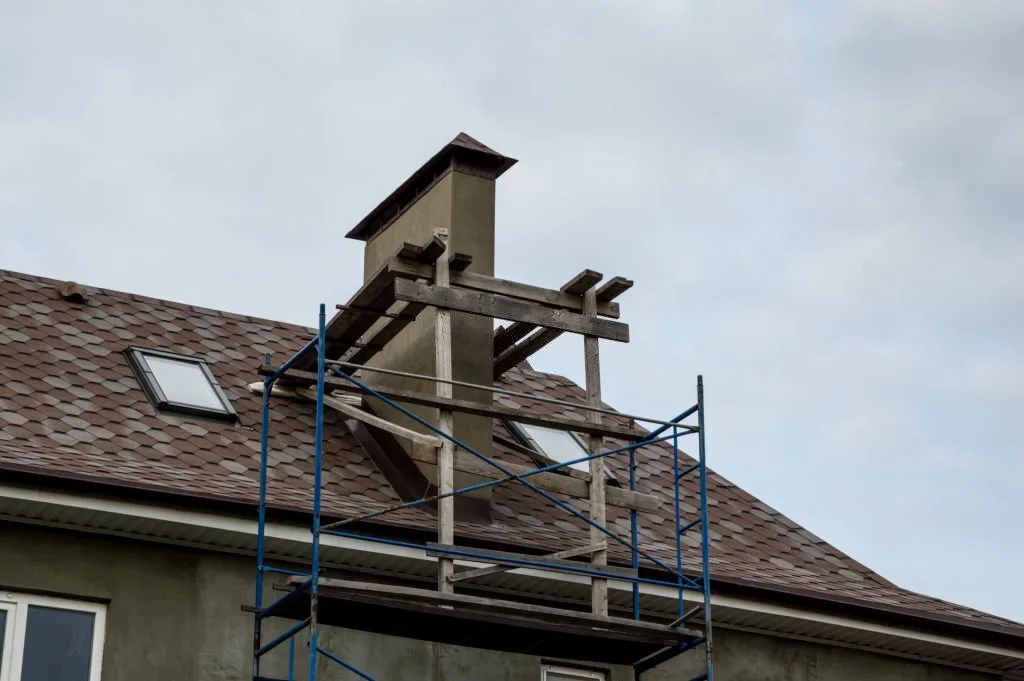
We check the chase from the roofline and, where there is access, from inside the framing. We probe the top plate, corner studs and sheathing, pull the chase cover if needed to see what is under it, and look at the firestop and flue clearance. You get a clear picture of how far the rot goes and whether repair makes sense.
Cut out the bad and rebuild the section
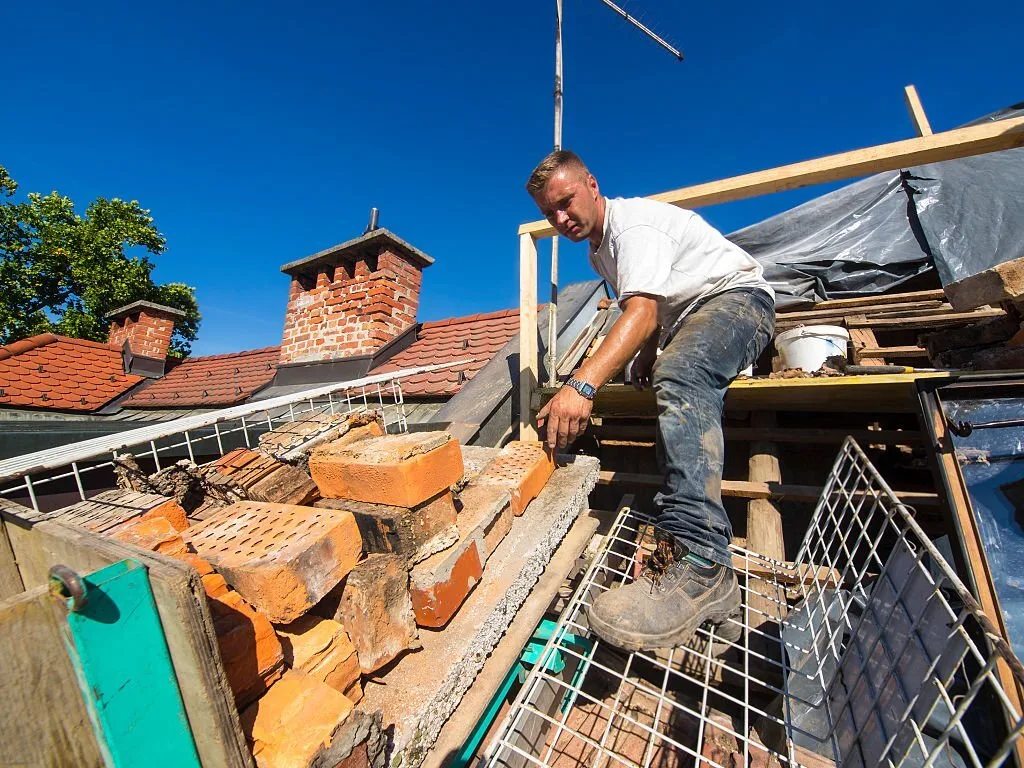
Rotted top plate, cap framing, sheathing and studs are removed back to sound wood and replaced with new pressure-treated or properly sealed lumber. Trim is replaced, and every seam, corner and penetration is flashed and sealed so water has no easy path back in. If the chase cover is sound, it is reset; if it has rusted through, we will recommend replacement at the same visit.
Report and next steps
You receive photos of what we found and what we replaced, along with any notes on the cover, siding or flue that should be addressed later. We also tell you honestly if what we found changed the picture and a rebuild is the better long-term answer.
Options
Common chimney chase repairs
- Top plate and cap framing replacement — when the wood under the chase cover has rotted but the studs below are still solid. This is the single most common chase repair in our area.
- Corner and partial stud repair — when one or two framing members at a corner are soft but the chase is still square and plumb. We sister or replace the affected pieces.
- Trim replacement and resealing — when trim has failed and water is getting behind it, but the framing is only surface-damaged. Often paired with a fresh flashing detail at the top band.
- Roof-to-chase flashing and seam repair — when leaks are coming from the joint between the chase and the roof or wall rather than from the top.
- Firestop and interior blocking repair — when the horizontal firestop inside the chase has rotted or been displaced and needs to be reset to maintain clearance around the flue.
Pricing
What affects the price
- How much of the framing is rotted and how deep the damage runs
- Height of the chase and how steep or fragile the roof is
- Whether the chase cover has to be removed and reset or replaced
- Amount of trim, sheathing and flashing that must be replaced
- Matching siding or trim profiles that are no longer stocked
- Interior access versus working entirely from the outside
- Weather windows, since exposed framing has to be closed up the same day
We don't publish flat prices because every chimney is different. You'll get a written quote after we look at the system — no surprises.
Timing & Safety
Repair or rebuild: where the line is
The repair-versus-rebuild decision comes down to how much sound structure is left to attach new material to. As a working rule:
- Repair makes sense when rot is confined to the top plate, cap framing, one or two corners, or the trim and sheathing, and the chase is still plumb, square and firmly attached to the house.
- Repair is still worth it when the flue, firestop and chase cover are in good shape and the structure just needs the weak sections replaced and sealed.
- A rebuild is the honest answer when rot runs down most of the studs, the chase has begun to lean or pull away from the wall, the base or ledger is compromised, or patching would mean replacing more than roughly half the framing. At that point piecemeal repair costs more over time than doing it once.
If you are not sure which side of the line you are on, that is exactly what the inspection is for. We would rather recommend a smaller repair that works than sell a rebuild you do not need.
Safety considerations
A wood chase surrounds a metal flue that gets hot. The reasons to fix rot promptly go beyond water damage:
- Rotted framing can let the firestop or flue supports shift, reducing the clearance between the hot pipe and combustible wood.
- Soft top framing can let the chase cover sag and pond water, which accelerates rust on the flue pipe itself.
- Water that runs down inside the chase can reach the fireplace unit and the wall cavities of the house.
- NFPA 211 recommends an annual chimney inspection, and a prefab system should be inspected by a qualified technician any time the chase has been opened or repaired.
Please do not climb on the roof or open the chase yourself. The top of a chase is one of the least stable places on a house, and it is not possible to judge rot from a ladder or from a photo. If your fireplace is gas and you ever smell gas, leave the house and call the gas utility or 911; gas lines and valves are only serviced by a qualified technician.
Seattle & Puget Sound conditions
Framed chases fail at the top for one reason in the Puget Sound: months of rain landing on a flat or nearly flat cap with nowhere to go. Any pinhole in the cover, any open trim joint, any gap at the storm collar sends water straight into the top plate, and it stays wet from October to May. Moss takes hold on the shaded side of the chase and holds moisture against the wood. In the foothills and north Snohomish County, freeze-thaw cycles widen those seams a little each winter. Homes near the Sound add salt air that speeds rust on the cover and fasteners. The practical result is that a chase can look fine from the street while the top eight inches are rotten. Catching it at that stage, while the studs are still sound, is the difference between a repair and a rebuild.
Real Work
Chimney Chase Repair in action
Fix the rot before it becomes a rebuild
Call 206-207-3974 or request a quote and we will inspect your chase and tell you honestly whether a repair will do the job.
☎ (206) 207-3974 Request ServiceQuestions
Chimney Chase Repair FAQ
How do I know if my chase needs repair or a full rebuild?
Repair is usually the answer when rot is limited to the top plate, cap framing, trim or one or two corners and the chase is still plumb and attached firmly to the house. A rebuild becomes the better choice when most of the studs are soft, the chase is leaning, or the base is compromised. We confirm this by probing the framing during the inspection, not by looking from the ground.
Can you repair the chase without replacing the chase cover?
Yes, if the cover is sound. We lift it to get at the top framing, repair the structure, then reset and reseal it. If the cover has rusted through or was undersized to begin with, we will recommend replacing it during the same visit since the top is already open.
Is chase repair the same as siding repair?
No. Siding repair addresses the exterior skin of the chase when the framing behind it is still solid. Chase repair is for the structure itself: the top plate, studs, sheathing, firestop and the sealing between them. Many jobs involve both, but they are different scopes and we price them separately.
Can I use the fireplace while the chase is being repaired?
We ask that you not use it the day of the work, and until the chase is closed up and the flue clearance has been confirmed. For most localized repairs the chase is closed up the same day.
Why is the top of the chase always where the rot is?
Because that is where water lands and sits. Chase covers are nearly flat, and any failure in the cover, trim or storm collar drains directly onto the top plate. In our climate that wood rarely dries out between storms, so it fails first while the lower framing stays dry and sound.
Will the repair hold up, or will I be doing this again in a few years?
The repair itself uses new, protected lumber and fresh sealing, but its lifespan depends on whether the water source is fixed. That is why we address the cover, flashing and trim detail as part of the job rather than just swapping wood. Keeping the cover sound and having the chase looked at during your annual inspection is the best way to make the repair last.
Related services
Service areas
Helpful reading