Home › Services › Chimney Cleaning Stage 2
Chimney Cleaning Stage 2 Seattle, WA
Rotary-head cleaning for second-degree creosote in wood-burning chimneys across Seattle, Tacoma and King, Pierce and Snohomish counties.
- 25+ years in business
- CSIA certified
- Licensed, bonded & insured
Request Chimney Cleaning Stage 2
Tell us what's going on — we'll confirm a time by phone or text.
Stage 2 chimney cleaning is the removal of second-degree creosote: the shiny, black, crunchy tar flakes that form when smoke condenses in a cool flue and bakes into a hard crust. Unlike the soft, sooty deposits that a standard sweep handles, stage 2 creosote is bonded to the flue wall. A conventional poly or wire brush skates over it and knocks off the loose top layer while leaving the crust in place. James Chimney Sweep uses rotary chain and whip heads, more passes and more time to break that crust down and bring the flue back to a safe, clean surface.
Who needs it? Homeowners across Seattle, Tacoma and the Puget Sound who burn wood regularly, burn it slowly overnight, burn wood that is not fully seasoned, or have a flue that runs cool because it sits on an exterior wall. If your last sweep said the flue "still has glaze" or your fireplace has started smoking back into the room, this is usually the service you are looking for.
How it differs from its closest siblings: our Chimney Cleaning Stage 1 page covers the light, powdery soot that brushes off easily, and our Chimney Cleaning Stage 3 page covers fully glazed, tar-like creosote that requires chemical treatment and sometimes multiple visits. Stage 2 sits in the middle, where mechanical rotary cleaning still works but a plain brush does not.
Symptoms & Problems
Signs your flue has stage 2 creosote
- Shiny black flakes or chips that look like burnt cornflakes falling into the firebox
- Deposits that crunch or crackle when you press them, rather than smearing like soot
- A hard, glossy crust visible on the flue walls or damper when you look up with a flashlight
- More smoke rolling back into the room than the fireplace used to produce
- A strong tar or campfire smell indoors, especially on damp Puget Sound days
- A previous sweep noted the brush was not removing everything
- You routinely damp the fire down overnight or burn wood that hisses and steams
- A dark, sticky residue around the top of the chimney or on the cap
How It Works
How a stage 2 cleaning works
Inspect and grade the creosote
We look at the flue from the firebox and, where the chimney allows, from the top with a camera. We identify whether the deposits are stage 1, 2 or 3, measure roughly how much of the flue is affected, and check the smoke chamber, damper and cap. If the creosote is actually stage 3 glaze, we tell you before starting rather than charging for a cleaning that will not work.
Rotary cleaning with chain and whip heads
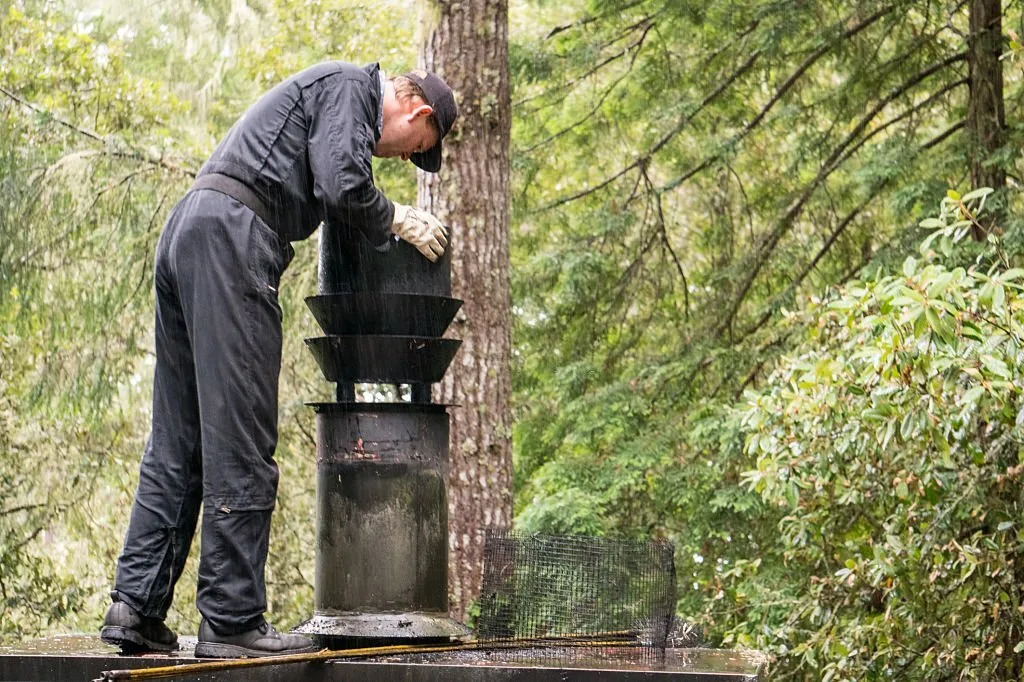
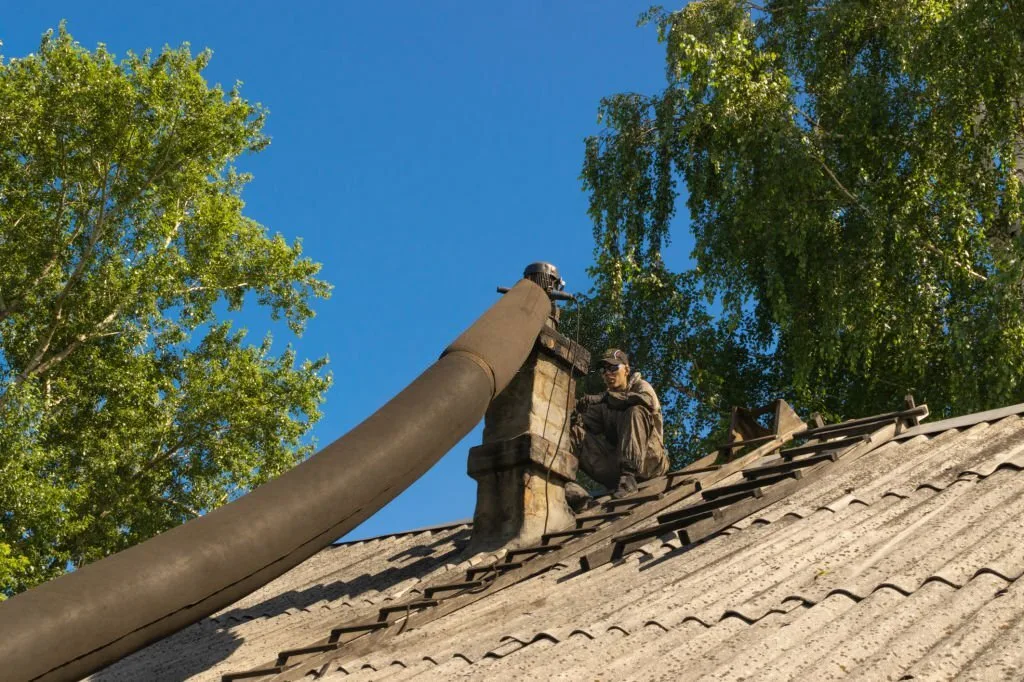
With the fireplace opening sealed off and a HEPA vacuum running, we run a rotary head on flexible rods through the flue. Chain or whip heads spin against the crust and fracture it off the liner in pieces, which fall to the firebox and are vacuumed out. Stage 2 typically takes noticeably longer than a standard sweep because each section of flue needs repeated passes until the surface is clean rather than just scuffed.
Verify, document and advise
After the flue is clear we re-check with a flashlight or camera, clean the smoke shelf and firebox, and walk you through what we found. You get a plain-English summary of the flue condition, any cracked tiles or damaged mortar joints the creosote was hiding, and practical burning changes so the buildup does not come back at the same rate.
Options
Cleaning options for second-degree creosote
- Rotary chain head cleaning — the standard approach for a sound clay tile flue with an even crust; heavy chains knock the flakes loose without chemicals.
- Rotary whip head cleaning — gentler flexible whips for stainless steel liners or older tile that should not be hit with chains.
- Rotary cleaning plus smoke chamber work — when the crust extends down into the smoke chamber, which a flue-only cleaning will not reach; this overlaps with our Chimney Smoke Chamber Cleaning service.
- Rotary cleaning with a creosote modifier — where patches are hardening toward stage 3, a powder or spray applied during a few fires before the visit makes the crust more brittle and easier to remove.
- Re-grade to stage 3 treatment — if the inspection shows true glaze rather than flakes, we recommend the stage 3 process instead of forcing a rotary clean that would only polish it.
Pricing
What affects the price
- How much of the flue length is coated and how thick the crust is
- Flue type and size: clay tile, stainless liner, or an unlined masonry chimney
- Whether the smoke chamber and smoke shelf also need rotary cleaning
- Chimney height and roof pitch, and whether cleaning is done from the firebox or the top
- Whether a creosote modifier pre-treatment is needed before the mechanical clean
- Number of flues in the chimney that need the same treatment
- Access to the fireplace, such as inserts or stoves that must be pulled forward
We don't publish flat prices because every chimney is different. You'll get a written quote after we look at the system — no surprises.
Timing & Safety
When stage 2 cleaning is necessary vs optional
NFPA 211 recommends that chimneys be inspected annually and cleaned whenever deposits are present. Stage 2 creosote is past the point where that is a judgment call.
- Necessary: when flakes are visibly shiny and crunchy, when a standard sweep left a crust behind, when smoke is backing up, or when you plan to keep burning through the Puget Sound heating season. Second-degree creosote can ignite, and a chimney fire in a crusted flue burns hotter and longer than one in a lightly sooted flue.
- Necessary before a sale or a new insert: an inspector or installer will want to see a clean flue to evaluate the liner.
- Optional timing, not optional work: if you are done burning for the year, the cleaning can wait until summer when schedules are open, provided you do not light another fire first.
- Not the right service: if deposits are only light, fluffy soot, a routine Chimney Sweep visit is all you need; if they are a thick, dripping, glass-like glaze, you need the stage 3 process.
Safety considerations
Stage 2 creosote is the point at which a flue starts to carry real fuel. The flakes have a high heat value, and an overnight fire that runs hot can light them. We treat every stage 2 job as a fire-prevention service, not a cosmetic one.
- We seal the opening and use HEPA filtration so creosote dust and the fine particles from the rotary head stay out of your living space.
- Rotary heads are matched to the liner: chains for sound tile, whips for steel liners and fragile tile, so the cleaning does not damage what it is meant to protect.
- We do not recommend homeowners climb on the roof or run rotary tools themselves. Wet Seattle roofs and moss are a real slip hazard, and a chain head in the wrong flue can crack tiles.
- If we find damaged tiles, open joints or a liner problem under the creosote, we tell you before you burn again and explain the repair options.
Seattle & Puget Sound conditions
Second-degree creosote is more common around Seattle, Tacoma and the rest of the Puget Sound than in drier climates, and the reasons are local. Firewood that sits outside through our long wet season rarely dries below the moisture level that burns cleanly, so it smolders, steams and sends wet, cool smoke up the flue. Many homes here run fires low and slow for damp-season warmth rather than short hot burns, which keeps flue temperatures in the condensation range. Exterior masonry chimneys on the north side of a house stay cold and damp for months, and a cold flue is where smoke turns to tar. Add a cap that is partly blocked by moss or debris and draft slows further. The result is a flue that crusts over faster than most owners expect, which is why we see stage 2 buildup in flues that were swept only one or two seasons earlier.
Real Work
Chimney Cleaning Stage 2 in action
Crunchy black flakes in your firebox? Get the flue cleaned properly.
Call 206-207-3974 or request a quote and James Chimney Sweep will grade the creosote and clear stage 2 buildup anywhere in King, Pierce or Snohomish counties.
☎ (206) 207-3974 Request ServiceQuestions
Chimney Cleaning Stage 2 FAQ
How do I tell stage 2 creosote from regular soot?
Stage 1 soot is dull, powdery and smears when you touch it. Stage 2 creosote is shiny or glossy, forms flakes or chips, and crunches or crackles when pressed. If you find black flakes in the firebox that look like burnt cereal, that is the typical stage 2 sign.
Why did my last sweep not remove it?
A standard sweep uses a round brush sized to the flue. That works well on soot but only scuffs a bonded crust. Removing stage 2 deposits needs a rotary chain or whip head that spins against the wall with enough force to fracture the crust, plus repeated passes on each section.
Can a rotary chain damage my chimney?
Used on the wrong flue, yes. That is why we inspect first and choose chains for sound clay tile and softer whips for stainless liners or older tile. Matching the head to the liner is part of doing the job properly.
Will the cleaning make a mess in my house?
We seal the fireplace opening and run a HEPA vacuum for the entire job. Creosote flakes fall into the firebox and are vacuumed out before the seal comes off. Stage 2 jobs produce more debris than a routine sweep, so this containment matters more, not less.
How do I stop stage 2 creosote from coming back?
Burn wood seasoned to a low moisture content, which in the Puget Sound usually means stored under cover with airflow for a full year or more. Burn hotter, shorter fires instead of damping down overnight, keep the air control open enough for a visible flame, and get an annual inspection so deposits are caught at stage 1.
What if it turns out to be stage 3?
We tell you during the inspection and switch to the stage 3 approach, which relies on chemical treatment to break glaze down before mechanical removal. Forcing a rotary head on true glaze mostly polishes it, so we would rather re-grade honestly than charge for a cleaning that does not work.
Related services
Service areas
Helpful reading