Home › Services › Chimney Cleaning Stage 3
Chimney Cleaning Stage 3 Seattle, WA
Specialized removal of glazed, tar-like Stage 3 creosote in wood-burning chimneys across Seattle, Tacoma and King, Pierce and Snohomish counties.
- 25+ years in business
- CSIA certified
- Licensed, bonded & insured
Request Chimney Cleaning Stage 3
Tell us what's going on — we'll confirm a time by phone or text.
Stage 3 chimney cleaning is for flues coated in glazed creosote: a hard, shiny, tar-like layer that has baked onto the liner and will not come off with brushes. It is the most dangerous form of creosote because it is dense, highly flammable and burns hot for a long time once it ignites. If a previous sweep told you your flue is glazed, if brushing made no difference, or if you have had a chimney fire, this is the service you need.
Our regular chimney sweep and the Stage 1 and Stage 2 cleaning pages cover soot and flaky or crusty deposits that rotary brushes and rods handle. Stage 3 is different: the glaze has to be chemically softened or mechanically broken before it can be removed, it often takes specialized tools and sometimes more than one visit, and there is no honest way to promise complete removal before we see how the deposit responds.
James Chimney Sweep has been serving Seattle and the Puget Sound for more than 25 years. We are CSIA certified and licensed, bonded and insured in Washington. We will tell you plainly whether your glaze can be treated, and when a liner has deteriorated past the point where cleaning makes sense.
Symptoms & Problems
Signs your chimney has Stage 3 glazed creosote
- A shiny, black, glass-like or tar-like coating visible inside the flue or at the damper
- A previous sweep said the flue is glazed or that brushing did not remove the buildup
- Thick drips or bubbles of hardened tar running down the flue walls
- A strong, acrid tar smell in the room on warm or rainy days
- You have had a chimney fire, or heard roaring, popping or cracking from the chimney
- Years of burning wet wood, smoldering overnight fires or a damper kept nearly closed
- Puffy, expanded creosote that looks like it has already been burned once
- A wood stove or insert vented into a large, oversized masonry flue
How It Works
How we clean Stage 3 creosote
Inspect and confirm the stage
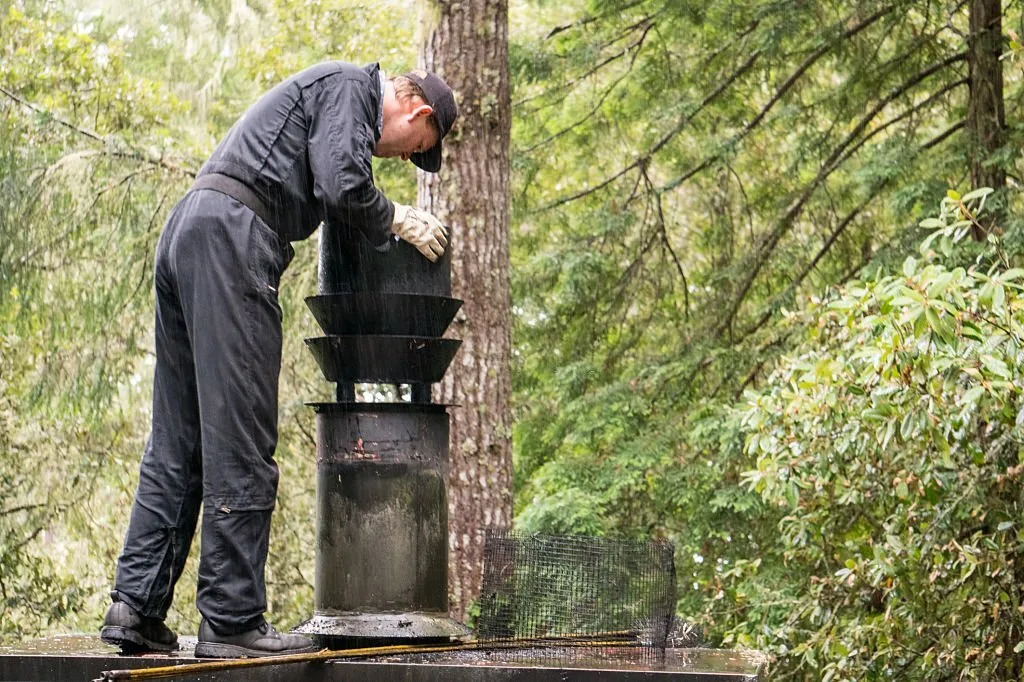
We look at the flue with a camera or light from the firebox and the top, confirm that the deposit is truly glazed rather than heavy Stage 2 crust, check the liner for cracks and missing mortar joints, and note how thick and widespread the glaze is. This is what tells us which treatment approach has a realistic chance of working.
Treat, break down and remove
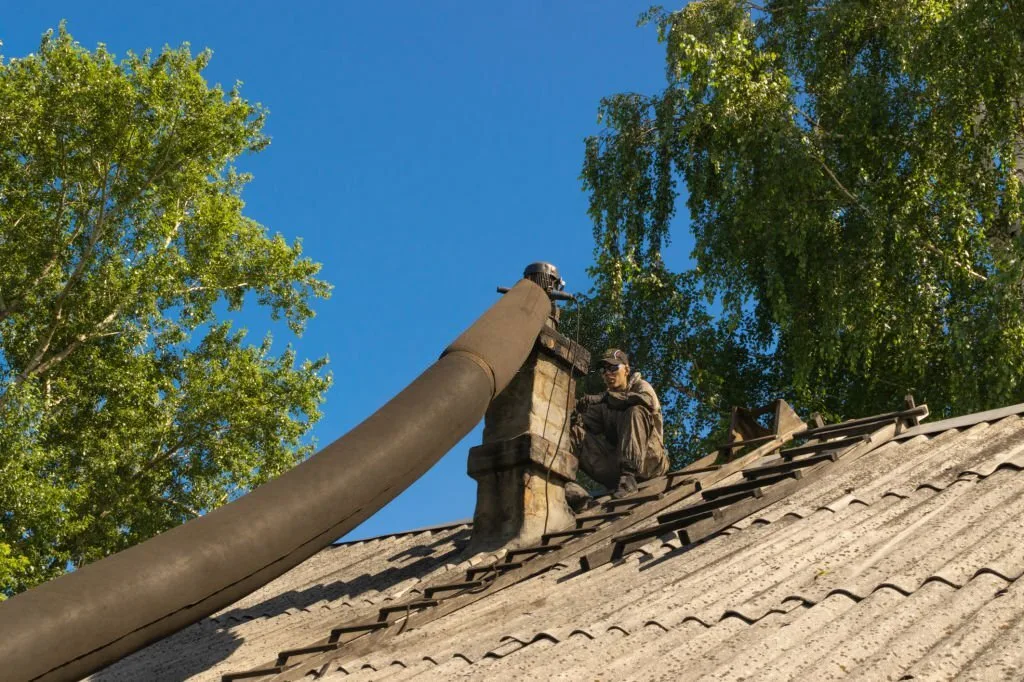
Glaze is softened with a creosote modifier applied to the deposit or, where appropriate, burned in the firebox over a number of fires by the homeowner following our instructions. Once it has converted to a brittle ash-like state we remove it with heavy rotary chain or whip heads, scrapers and a HEPA vacuum. Thick glaze often needs a second or third visit because it loosens in layers.
Report and next steps
We show you before-and-after images, explain how much of the glaze came off and what, if anything, remains, and walk you through the liner's condition. If cleaning succeeded, we cover the burning habits that prevent it from coming back. If the liner is cracked, spalled or too far gone, we explain relining options rather than pretending another cleaning will fix it.
Options
Stage 3 treatment options
- Chemical creosote modifier with follow-up mechanical removal — the standard approach for thin-to-moderate glaze; we apply a modifier, allow it to work, then return to break out the converted deposit.
- Homeowner-applied powder or log treatment between visits — used when the glaze is widespread and needs several burn cycles to convert; we give written instructions and schedule the removal visit.
- Heavy rotary chain and whip cleaning — for glaze that has already been converted or is brittle from a past chimney fire; only used on liners sound enough to take it.
- Multi-visit staged removal — thick, layered glaze that releases in stages over two or more appointments, each followed by a camera check.
- Stop and recommend relining — when inspection shows the liner is cracked, missing tile sections or so thin that aggressive cleaning would do more harm than the glaze itself.
Pricing
What affects the price
- Thickness and extent of the glaze, which determines how many treatment cycles and visits are needed
- Flue height, diameter and the number of offsets or bends the tools must work through
- Whether a camera inspection is needed to confirm the stage and check liner condition
- Type of liner (clay tile, stainless steel or unlined masonry) and how aggressively it can be worked
- Whether a wood stove or insert must be disconnected to reach the flue
- Access conditions for the top of the chimney and the roof pitch
- Amount of chemical modifier required and any return trips for staged removal
We don't publish flat prices because every chimney is different. You'll get a written quote after we look at the system — no surprises.
Timing & Safety
When Stage 3 cleaning is necessary and when it is not
Necessary:
- A sweep or inspection has identified glazed creosote in any part of the flue. Glaze does not go away on its own and does not respond to routine sweeping.
- After any chimney fire, before the fireplace or stove is used again. A fire often expands or cracks the glaze and can damage the liner at the same time.
- Before connecting a new wood stove or insert to an existing flue that has glaze in it.
- When you are buying or selling a home and the inspection notes glazed deposits.
Probably not the right service:
- If the buildup is dusty, flaky or crunchy rather than shiny and hard, a standard sweep or our Stage 1 or Stage 2 cleaning will handle it at a fraction of the effort.
- If the problem is limited to the smoke chamber shelf or the firebox rather than the flue, our smoke chamber cleaning or wood fireplace cleaning is the better fit.
- If the liner is already broken or missing sections, cleaning alone will not make the chimney safe to use; relining is the honest recommendation.
Not sure which stage you have? Describe what you see or send photos when you call, and we will schedule an inspection rather than guessing. We do not diagnose remotely.
Safety considerations
Glazed creosote is the fuel behind most serious chimney fires. It is dense, holds a lot of energy and, once ignited, can burn at temperatures high enough to crack clay tiles, warp metal liners and ignite framing near the chimney. Because it is hard and shiny, many homeowners assume it is harmless or mistake it for a stained liner.
- Do not use the fireplace or stove until a Stage 3 cleaning has been completed and the liner checked. A single hot fire can ignite the glaze.
- Never try to burn glaze off with an intentionally hot fire or accelerants. That is how chimney fires start.
- Do not attempt to scrape glaze yourself or climb onto the roof; the tools and chemicals involved are for trained technicians.
- If you ever see flames or sparks coming out of the chimney top, hear a roaring sound or smell intense burning, get everyone out and call 911.
- Chemical modifiers we use are applied per the manufacturer's instructions; we will explain what is being applied in your home and any precautions while it works.
NFPA 211 recommends that chimneys be inspected annually and cleaned when deposits warrant it. With Stage 3 creosote, any amount warrants it.
Seattle & Puget Sound conditions
Puget Sound homes are unusually prone to glazed creosote. Our winters are damp and mild, so many people keep a slow, smoldering fire going for hours rather than a hot, short burn, and that low-temperature smoke condenses on cool flue walls as liquid tar. Firewood stored outside in Seattle, Tacoma or Everett rarely dries below 20 percent moisture without a covered, ventilated rack, and wet wood is the single biggest cause of glaze. Add the tall, exterior masonry chimneys common on older Seattle and Tacoma houses, which stay cold and rainy on the outside, and the flue becomes a condensation surface. Rain entering through a missing cap keeps the glaze moist and accelerates liner damage, and freeze-thaw cycles in the foothills and Snohomish County can crack tiles already weakened by a past creosote fire. We see the worst cases in homes that switched to a wood stove for heating without upgrading the old oversized flue.
Real Work
Chimney Cleaning Stage 3 in action
Glazed creosote will not brush off. Let us treat it properly.
Call 206-207-3974 or request a quote for Stage 3 chimney cleaning anywhere in King, Pierce or Snohomish County, Sunday through Friday, 7am to 8pm.
☎ (206) 207-3974 Request ServiceQuestions
Chimney Cleaning Stage 3 FAQ
Can you guarantee all the glaze will be removed?
No, and you should be wary of anyone who does. Glazed creosote responds differently depending on how thick it is, how long it has been there and what the liner is made of. Our approach is to treat it, remove what releases, inspect with a camera and tell you exactly what remains and whether another round is worth it.
Why does Stage 3 cleaning sometimes take more than one visit?
Chemical modifiers need time, and usually heat from several fires, to convert the tar into a brittle form that tools can remove. Thick glaze converts in layers, so we typically remove the outer layer, let the next layer react and return. Rushing it with harder tools risks damaging the liner.
How is this different from your chimney creosote removal service?
Our creosote removal page covers heavy deposits across all stages, including the flaky and crusty kinds that brushes handle. This page is specifically for Stage 3 glaze, where brushing does nothing and chemical treatment plus specialized removal is the only option. If you are not sure which you have, an inspection settles it.
I had a chimney fire and the creosote looks puffy now. Is it safe to use the fireplace?
Not until it has been inspected. A chimney fire often expands glaze into a honeycomb that is easier to remove, but the same fire can crack tiles or open mortar joints you cannot see from the firebox. We clean the expanded deposit and check the liner before giving the go-ahead.
What if the liner is too far gone?
If the camera shows cracked or missing tiles, a heavily spalled liner or gaps that expose the masonry, we will stop and explain that cleaning cannot make the chimney safe. At that point relining is the right conversation, and we would rather tell you that than bill you for cleanings that do not solve the problem.
How do I keep glaze from coming back?
Burn only seasoned wood, covered and dried for a year or more in our climate. Keep fires hot and active rather than damped down overnight. Make sure the flue size matches the appliance, especially with inserts. Keep a cap on the chimney so rain stays out. And have the flue looked at every year so deposits are caught at Stage 1 instead of Stage 3.
Related services
Service areas
Helpful reading