Home › Services › Chimney Cleaning
Chimney Cleaning Seattle, WA
Clearing blockages, nesting debris, odors and buildup from wood fireplaces, stoves and inserts across King, Pierce and Snohomish counties.
- 25+ years in business
- CSIA certified
- Licensed, bonded & insured
Request Chimney Cleaning
Tell us what's going on — we'll confirm a time by phone or text.
Chimney cleaning covers the jobs that go beyond a routine sweep of the flue: clearing a blocked or partially blocked chimney, removing leaves, needles, nesting material and other debris, dealing with a persistent smoky or musty odor, and cleaning the parts of a wood stove or fireplace insert that a standard fireplace sweep does not reach. If your fireplace has been sitting unused, smells after the first fall rain, or won't draw the way it used to, this is usually the service you need.
In the trade, sweeping and cleaning overlap. The difference on this page is scope: a sweep is the regular creosote removal a working fireplace needs; cleaning is what we do when a system is blocked, dirty from neglect, or has a stove or insert that needs to be partially disassembled to clean properly. We inspect first, explain what we find, and only do the work the system actually needs.
Symptoms & Problems
Signs your chimney needs more than a routine sweep
- A musty, damp or animal smell from the fireplace, strongest after rain
- Leaves, needles, twigs or feathers falling into the firebox
- Smoke backing into the room even with the damper fully open
- A fireplace or stove that has not been used for several seasons
- A wood stove or insert with heavy buildup behind the baffle or in the connector pipe
- Scratching, chirping or fluttering sounds from the flue
- A cap or screen that is clogged with debris or soot
- Slow, weak draft that does not improve with dry wood
How It Works
How a chimney cleaning visit works
Inspect and locate the problem
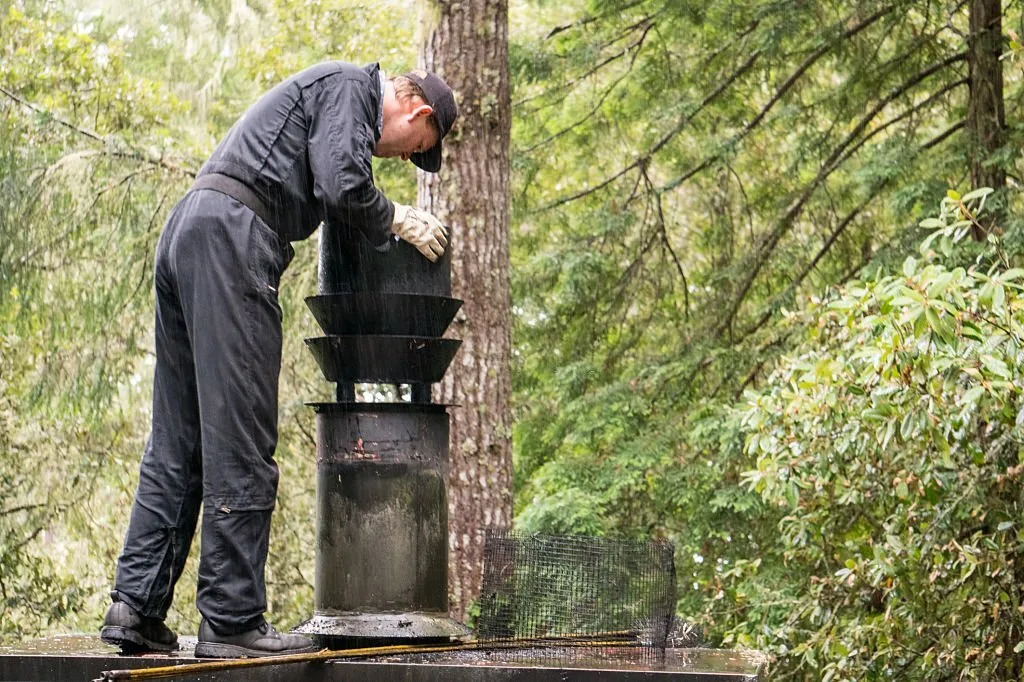
We look down the flue and into the smoke chamber and firebox to find what is blocking or fouling the system — debris, nests, creosote, or buildup inside a stove or insert.
Clear and clean
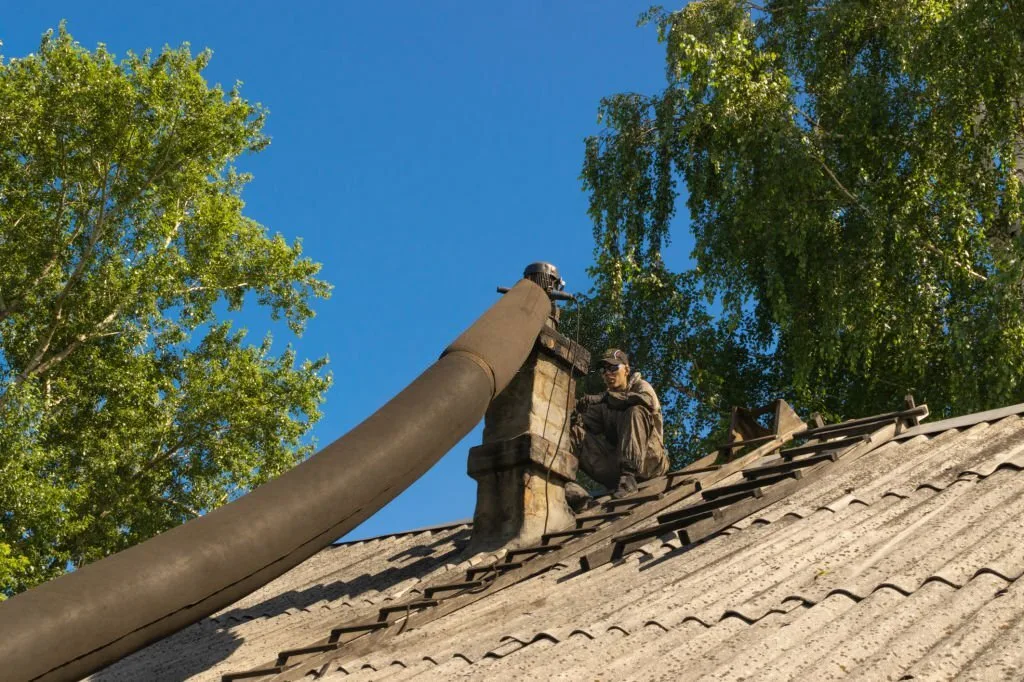
Debris and blockages are removed from the top down and bottom up with HEPA containment in place. Stoves and inserts are opened up so the baffle, connector pipe and flue can be cleaned, not just the visible firebox.
Check draft and recommend prevention
We confirm the flue draws, explain what caused the problem, and recommend the fix that keeps it from coming back — usually a cap, a screen, or a sweeping schedule that matches how you burn.
Options
What chimney cleaning can include
- Blockage and debris removal — clearing leaves, needles, nesting material and fallen masonry from the flue and smoke shelf.
- Wood stove and insert cleaning — removing baffles and cleaning the stove body, connector pipe and flue liner, which a fireplace-only sweep does not cover.
- Odor treatment — removing the creosote, soot and damp debris that produce smoky or musty smells, then addressing the draft or moisture issue behind them.
- Firebox and smoke-chamber cleaning — clearing ash, soot and buildup from the firebox, damper area and smoke chamber.
- Animal and nest removal — see our animal and nest removal service; active nests of protected birds must be left until the birds leave.
Pricing
What affects the price
- How severely the flue is blocked and what the blockage is made of
- Whether a wood stove or insert has to be partially disassembled to clean
- Flue height and roof access
- How long the system has gone without service
- Whether a cap or screen is needed afterward to prevent a repeat
- Number of flues in the chimney
We don't publish flat prices because every chimney is different. You'll get a written quote after we look at the system — no surprises.
Timing & Safety
When a cleaning is needed, and when a sweep is enough
Book a cleaning when something is clearly wrong: a smell, a blockage, debris falling into the firebox, a stove that is choked with buildup, or a fireplace that has sat unused for years. If your fireplace simply gets regular use and is due for its annual attention, a standard chimney sweep after an inspection is usually enough.
- A chimney that has been unused for a season or more should be inspected and cleaned before the first fire — debris and nests build up quietly.
- Wood stoves and inserts need their own cleaning schedule because buildup collects in the connector pipe and behind the baffle, not only in the flue.
- Odors that persist after a cleaning usually point to a draft or moisture problem, which an inspection can pin down.
Safety considerations
- Do not light a fire to "burn out" a blockage or smell. A blocked flue pushes smoke and carbon monoxide into the house, and burning debris can ignite creosote.
- Do not use the fireplace if you hear animals in the flue; call for removal first.
- Stoves and inserts contain refractory parts and baffles that are easy to crack; leave disassembly to a technician.
- Never attempt roof or flue-top access yourself; wet Northwest roofs are dangerous.
Seattle & Puget Sound conditions
Puget Sound chimneys collect a lot of what falls out of the sky and the trees. Conifer needles and leaves blow into uncapped flues every autumn, damp debris sits in the smoke shelf through the wet season and starts to smell, and birds and squirrels look for dry shelter in spring. An uncapped or poorly screened flue in a wooded lot will need cleaning far more often than a capped one, which is why we usually recommend a cap or screen as part of the fix.
Real Work
Chimney Cleaning in action
Blocked, smelly or neglected chimney?
Call or request service and we will inspect, clear it, and tell you how to keep it clean.
☎ (206) 207-3974 Request ServiceQuestions
Chimney Cleaning FAQ
What is the difference between chimney cleaning and a chimney sweep?
They overlap, and in everyday use the words mean the same thing. On this site, a sweep is the regular creosote and soot removal a working fireplace needs. Cleaning is the broader job of clearing blockages, debris, odors and buildup, including inside wood stoves and inserts. An inspection tells you which one your system needs.
My fireplace smells musty after it rains. Will cleaning fix that?
Usually, yes. The smell comes from damp soot, creosote and debris on the smoke shelf and flue walls. Cleaning removes that material. If the odor returns, there is typically a draft or moisture problem — often a missing cap or negative pressure in the house — that we can identify during the visit.
Do wood stoves and inserts need a different kind of cleaning?
Yes. A fireplace-only sweep does not reach the connector pipe or the area behind a stove's baffle, where buildup collects. Cleaning a stove or insert means partially disassembling it so those parts and the liner can be cleaned properly.
I haven't used my fireplace in years. Do I still need it cleaned before lighting it?
Have it inspected and cleaned first. Unused chimneys collect nests, leaves and moisture, and old creosote does not go away on its own. Lighting a fire into a blocked flue can push smoke and carbon monoxide into the house.
Can you clean a chimney that has a bird's nest in it?
It depends on the nest. Abandoned nests and debris can be removed. Chimney swifts and other migratory birds are federally protected, so an active nest has to stay until the young have left; we can confirm what is in the flue and schedule the cleaning for when it is legal and safe.
How do I keep debris and animals out once the chimney is clean?
A properly sized chimney cap with a mesh screen is the single most effective fix. It keeps rain, leaves and animals out while letting smoke exit. We can install one at the same visit.
Related services
Service areas
Helpful reading