
Home › Services › Chimney Creosote Removal
Chimney Creosote Removal Seattle, WA
Identification and removal of all three degrees of creosote from wood-burning chimneys across Seattle, Tacoma and King, Pierce and Snohomish counties.
- 25+ years in business
- CSIA certified
- Licensed, bonded & insured
Request Chimney Creosote Removal
Tell us what's going on — we'll confirm a time by phone or text.
Creosote is the tar-like residue that condenses inside a chimney every time wood burns. It starts as loose soot, hardens into brittle flakes, and can finally bake into a shiny, glazed coating that no brush will touch. Chimney creosote removal is the work of figuring out which of those three stages you have and clearing it with the method that stage actually needs, so the flue is clean enough to burn safely again. Any household that burns wood in a fireplace, insert or stove needs this at some point; in the Puget Sound, where damp softwood and slow, smoldering fires are the norm, it tends to come sooner.
This page is the overview. It explains how creosote forms, why it builds so fast here, what each degree looks like, and what it takes to remove it. Our Chimney Sweep page covers the routine annual service that keeps light buildup from ever becoming a problem; this page is for the deposit itself, once it is already there. When the inspection tells us which stage you have, we match it to our Chimney Cleaning Stage 1, Stage 2 or Stage 3 service, each of which is described in more detail on its own page.
James Chimney Sweep has served Seattle-area homeowners for more than 25 years. We are CSIA certified, and licensed, bonded and insured in Washington.
Symptoms & Problems
Signs your chimney has a creosote problem
- Black, flaky or crusty deposits visible just above the damper or on the smoke shelf
- A shiny, tar-like or blistered coating on the flue walls
- A strong, sharp smoky smell in the room, especially on humid days or when the fireplace is cold
- Smoke drifting back into the room because the flue opening has narrowed
- Fires that are harder to start or burn sluggishly compared with last season
- Black, oily drips or staining around the damper, firebox or at the chimney cap
- Popping, crackling or a low roar from inside the chimney while burning, which can indicate a small chimney fire
- Puffy, honeycomb-shaped ash in the flue, a sign a chimney fire has already happened
How It Works
How we remove creosote
Inspect and grade the deposit
We look at the firebox, damper, smoke chamber and the length of the flue, usually with a camera. We note how thick the creosote is, whether it is powdery, flaky or glazed, and whether there is any sign of a past chimney fire. That grade decides the method; a brush that handles first-degree creosote does nothing against third-degree glaze.
Remove it with the method the stage calls for
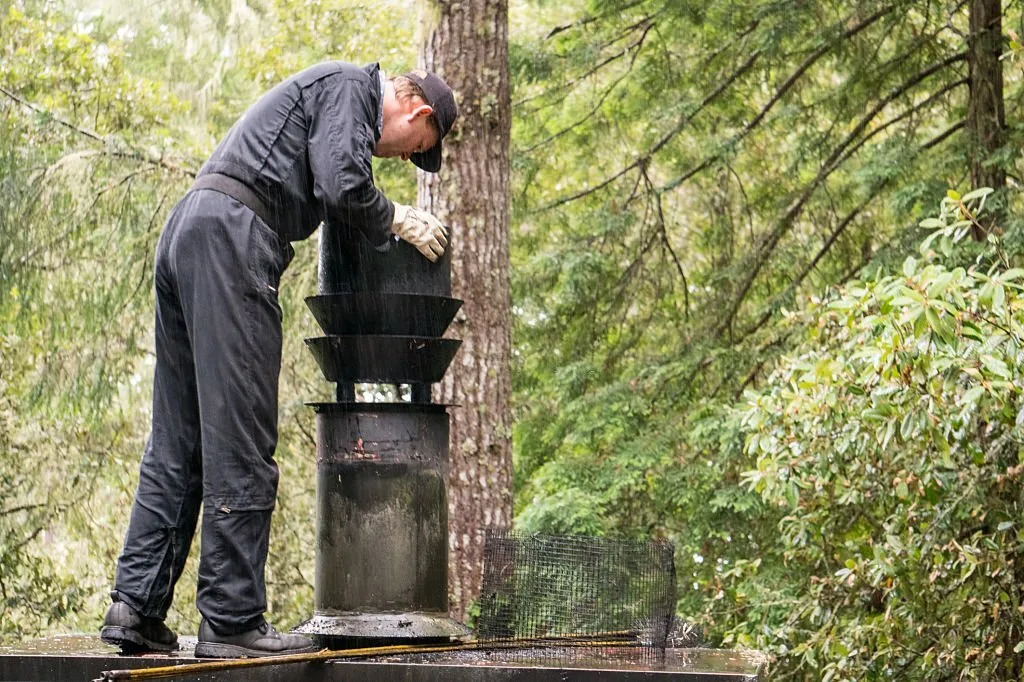
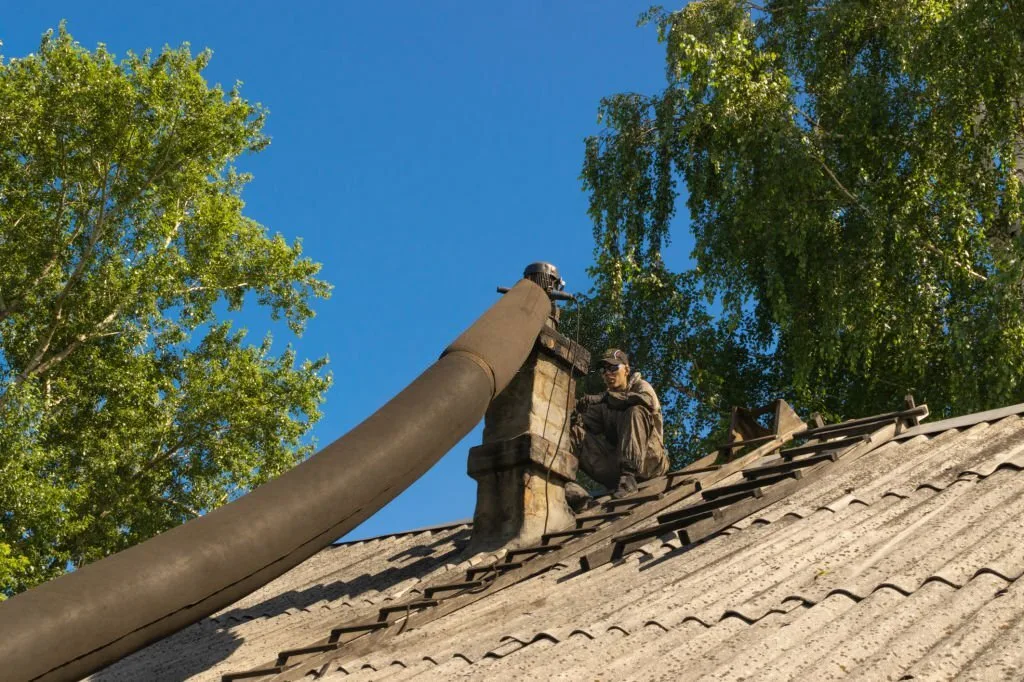
Light, powdery buildup comes out with rods and brushes, the same approach used in a standard sweep. Hard flakes need a more aggressive brush or rotary head and more passes. Glazed creosote requires a chemical treatment applied in stages to break the glaze down so it can be mechanically removed, sometimes over more than one visit. Your home is protected with drop cloths and a HEPA vacuum keeps the dust contained.
Re-inspect and explain what comes next
Once the flue is clear we look again to confirm the liner or masonry underneath is intact, because heavy creosote, and especially a chimney fire, can crack tiles or damage a liner. You get a plain explanation of what we found, what was removed, and whether anything about how you burn should change so the buildup does not return at the same rate.
Options
The three degrees of creosote and what each needs
- First-degree creosote (soot and dust) — A velvety, powdery layer that brushes off easily. This is what a regular sweep removes and it is the stage you want to catch. Covered in depth on our Chimney Cleaning Stage 1 page.
- Second-degree creosote (hard flakes) — Shiny black flakes that look like dried tar or cornflakes. Common with inserts, stoves and fireplaces with glass doors, where restricted air lets smoke cool and condense. Needs heavier brushing, rotary tools and more time. See our Chimney Cleaning Stage 2 page.
- Third-degree creosote (glaze) — A hard, shiny coating that has baked onto the flue walls, sometimes dripping and re-hardening in layers. Highly concentrated fuel that brushes cannot remove. Requires chemical breakdown and mechanical removal, and often reveals liner damage once it is gone. See our Chimney Cleaning Stage 3 page.
- Smoke chamber and smoke shelf deposits — Creosote gathers heavily in the irregular area above the damper. When this section is the main problem we handle it as Chimney Smoke Chamber Cleaning, which focuses on that specific zone rather than the full flue.
- Post-chimney-fire removal — If there is evidence a fire has already burned through the deposit, removal is paired with a close inspection of the liner and masonry before the fireplace is used again.
Pricing
What affects the price
- The degree of creosote present; glazed third-degree removal is a multi-step job compared with a single brushing
- Flue height, diameter and whether it is straight or has offsets that slow the work
- Type of appliance: open fireplace, insert or wood stove, and whether the insert must be pulled to reach the flue
- Whether the smoke chamber and smoke shelf also need heavy cleaning
- Whether a chemical treatment is needed and how many applications it takes
- Number of visits required for a heavily glazed flue
- Any liner or masonry damage uncovered once the deposit is removed
We don't publish flat prices because every chimney is different. You'll get a written quote after we look at the system — no surprises.
Timing & Safety
When creosote removal is necessary and when it can wait
NFPA 211 recommends that chimneys be inspected annually and cleaned when deposits are present. In practice, the guideline most sweeps work to is that any accumulation of roughly an eighth of an inch or more should come out before the next fire, and glazed creosote should be removed at any thickness.
- Necessary now: visible flakes or glaze in the flue, a smoky smell in the room, smoke rolling back, any sign of a past chimney fire, or a fireplace in a home you just bought with no record of the last cleaning.
- Necessary this season: you burn most evenings through the winter, you burn wood that was not fully seasoned, or you run a stove or insert damped down overnight. These habits produce second-degree creosote quickly.
- Can usually wait for the routine sweep: a fireplace used a handful of times a year with dry hardwood and a light dusting of soot. That is ordinary maintenance, handled by our Chimney Sweep service.
If you are unsure which group you are in, an inspection settles it. We do not diagnose by phone or from photos.
Safety considerations
Creosote is concentrated, unburned fuel stuck to the inside of your chimney. When a flue reaches the right temperature it ignites, and a chimney fire can reach temperatures that crack clay tiles, warp metal liners and transfer heat to the wood framing around the chimney. Many chimney fires burn unnoticed and are only discovered at the next inspection.
- If you hear a roar, see flames or sparks from the top of the chimney, or smell intense burning, get everyone out and call 911. Do not try to put it out from inside the flue.
- Do not use creosote-removal logs or powders as a substitute for removal. They can loosen some deposits, but the loosened material still has to be physically taken out, and they do nothing against heavy glaze.
- Do not attempt to scrape or brush a glazed flue yourself. Dislodged chunks can block the flue, and the work needs the liner checked afterward.
- Removal is done from inside the home and from the roof by our technician with proper equipment; we never ask homeowners to go onto the roof.
- Burn dry, seasoned wood, keep fires hot and open the air supply rather than smoldering a load overnight. These are the three habits that slow creosote more than anything else.
Seattle & Puget Sound conditions
Creosote forms faster in the Puget Sound than in most of the country, and the reasons are local. Much of the firewood sold and cut here is fir, hemlock and other softwoods that carry a high resin content, and after a wet autumn it often goes into the fireplace well above the moisture level it should have. Wet wood burns cool; cool smoke condenses on the flue walls instead of leaving the chimney. Add the regional habit of damping a stove or insert down to smolder through a long, mild, damp evening, and you have the ideal recipe for second- and third-degree buildup. The marine air does its part too: a chimney that sits cold and damp between fires collects moisture in existing soot, and that moisture makes deposits heavier, more acidic and more likely to smell in the living room on muggy days. Homes in Seattle, Tacoma, Everett and the surrounding counties that burn through a full heating season should expect to be on the faster end of the creosote schedule.
Real Work
Chimney Creosote Removal in action
Find out which stage of creosote is in your flue
Call 206-207-3974, Sunday through Friday, 7am to 8pm, or request a quote online and we will inspect, grade and remove it across King, Pierce and Snohomish counties.
☎ (206) 207-3974 Request ServiceQuestions
Chimney Creosote Removal FAQ
How do I know which degree of creosote I have?
Only an inspection can say for certain. As a rough guide, powdery black dust you could wipe off with a finger is first degree, hard shiny flakes are second degree, and a smooth, tar-like coating that looks painted on is third degree. We grade it with a camera before choosing a method.
Can creosote be removed with a regular chimney sweep?
First-degree creosote, yes. That is exactly what a routine sweep is for. Second-degree flakes need more aggressive tools and time, and third-degree glaze will not come off with brushes at all. That is why this service is separate from our standard Chimney Sweep.
Do the creosote sweeping logs actually work?
They can change the chemistry of light deposits so they flake and fall more easily, but they do not remove anything from the chimney, and the fallen material still sits on the smoke shelf. They are not a replacement for removal and have no meaningful effect on glazed creosote.
Will removing glazed creosote damage my chimney liner?
Done correctly, no. The chemical treatment breaks the glaze down so it can be removed without gouging the liner. What often happens is that the removal reveals damage the creosote was hiding, usually from the heat of a past chimney fire. We check for that and tell you what we find.
How often should a wood stove or insert in the Seattle area be checked for creosote?
At least once a year per NFPA 211 guidance, and for a stove or insert used as a primary heat source through the wet season, a mid-winter check is a reasonable precaution. Inserts with restricted airflow produce second-degree creosote faster than open fireplaces.
Is creosote a problem with a gas fireplace?
No. Creosote comes from burning wood. Gas appliances produce a different kind of residue and corrosion, which is handled under our Chimney Gas Fireplace Cleaning service. If you ever smell gas, leave the house and call the gas utility or 911; gas lines and valves are only serviced by a qualified technician.
Related services
Service areas
Helpful reading