
Home › Services › Chimney Flashing Leak Repair
Chimney Flashing Leak Repair Seattle, WA
Water stains around the chimney? We confirm whether the flashing is the real entry point, then fix it, across Seattle, Tacoma and King, Pierce and Snohomish counties.
- 25+ years in business
- CSIA certified
- Licensed, bonded & insured
Request Chimney Flashing Leak Repair
Tell us what's going on — we'll confirm a time by phone or text.
Chimney flashing leak repair starts with a question most homeowners cannot answer from the living room: is the water actually coming in at the flashing? A brown ring on the ceiling next to the chimney can be caused by failed flashing, but it can also be a cracked crown, a missing cap, saturated brick, a leaking roof valley or even condensation inside the flue. James Chimney Sweep has spent 25+ years in Seattle and the Puget Sound tracing these leaks to their true source before anyone picks up a tube of sealant.
This page is for homeowners who have a leak and want it diagnosed correctly. If you already know your flashing is damaged and simply need it fixed, our Chimney Flashing Repair page covers that component-level work; if the metal is past saving, Chimney Flashing Replacement and Chimney Flashing Installation cover full tear-out and new systems. Here, the job is to prove where the water enters, stop it, and confirm it stays stopped through the next Puget Sound storm.
We are CSIA certified and licensed, bonded and insured in Washington, serving King, Pierce and Snohomish counties Sunday through Friday, 7am to 8pm.
Symptoms & Problems
Signs the Leak May Be at Your Flashing
- Ceiling or wall stain that sits on the downhill (lower-roof) side of the chimney
- Drip or stain that appears only during wind-driven rain, not every shower
- Water running down the outside face of the chimney in the attic, not inside the flue
- Rust streaks or lifted metal visible at the base of the chimney from the ground
- Old roofing tar or caulk smeared around the chimney base that has cracked or pulled away
- Soft, dark or delaminating roof sheathing right beside the chimney in the attic
- Damp smell or peeling paint near the chimney that gets worse in October through March
- Moss or debris packed against the uphill side of the chimney where water pools
How It Works
How We Diagnose and Repair a Chimney Flashing Leak
Trace the water to its source
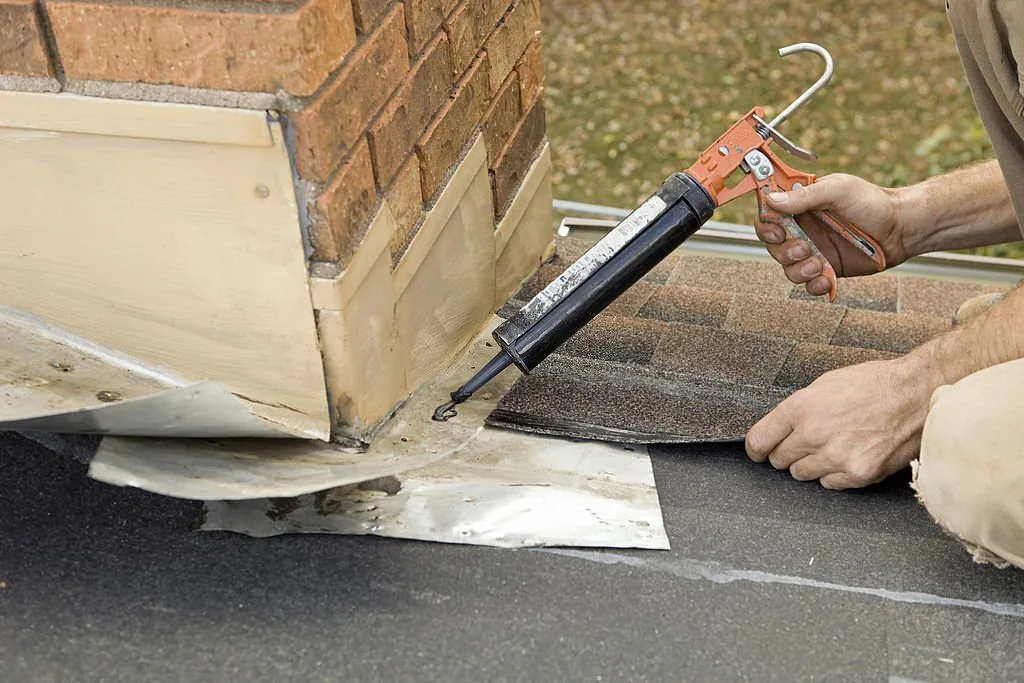
We start inside, in the attic or at the stain, and follow the water trail uphill. We check the flue interior for moisture, the crown and cap from the roof, the masonry for saturation and the flashing for lifted counter-flashing, open laps, pulled fasteners and failed sealant. When the weather cooperates, a controlled water test on each zone one at a time tells us exactly which component lets water through, so we are not guessing.
Fix the confirmed entry point
If the flashing is the culprit, we reset or re-bed lifted step and counter-flashing, replace failed sections, cut and re-seal the reglet in the mortar joint where needed, clear debris from the cricket or uphill side and apply proper flashing sealant rather than roofing tar. If the test shows the crown, cap or masonry is the real source, we tell you that and quote that repair instead of selling you flashing work you do not need.
Verify and report
After the repair we re-run the water test where practical, photograph the finished work and explain what we found, what we fixed and anything else we noticed on the roof or in the flue. You get a clear written summary so you know what was done and what to watch for.
Options
Repair Options Based on What the Diagnosis Shows
- Re-seal and re-bed existing flashing — when the metal is sound but the sealant, mortar reglet or laps have opened; the most common fix on chimneys under about fifteen years old.
- Partial section replacement — when one side (usually the uphill or weather-facing side) is rusted, torn or badly bent while the rest is intact.
- Counter-flashing re-cut into the mortar joint — when the original installer surface-mounted the counter-flashing and relied on caulk instead of a proper reglet; this fixes the recurring 'it leaks again every two years' problem.
- Cricket or saddle correction — when water and debris pile up behind a wide chimney because there is no cricket or the existing one is undersized; a flashing leak here will keep returning until the water is diverted.
- Refer to a different repair — when the water test proves the flashing is not the source; we recommend crown, cap or masonry work instead, and we will not charge you for flashing work that would not have solved it.
Pricing
What affects the price
- Whether a water test is needed to isolate the source, or the failure is obvious on inspection
- How much of the flashing perimeter is affected: one lap versus all four sides
- Whether counter-flashing must be re-cut into the mortar joints or can be re-sealed in place
- Roof pitch, height and how safely the chimney can be reached
- Condition of the surrounding roofing and sheathing, and whether any must be lifted or patched
- Chimney width and whether a cricket needs to be added or rebuilt
- Extent of hidden water damage found once the metal is opened up
We don't publish flat prices because every chimney is different. You'll get a written quote after we look at the system — no surprises.
Timing & Safety
When Flashing Leak Repair Is Urgent and When It Can Wait
Treat it as necessary now when:
- You can see active dripping or a stain that grows after each storm
- Attic sheathing or framing next to the chimney is soft, dark or growing mold
- Drywall near the chimney is bubbling, sagging or has started to crumble
- Flashing is visibly lifted or missing and the rainy season is starting
It can usually be scheduled, but should not be ignored, when:
- There is an old, faint stain that has not changed in a year
- Caulk or tar around the base is cracked but the attic is dry
- You are planning a roof replacement and want the flashing addressed at the same time
A small flashing leak rarely stays small in our climate. Water that enters at the roofline saturates brick and mortar, feeds freeze-thaw spalling in a cold snap, and rots the wood that holds the roof up. Fixing the leak early is almost always the cheaper path.
Safety considerations
Please do not go onto the roof to look for the leak yourself. Wet Puget Sound roofs, moss and steep pitches make falls the most common way a chimney problem turns into an emergency room visit. What you can safely do is note when the leak appears, which direction the wind was blowing, and photograph stains from inside the house or from the ground; that information genuinely helps our diagnosis.
- Never smear roofing tar or hardware-store caulk over flashing as a stopgap; it traps water behind the metal and makes the real repair harder
- If ceiling drywall is sagging or holding water, keep people and pets out of that room until it is addressed
- If the leak is inside the flue rather than outside it, stop using the fireplace until it is inspected; wet creosote and damaged liners are a different kind of problem
- We cannot confirm the source of a leak from photos alone; an on-site inspection is required
Seattle & Puget Sound conditions
Seattle, Tacoma and the rest of the Puget Sound hand chimney flashing a uniquely hard job. We get months of continuous light rain rather than short, hard storms, which means sealant never fully dries and any open lap sees water for weeks at a time. Wind-driven rain off the Sound pushes water sideways under laps that would be fine in calmer climates, which is why so many flashing leaks here show up only in a southwest gale. Moss grows on the uphill side of chimneys and in the cricket, holding water against the metal and mortar and slowly lifting the flashing. Near the water, salt air accelerates rust on galvanized flashing. And while our winters are mild, the few hard freezes we do get find every saturated mortar joint and crack it open. All of this is why a flashing leak in King, Pierce or Snohomish county is worth diagnosing properly rather than re-caulking every autumn.
Real Work
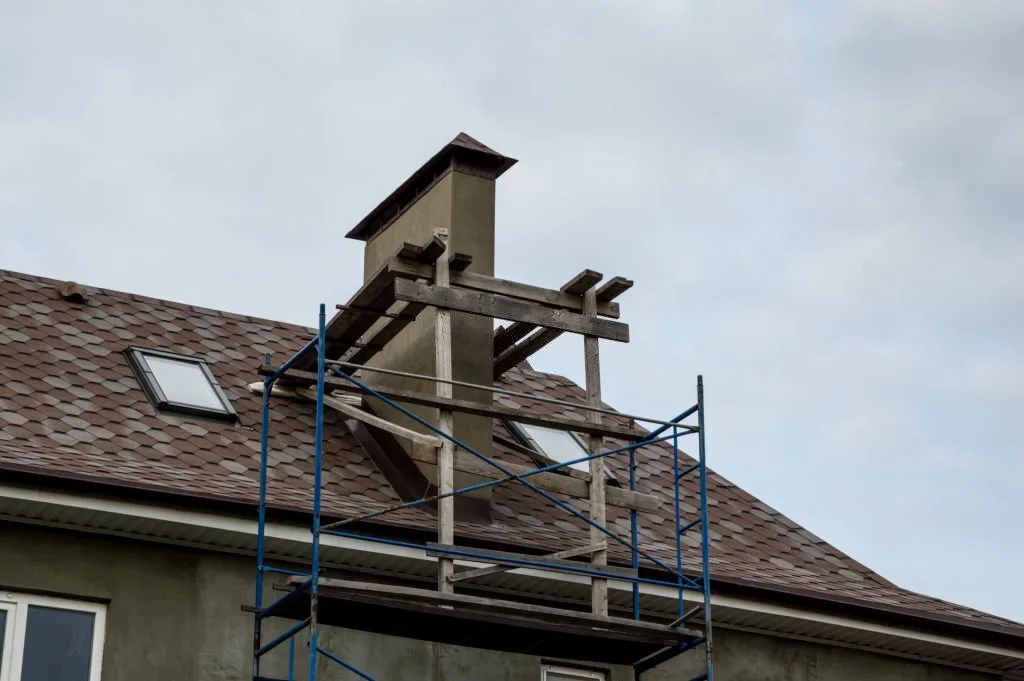
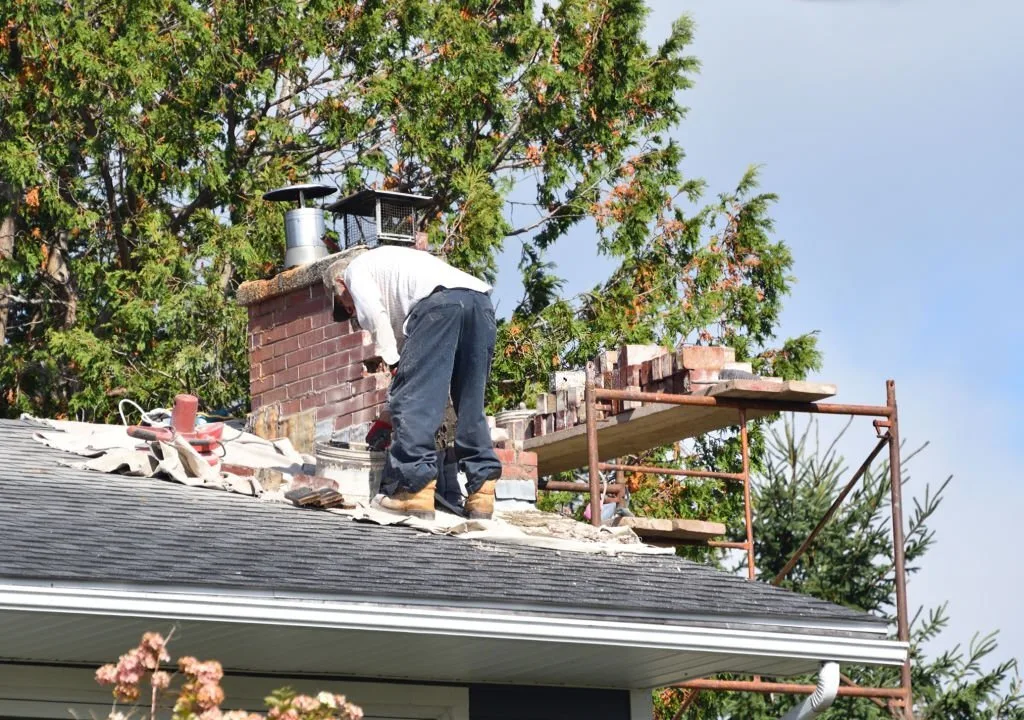
Chimney Flashing Leak Repair in action
Stop Guessing Where the Water Is Coming From
Request a quote from James Chimney Sweep at 206-207-3974 and we will trace the leak to its source before recommending any repair.
☎ (206) 207-3974 Request ServiceQuestions
Chimney Flashing Leak Repair FAQ
How do you know the leak is the flashing and not my roof?
We test one zone at a time. Water applied only to the flashing that reproduces the leak, with the crown, cap and surrounding roofing kept dry, points clearly to the flashing. If the flashing stays dry and the leak appears when we wet the roof field or a valley, we tell you it is a roofing issue rather than a chimney issue.
Why does my chimney only leak when it is windy?
Wind-driven rain pushes water sideways and upward under flashing laps that shed normal vertical rainfall just fine. A lap that has opened slightly, or counter-flashing that has pulled away from the mortar joint, will pass water only when the wind forces it in. That pattern is one of the strongest homeowner-observable tells that the flashing is involved.
The previous owner caulked around the chimney. Why is it leaking again?
Surface caulk and roofing tar are temporary at best. They shrink, crack and pull away within a season or two in our wet climate, and they often trap water behind the flashing instead of keeping it out. A lasting repair resets the metal itself and seals the counter-flashing into the mortar joint, not just over it.
Could the water be coming from inside the chimney instead of around it?
Yes. A missing cap lets rain fall straight down the flue, and a cracked crown lets water soak through the top of the masonry. Both can produce stains that look identical to a flashing leak. Part of our diagnosis is checking the flue interior and the crown so those sources are ruled in or out before any flashing work is quoted.
Do I need to replace all the flashing if only one side leaks?
Not necessarily. If the other sides are sound and properly embedded, repairing or replacing the failed side is usually enough. If the whole system was installed poorly or the metal is generally rusted, full replacement makes more sense, and we will explain the difference and let you decide.
Can you look at photos and tell me what is wrong?
Photos help us prepare, but we do not diagnose leaks remotely. Too many different problems look the same from inside the house. An on-site inspection, usually with a water test, is how we confirm the source so the repair actually works.
Related services
Service areas
Helpful reading