
Home › Services › Chimney Restoration
Chimney Restoration Seattle, WA
Bringing older and historic chimneys in Seattle, Tacoma and the Puget Sound back to sound, period-appropriate condition without tearing them down.
- 25+ years in business
- CSIA certified
- Licensed, bonded & insured
Request Chimney Restoration
Tell us what's going on — we'll confirm a time by phone or text.
Chimney restoration is the careful repair of an older masonry chimney so it is structurally sound and weather-tight again while keeping the look it has had for decades. Instead of demolishing the stack and starting over, we replace only the bricks that have failed, repoint the joints with a mortar that matches the original in strength and color, rebuild the crown, and reseal the flashing and cap. The goal is a chimney that works like new but still looks like it belongs on your 1910 Craftsman, 1925 Tudor or 1940s Tacoma bungalow.
This is the right service for homeowners in Seattle, Tacoma and the surrounding King, Pierce and Snohomish County neighborhoods whose chimney has spalled faces, crumbling mortar, a cracked crown or loose bricks at the top, but whose structure is still fundamentally straight and solid.
How it differs from its closest sibling: a Chimney Rebuild takes the chimney down to a sound course (or to the roofline) and builds it back up new. Restoration keeps the original chimney in place and repairs it selectively. If the stack is leaning, bulging or so deteriorated that the bricks no longer hold together, restoration is not enough and we will tell you so honestly.
Symptoms & Problems
Signs an older chimney is ready for restoration
- Brick faces flaking or popping off (spalling), especially on the weather side
- Mortar joints crumbling, recessed or washed out between otherwise solid bricks
- Cracked or eroded crown with bricks loosening in the top few courses
- White chalky staining (efflorescence) spreading across the brickwork
- Moss or lichen rooted in the joints rather than just sitting on the surface
- Water stains on the ceiling or walls beside the chimney after heavy rain
- A previous patch in hard gray cement that is now cracking the old brick around it
- The chimney is original to a pre-1950 home and has never had major masonry work
How It Works
How we restore a chimney
Assess the whole chimney, inside and out
We examine the exterior masonry from foundation to crown, check the flue with a camera where appropriate, and probe the mortar to see how deep the deterioration runs. We note the brick type, size and color, the original mortar, and which courses are still sound so the scope is limited to what actually needs work.
Repair selectively with matched materials
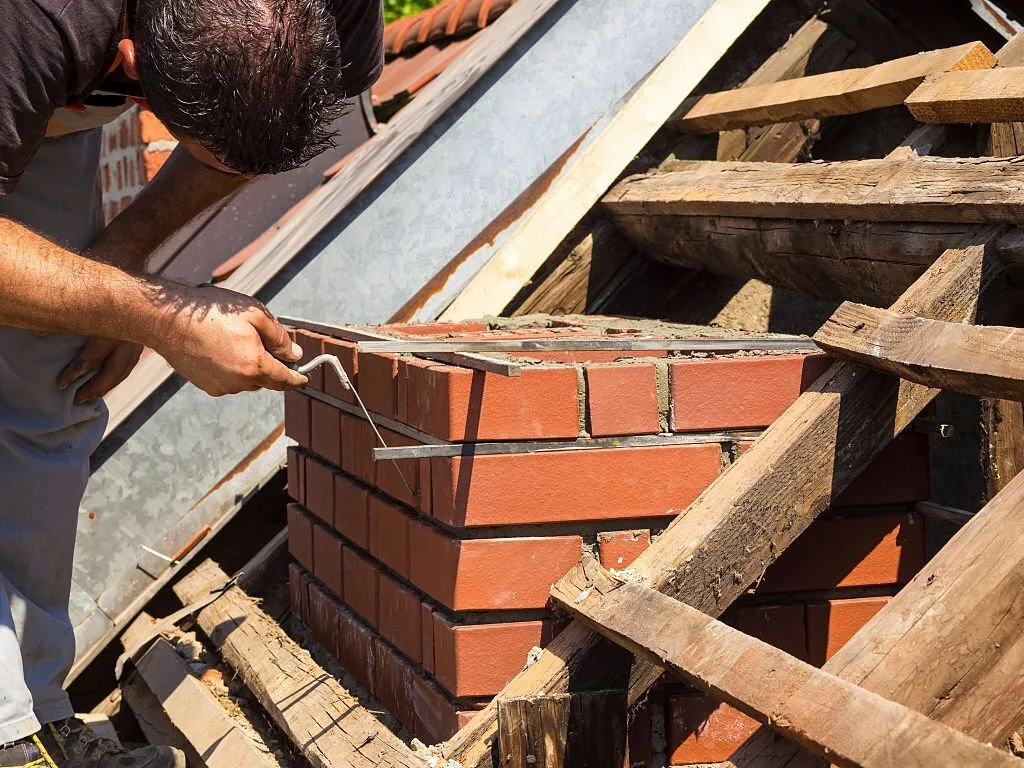
Failed bricks are cut out and replaced one at a time with reclaimed or closely matched units. Joints are raked out to proper depth and repointed with a lime-based or appropriately soft mortar tinted to match. The crown is rebuilt with a proper overhang and drip edge, flashing is resealed or replaced, and a cap is fitted. Where the flue itself is damaged, we explain relining as a separate step.
Document and hand off
You receive photos of the finished work and a plain-English summary of what was done, what was left alone and why, and what to watch for. We recommend a maintenance cadence so the restored chimney stays that way.
Options
Restoration options for older Seattle and Tacoma chimneys
- Spot brick replacement and full repointing — when most of the bricks are sound but the joints have eroded and a scattering of faces have spalled. This is the most common restoration scope on pre-war Seattle homes.
- Lime-mortar repointing only — when the bricks are intact but a previous repair used hard Portland cement that is now damaging the soft original brick, or the original lime joints have simply weathered away.
- Crown rebuild with upper-course restoration — when damage is concentrated in the top few feet: cracked crown, loose top courses, failed cap. The body of the chimney is left as it is.
- Restoration plus flue relining — when the exterior can be preserved but the clay tile liner inside is cracked or missing, so the chimney needs a new liner to be safe to use.
Pricing
What affects the price
- Height and accessibility of the chimney and the roof pitch around it
- Number of bricks that must be cut out and replaced versus simply repointed
- Whether matching reclaimed brick must be sourced for a specific color and size
- Type of mortar required (lime-based mixes take more labor and curing time than standard)
- Condition of the crown, flashing and cap, and whether they are repaired or rebuilt
- Whether the flue liner also needs repair or replacement
- Historic-district or permit considerations in some Seattle and Tacoma neighborhoods
We don't publish flat prices because every chimney is different. You'll get a written quote after we look at the system — no surprises.
Timing & Safety
When restoration is necessary, and when it can wait
Restoration is the right call when:
- Bricks are spalling or mortar is falling out, but the chimney is still plumb and the structure is intact.
- Water is getting into the house through the chimney and the cause is eroded joints, a cracked crown or failed flashing rather than a collapsing stack.
- The home is older or in a historic area and you want the repair to look original rather than new.
- A previous cement patch is accelerating damage to soft historic brick and needs to be corrected.
Restoration is not enough when: the chimney leans, bulges, or has large sections where bricks move by hand. In those cases the portion above the roof usually needs a Chimney Stack Rebuild, or the whole chimney needs a Chimney Rebuild. We will explain which during the assessment rather than recommend work that will not hold.
It can wait (briefly) when: the damage is purely cosmetic surface weathering with tight joints and no water entry. Even then, we recommend addressing early spalling before the next freeze season rather than after it.
Safety considerations
A deteriorating chimney is a safety concern, not just an appearance problem. Loose bricks at the top can fall onto the roof, yard or a walkway, and mortar loss lets water into the flue and the framing around it.
- Do not use the fireplace or appliance if bricks have shifted or the liner is suspected to be damaged until it has been inspected.
- Please do not climb onto the roof to check the chimney yourself; we inspect from ladders and the roof with proper equipment.
- Restoration does not address the flue by itself. NFPA 211 recommends annual chimney inspection, and we will tell you if the liner needs attention as part of the restoration scope.
- If your chimney serves a gas appliance and you ever smell gas, leave the house and call the gas utility or 911. Gas lines and valves are only serviced by a qualified technician.
Seattle & Puget Sound conditions
Older chimneys around Seattle and Tacoma fail in a particular way. Months of rain soak soft, early-1900s brick and lime mortar; then a cold snap freezes that water and pops the faces off the brick and powders the joints. Moss and lichen take root in the open joints and hold even more moisture against the masonry. Homes near the Sound, in West Seattle, Ballard, Tacoma's North End and the waterfront neighborhoods, also take salt-laden wind on the exposed side of the stack, which is why one face of a chimney often looks far worse than the other. Restoration with matched brick, properly soft mortar and a well-built crown is how these chimneys are made to last through more Puget Sound winters without losing the character of the house.
Real Work
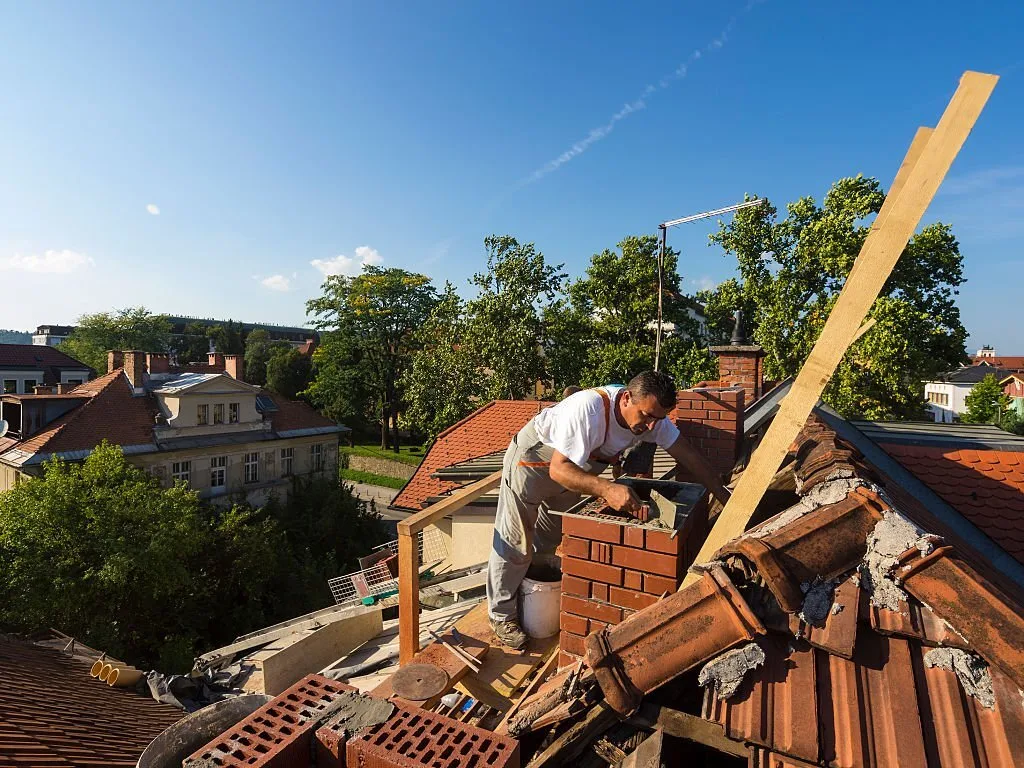
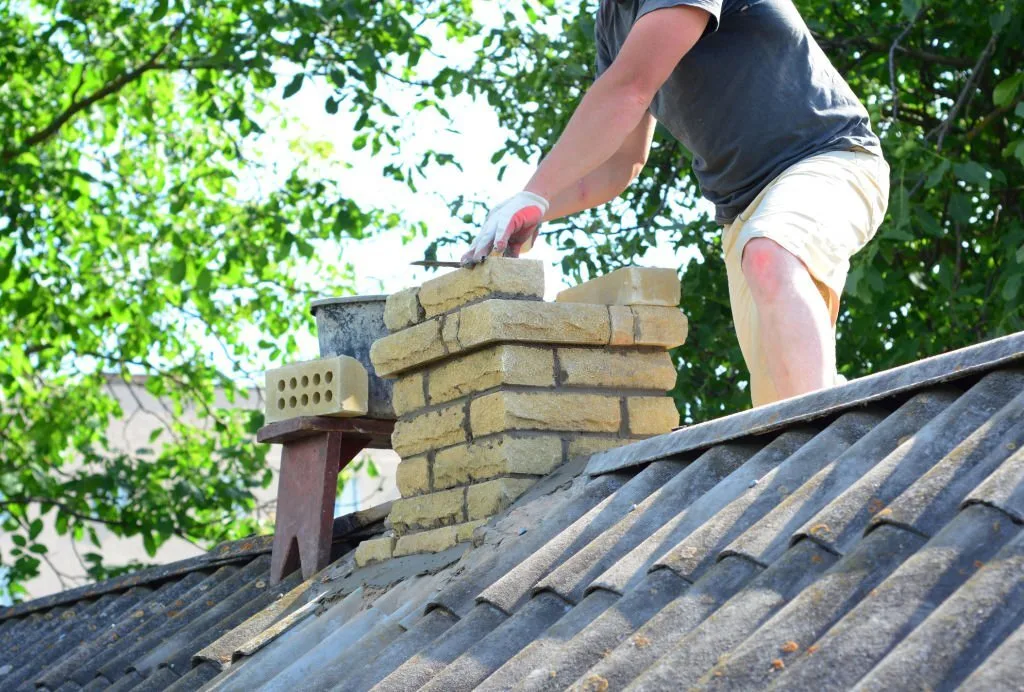
Chimney Restoration in action
Keep the chimney your house was built with
Call 206-207-3974 or request a quote and we will assess your older chimney and lay out exactly what can be restored and what should be left alone.
☎ (206) 207-3974 Request ServiceQuestions
Chimney Restoration FAQ
What is the difference between chimney restoration and a chimney rebuild?
Restoration keeps the existing chimney standing and repairs it selectively: replacing individual bricks, repointing joints and rebuilding the crown. A rebuild removes part or all of the chimney and constructs it new. Restoration is the choice when the structure is sound and you want to preserve the original appearance.
Will the repaired areas match my original brick?
That is the whole point of restoration. We match brick size, color and texture as closely as possible, often with reclaimed brick, and tint the mortar to blend with the surrounding joints. A fresh repair will look slightly newer at first and weathers in over a season or two.
Why does the type of mortar matter on an older chimney?
Brick made before the mid-1900s is softer than modern brick. If it is repointed with hard modern cement, the mortar becomes stronger than the brick and moisture and movement get forced into the brick itself, which causes spalling. A lime-based or appropriately soft mortar lets the joint do that work instead, the way the chimney was originally built.
Can you restore a chimney in a Seattle or Tacoma historic district?
Yes. Restoration is generally the preferred approach for designated homes because it preserves original material. Some districts have review requirements for exterior changes; we will flag that during the assessment so you can check with the city before work begins.
Does restoring the outside mean the chimney is safe to use?
Not automatically. The exterior and the flue liner are separate systems. We check the flue as part of the assessment, and if the liner is cracked or missing we will recommend relining alongside the masonry work so the chimney is both sound and safe to use.
How do I keep a restored chimney from deteriorating again?
Keep a good cap and crown on it, have the flashing checked when the roof is serviced, apply a breathable water repellent as recommended, and schedule an annual inspection. Catching a cracked crown or a few open joints early is far cheaper than another round of brick replacement.
Related services
Service areas
Helpful reading