
Home › Services › Chimney Stack Rebuild
Chimney Stack Rebuild Seattle, WA
Tear-down and rebuild of the exposed chimney section above the roofline for homes across Seattle, Tacoma and King, Pierce and Snohomish counties.
- 25+ years in business
- CSIA certified
- Licensed, bonded & insured
Request Chimney Stack Rebuild
Tell us what's going on — we'll confirm a time by phone or text.
A chimney stack rebuild replaces the part of your chimney that lives above the roofline: the brick, mortar, crown and cap that sit out in the weather year-round. We take the stack down to a sound course of brick at or just above the roof deck, then rebuild it with new brick and mortar, tie the liner back in, pour a proper crown and fit a cap. The chimney below the roof, inside the attic and walls, stays as it is.
This is the most common partial rebuild we do in the Puget Sound, and for a simple reason. The stack takes every inch of rain, every freeze-thaw night and, near the water, every bit of salt air, while the masonry inside the house stays dry and protected. When the top is crumbling and the rest of the chimney is solid, rebuilding just the stack restores the chimney without the cost of starting over.
How it differs from its closest sibling: a full chimney rebuild replaces masonry from the firebox or foundation all the way up, usually because the whole structure is failing or leaning. A stack rebuild stops at the roof. If an inspection shows the damage is confined to the exposed section, this page describes the right fix.
Symptoms & Problems
Signs Your Chimney Stack Needs Rebuilding
- Brick faces popping off (spalling) on the section above the roof, with chips landing on shingles or in gutters
- Mortar joints above the roofline washed out deeper than a fingertip, while joints in the attic look fine
- The stack visibly leans, twists or has stepped cracks running through several courses
- A crown that is cracked through, crumbling at the edges or missing chunks
- Loose or wobbly bricks you can move by hand at the top of the chimney
- Water stains on the ceiling or attic framing right around the chimney after heavy rain
- Heavy moss or plant growth rooted into the brick joints above the roof
- Previous tuckpointing or sealant that keeps failing within a season or two
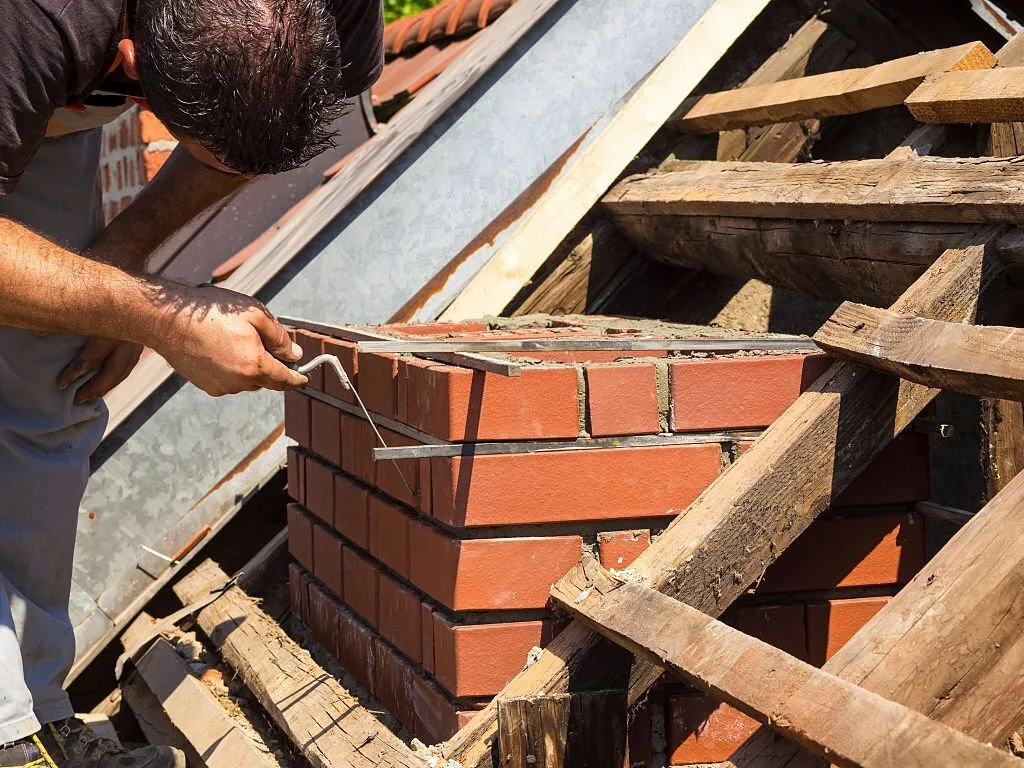
How It Works
How a Stack Rebuild Works
Inspect and mark the tear-down line
We inspect the stack, the flashing, the crown and the chimney below the roof, including the attic side where we can reach it. The goal is to find where sound masonry begins. That becomes the tear-down line. If the damage runs below the roof deck, we tell you plainly that a stack rebuild is not enough and explain what is.
Tear down and rebuild
We protect the roof, remove the deteriorated brick course by course down to the marked line and clean the bearing surface. The stack is rebuilt with new brick and mortar suited to the exposure, with the liner extended or tied back in so the flue runs continuous to the top. A new crown is formed with an overhang and drip edge, then a cap is installed. Flashing is reset or replaced so the roof-to-chimney joint sheds water.
Cure, clean up and report
New mortar needs time to cure before the first fire, and we tell you how long to wait for the conditions on the day. We clean the roof and the ground, remove the old brick and walk you through photos of the finished work. You receive a written summary of what was rebuilt, what was left in place and what to watch for in the years ahead.
Options
Stack Rebuild Options
- Rebuild to the roofline — the standard approach when the bricks just above the roof are still sound; we remove everything above the tear-down line and rebuild the full exposed height.
- Rebuild from the crown down a few courses — when only the top courses and crown have failed; a smaller job that still gets a new crown and cap, but only makes sense if the lower stack passes inspection.
- Matched-brick rebuild — we source brick that matches the size and color of the original as closely as possible so the new stack blends with the house; older Seattle and Tacoma homes sometimes need a closer search.
- Rebuild with liner extension — when the existing liner is short, damaged or was never carried to the top; we extend or replace the liner through the new stack so the flue is continuous.
- Rebuild with new flashing — whenever the existing flashing is corroded, patched with tar or set into the old mortar being removed; fresh step and counter-flashing is usually the right call during a rebuild.
Pricing
What affects the price
- Height of the stack above the roof and how many courses must come down
- Chimney footprint: a single flue stack versus a wide two or three-flue stack
- Roof pitch, roof height and how staging or scaffolding has to be set up
- Whether the liner needs extending or replacing through the new section
- Brick matching requirements and mortar type for the exposure
- Condition of the flashing and whether roofing around the chimney must be disturbed
- Access for removing debris and bringing materials to the roof
We don't publish flat prices because every chimney is different. You'll get a written quote after we look at the system — no surprises.
Timing & Safety
When a Stack Rebuild Is Necessary vs. Optional
Necessary when the exposed masonry has lost its structural integrity. Tuckpointing and sealing only work when the brick itself is sound. Once brick faces are spalling across the stack, joints are washed out through the depth of the wall or the stack is leaning, patching just delays the same decision and risks bricks falling onto the roof or the ground.
- Spalled or loose brick across most of the exposed section
- Leaning, twisting or stepped cracks through multiple courses
- A crown failure that has let water into the core of the stack for several seasons
- Water entering the house around the chimney that flashing repair alone has not solved
Optional, or better served by a smaller repair when damage is limited and shallow. A cracked crown with solid brick beneath it can often be rebuilt on its own. Scattered soft joints with sound brick are a tuckpointing job. A handful of damaged bricks on an otherwise good stack fall under chimney brick replacement, where individual units are cut out and replaced rather than the whole section rebuilt. An honest inspection tells you which category you are in, and we will say so even when it means a smaller job.
Safety considerations
A deteriorating stack is a falling-object hazard as much as a water problem. Loose brick and crown fragments come down in wind and during freeze-thaw cycles, onto the roof, walkways and anything parked below. Please do not climb onto the roof to check the stack yourself; wet Seattle roofs and moss are a bad combination, and we can assess it safely from ladders and with the right gear.
- Stop using the fireplace or wood stove until the stack is inspected if you have seen bricks or crown pieces on the ground.
- A damaged stack can mean a damaged or separated liner, which allows heat and flue gases to reach framing. NFPA 211 recommends a Level 2 inspection after any event that may have damaged the chimney.
- We set up fall protection and roof protection on every rebuild, and we work within the hours and weather that allow mortar to set properly.
- Keep pets and children clear of the work zone and the debris chute on rebuild day.
Seattle & Puget Sound conditions
The Puget Sound is hard on chimney stacks in a way the rest of the chimney never feels. From October through spring the exposed brick rarely dries out. Saturated brick then meets the handful of hard freezes we get each winter, and the water inside expands and pushes the brick face off. Moss takes root in any joint that has softened, holds more water against the masonry and pries the joint open further. Along the Sound, Elliott Bay, Commencement Bay and the Kitsap shoreline, salt air adds a slow chemical attack on mortar. Meanwhile the section of chimney in the attic, shielded from all of it, is often in excellent shape. That contrast is exactly why a stack-only rebuild is so common here, and why we rebuild with a crown overhang, drip edge and cap that are sized for months of sideways rain rather than a drier climate.
Real Work
Chimney Stack Rebuild in action
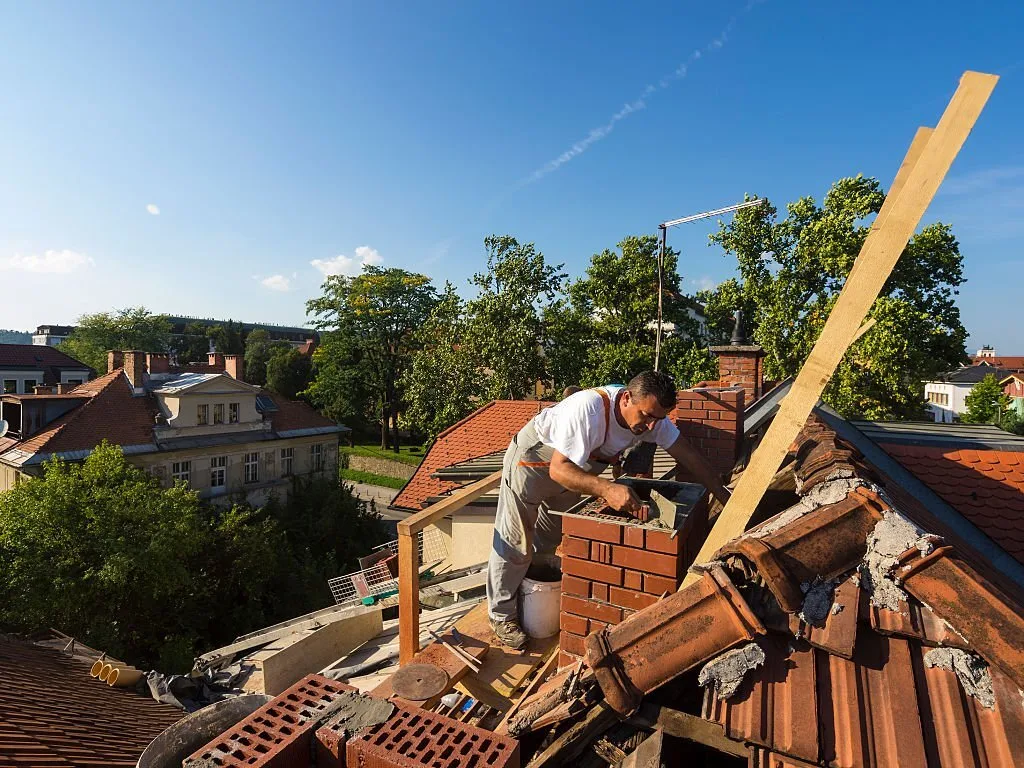
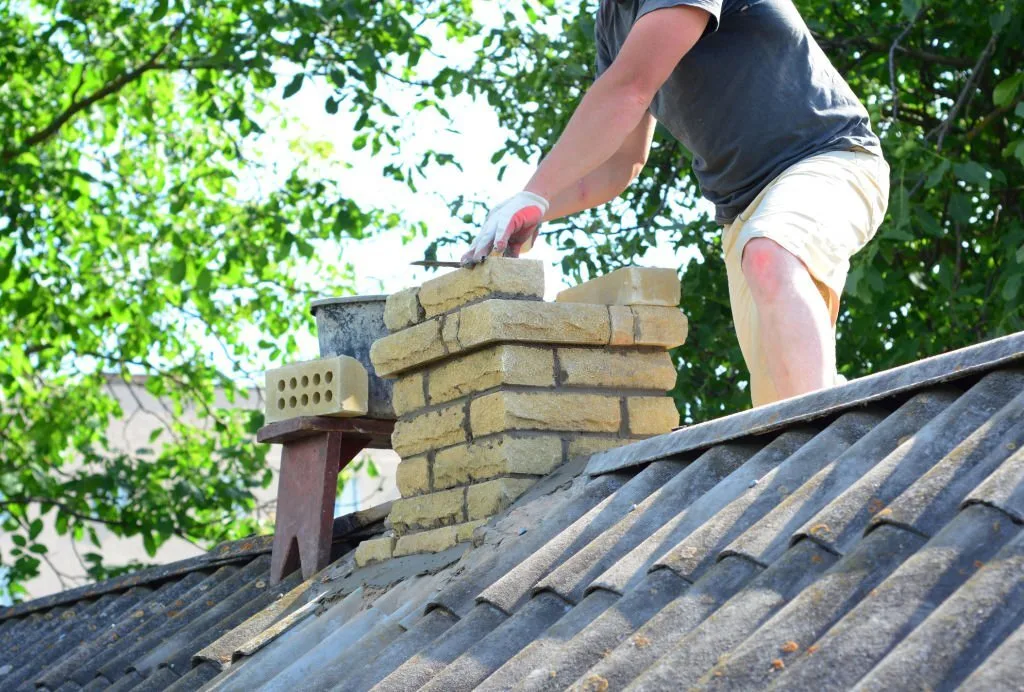
Get the Top of Your Chimney Rebuilt Right
Call 206-207-3974 or request a quote and we will inspect the stack, tell you honestly whether a rebuild is needed and lay out the work in writing.
☎ (206) 207-3974 Request ServiceQuestions
Chimney Stack Rebuild FAQ
How do you know the damage stops at the roofline?
We inspect from both sides: the exterior stack from the roof and ladder, and the interior chimney from the attic where we can reach it, plus a camera look at the flue. Sound brick has a hard face and tight joints; we also check for moisture staining on the attic side. If the deterioration continues below the roof deck, we tell you before any work starts, because a stack rebuild on top of a failing base is money wasted.
Can you match the old brick on my house?
Usually close enough that the new stack blends in from the street, though a brand-new brick will never be an exact twin of one that has weathered for decades. We match size, color range and texture as closely as available supply allows. Over a few seasons the new section weathers toward the rest of the house.
Does a stack rebuild include a new liner?
It includes tying the liner in so the flue runs continuous through the new section. If your existing liner is intact and reaches the top, we extend or reconnect it. If the liner is cracked, short or missing, we recommend addressing it during the rebuild while the stack is open, since doing it later means disturbing the new work.
How long does a chimney stack rebuild take?
Most single-flue stacks come down and go back up within a couple of days of on-site work, with larger multi-flue stacks taking longer. Weather is the main variable in Seattle: mortar should not be laid in heavy rain or near freezing, so we schedule rebuilds around the forecast and tell you the curing wait before the first fire.
Will the rebuild fix the leak around my chimney?
Often, because the rebuild replaces the three places water most commonly gets in: the crown, the brick and mortar, and the flashing that we reset or replace as part of the job. If the leak is from the roof field or valleys rather than the chimney, we will point that out so you can have a roofer address it.
Is a stack rebuild the same as chimney restoration?
No. Chimney restoration aims to preserve the existing masonry, often on historic homes, through repointing, cleaning, crown repair and water-repellent treatment while keeping the original brick. A stack rebuild removes the deteriorated section and replaces it with new masonry. Restoration is the answer when the brick is still sound; a rebuild is the answer when it is not.
Related services
Service areas
Helpful reading