
Home › Services › Chimney Tuckpointing & Repointing
Chimney Tuckpointing & Repointing Seattle, WA
Failed mortar joints ground out and repacked with matched mortar on chimneys across Seattle, Tacoma and the I-5 corridor.
- 25+ years in business
- CSIA certified
- Licensed, bonded & insured
Request Chimney Tuckpointing & Repointing
Tell us what's going on — we'll confirm a time by phone or text.
Chimney tuckpointing and repointing is the repair of the mortar joints between the bricks or blocks of your chimney. Over time the mortar weathers faster than the brick around it. Joints recede, crack and crumble, and once they do, rain has an open path into the chimney structure. Our team grinds out the failed joints to a sound depth, cleans the cavity, and repacks it with new mortar matched to the original in strength and color. The result is a chimney that sheds water again and stops losing material every winter.
This service is for homeowners whose bricks are still sound but whose mortar is not. If you can run a key along a joint and pull out sand, if you see gaps or missing mortar, or if small chunks of mortar appear on the roof or around the base of the chimney, repointing is the likely fix. When the bricks themselves are spalling, cracked or loose, the job moves into masonry repair, which is a different service. A technician will tell you which one you actually need after looking at the chimney in person.
James Chimney Sweep serves King, Pierce and Snohomish counties along the I-5 corridor from DuPont to Mount Vernon. Hours are Sunday through Friday, 7am to 8pm. Call 206-207-3974 or email info@jameschimneysweep.com to request a quote.
Symptoms & Problems
Signs your chimney mortar joints are failing
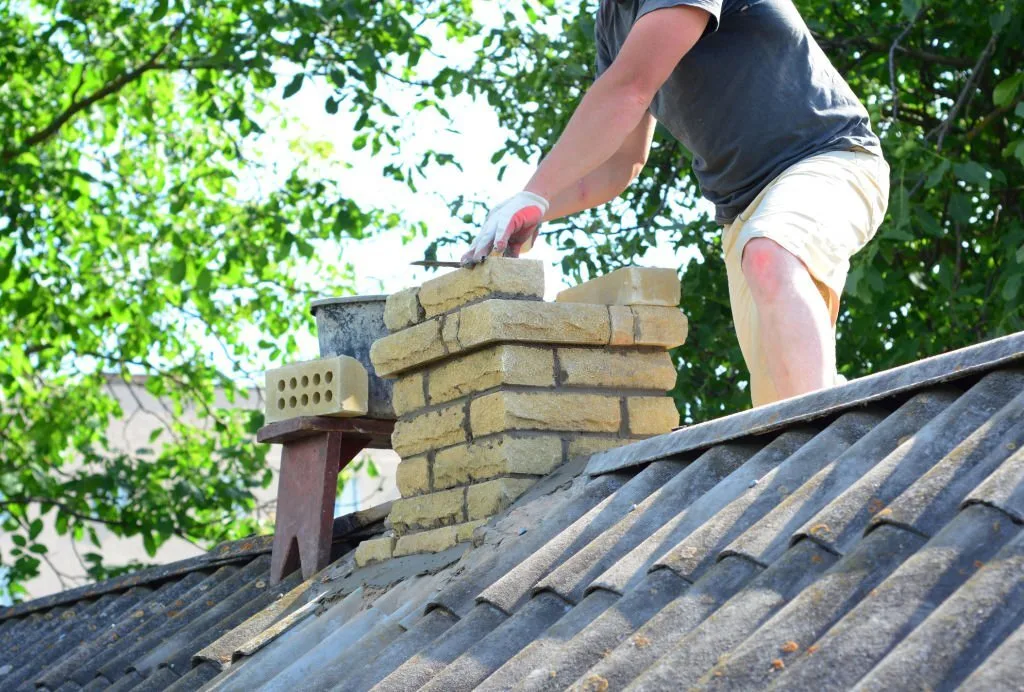
- Mortar joints recessed well behind the face of the brick
- Crumbly or sandy mortar that flakes away when touched
- Visible gaps, cracks or missing sections between bricks
- Bits of mortar on the roof, in the gutters or at the chimney base
- Moss, algae or dark staining concentrated along the joints
- White powdery deposits (efflorescence) on the brick face
- Water stains on the ceiling or wall near the chimney after heavy rain
- Bricks starting to shift or sit unevenly because the mortar no longer holds them
How It Works
How we tuckpoint and repoint a chimney
Inspect and map the damage
A technician examines every face of the chimney, probes the joints to find where mortar has lost its bond, and checks the crown, flashing and brick condition so you know whether repointing alone will solve the problem.
Grind out and repack the joints
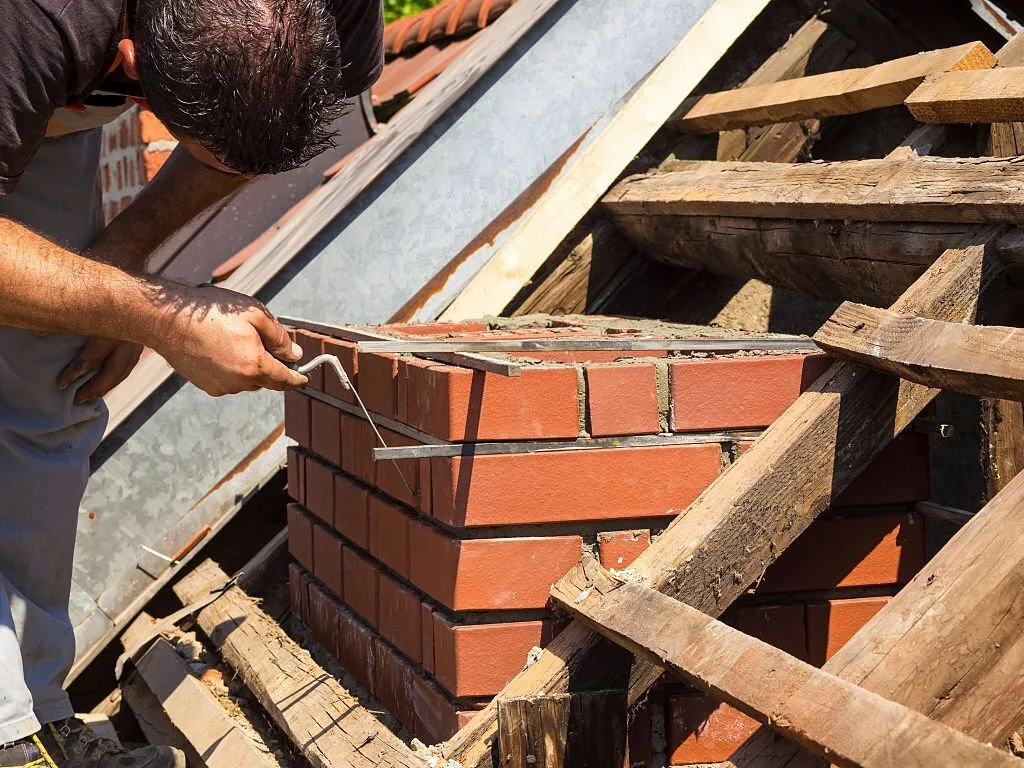
Failed mortar is cut out to a sound depth, typically about two to three times the joint width, then the cavity is brushed and dampened so the new mortar bonds. Fresh mortar matched to the original is packed in layers and tooled to match the existing joint profile.
Cure, clean and report
The new joints are protected while they cure, the brick face is cleaned of residue, and you receive a written summary with photos of what was done and any other items worth watching.
Options
Repointing options we offer
- Spot repointing — when joint failure is limited to one face or one section, usually the weather side, and the rest of the mortar is still sound.
- Full repointing — when joints are failing on most or all faces of the chimney; every joint is ground out and repacked so the whole stack weathers evenly.
- Tuckpointing with contrasting fillet — the traditional decorative method where a thin line of contrasting mortar is set into the joint to give the look of fine, straight joints; chosen for appearance on older or visible chimneys.
- Repointing combined with crown repair — when the concrete crown on top is cracked too, since a leaking crown will keep feeding water into freshly repointed joints.
- Water repellent after repointing — a breathable masonry water repellent applied once the new mortar has cured, to slow water absorption on exposed chimneys.
Pricing
What affects the price
- Height and size of the chimney and how many faces need work
- Depth and extent of the joint failure (spot versus full repointing)
- Access and roof pitch, including whether scaffolding or fall protection setup is needed
- Type of mortar required to match the original brick, such as lime-based mix for older masonry
- Whether decorative tuckpointing with a contrasting fillet is requested
- Additional work uncovered during inspection, such as crown repair or flashing resealing
- Weather windows, since mortar needs dry, mild conditions to cure properly
We don't publish flat prices because every chimney is different. You'll get a written quote after we look at the system — no surprises.
Timing & Safety
When repointing is necessary and when it can wait
Repointing is necessary when mortar has receded or fallen out deep enough that water can enter the joint. At that stage every rainy month makes the damage worse, and once bricks start to loosen or spall the repair becomes a larger masonry job.
- Do it now: joints recessed with open gaps, mortar falling out, bricks shifting, water stains inside the home near the chimney, or a chimney that is visibly leaning.
- Plan it soon: surface cracking and sandy mortar on the weather-facing side, moss rooted in the joints, or efflorescence that keeps returning.
- Optional: hairline surface cracks with mortar that is otherwise firm, or cosmetic tuckpointing to improve the look of a sound chimney.
NFPA 211 recommends that chimneys be inspected at least once a year. The masonry condition of the exterior is part of that inspection, which is the easiest way to catch joint failure early.
Safety considerations
Failing mortar is a structural and a water problem before it is a cosmetic one. Water that enters open joints saturates the brick, and in freezing weather it expands and pushes the brick face off. Left long enough, loose bricks can fall from the chimney, and a chimney with badly deteriorated joints can shift or topple in an earthquake, which is a real consideration in the Puget Sound region.
- Water entering through joints can reach the flue liner and firebox and damage the interior of the chimney as well.
- Do not climb onto the roof to inspect or patch joints yourself; steep, wet Northwest roofs are a fall hazard and a quick caulk or surface smear traps water instead of fixing the joint.
- Using the wrong mortar is a common DIY mistake. Mortar that is harder than the brick forces moisture and stress into the brick, causing the brick to spall instead of the joint.
- If your chimney serves a gas appliance and you ever smell gas, leave the house and call your gas utility or 911 before anything else.
Seattle & Puget Sound conditions
Mortar joints in Seattle, Tacoma and the rest of Puget Sound work harder than in most of the country. Months of steady rain keep the chimney damp, and the weather-facing side (often south or southwest) takes the most wind-driven water. Moss takes root in open joints and holds moisture against the mortar year-round, slowly prying it apart. Our winters are mild, but the handful of freeze-thaw cycles we do get hit saturated masonry hardest, which is why joint failure often shows up suddenly after a cold snap. Repointing also has a seasonal side here: mortar needs dry weather and moderate temperatures to cure, so late spring through early fall is the best window, and the inspection that identifies the need can happen any time of year.
Real Work
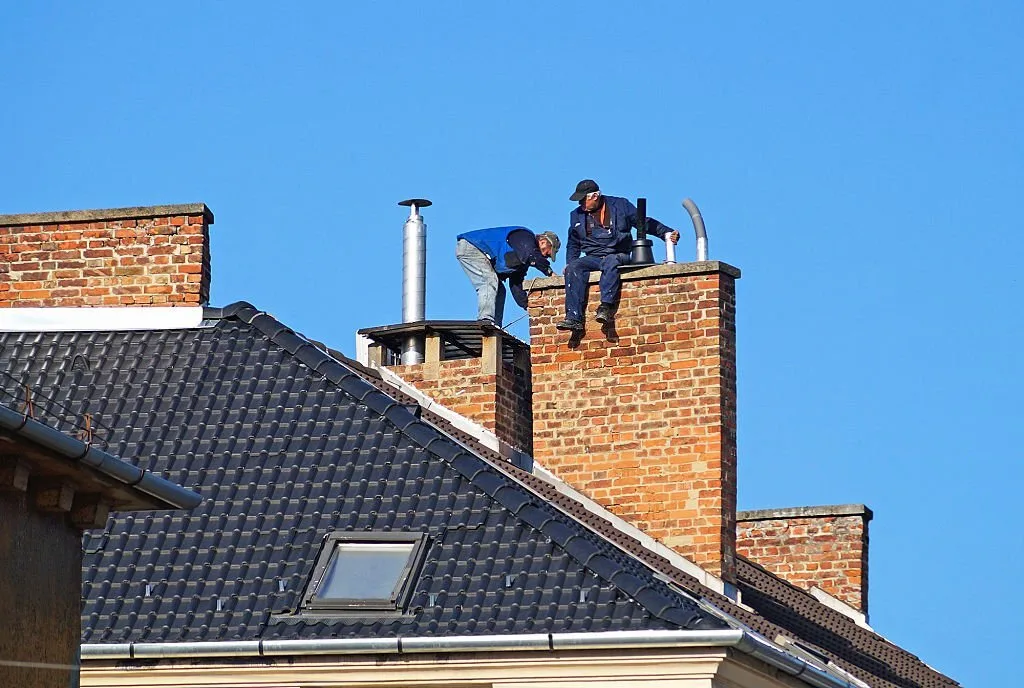
Chimney Tuckpointing & Repointing in action
Stop water at the joints before the bricks pay for it
Call 206-207-3974 or email info@jameschimneysweep.com to request a chimney repointing quote anywhere along the I-5 corridor from DuPont to Mount Vernon.
☎ (206) 207-3974 Request ServiceQuestions
Chimney Tuckpointing & Repointing FAQ
What is the difference between tuckpointing and repointing?
Repointing is the repair: grinding out failed mortar and packing in new mortar. Tuckpointing is traditionally a decorative version that adds a thin fillet of contrasting mortar to create the look of very fine joints. In everyday use most people, including many contractors, say tuckpointing to mean any mortar joint repair. When you call us, we will confirm whether you want the structural repair, the decorative finish, or both.
How do I know if I need repointing or full masonry repair?
If the bricks are intact and only the mortar is crumbling, repointing is the fix. If bricks are cracked, flaking on the face, loose or missing, the chimney needs masonry repair, which can include replacing brick and rebuilding sections. A technician checks both during the inspection and tells you which applies.
Can tuckpointing be done in wet Seattle weather?
Mortar needs time to cure without being washed out or frozen, so we schedule tuckpointing around dry windows and protect fresh joints if a shower is likely. Late spring through early fall is the easiest season; it can still be done in winter on dry, above-freezing days.
Do you remove all the old mortar, or only the failed joints?
Only joints that have failed are ground out, typically to a depth that lets the new mortar bond properly. Sound joints are left alone. Grinding every joint on a chimney that only has scattered failures adds cost and risk without improving the result; an on-site look determines which joints need work.
Can I just caulk or patch the gaps myself?
Surface patches and caulk do not bond inside the joint and tend to trap water behind them, which speeds up the damage. They also require roof access, which we do not recommend for homeowners. Proper repointing removes the failed mortar to depth before any new material goes in.
What does repointing cost?
Pricing depends on the chimney's height and number of affected faces, how deep the failure goes, roof access, the mortar type required, and whether the crown or flashing needs attention at the same time. After an inspection we provide a written quote so you know exactly what is included.
Related services
Service areas
Helpful reading