
Home › Services › Chimney Gas Fireplace Cleaning
Gas Fireplace Chimney Cleaning Seattle, WA
Vent and chimney cleaning for gas fireplaces, inserts and gas logs across Seattle, Tacoma and King, Pierce and Snohomish counties.
- 25+ years in business
- CSIA certified
- Licensed, bonded & insured
Request Chimney Gas Fireplace Cleaning
Tell us what's going on — we'll confirm a time by phone or text.
Gas fireplace chimney cleaning is the cleaning and inspection of the vent or chimney that carries exhaust away from a gas fireplace, gas insert or set of gas logs. Gas burns far cleaner than wood, so there is no creosote to scrape out. What builds up instead is different: white or rust-colored corrosion deposits from acidic condensation, fallen debris, leaves and moss from the roof, bird and rodent nests, and termination caps clogged with grit and spider webs. Any of these can slow or block the flow of exhaust, and a gas appliance that cannot vent properly can push combustion gases, including carbon monoxide, back into the living space.
This service is for any Seattle-area homeowner with a gas fireplace, whether it vents through a masonry chimney that once served a wood fire, a metal B-vent pipe, or a direct-vent termination on an exterior wall. It is a different job from our standard Chimney Sweep, which is built around removing creosote and soot from a wood-burning flue. A gas vent needs lighter tools, more attention to corrosion and blockage, and a careful look at the connections and the appliance itself. NFPA 211 recommends an annual inspection of every chimney and vent, and that recommendation applies to gas just as much as wood.
James Chimney Sweep has served Seattle, Tacoma and the Puget Sound for more than 25 years. We are CSIA certified and licensed, bonded and insured in Washington, and we service gas fireplace vents Sunday through Friday from 7am to 8pm.
Symptoms & Problems
Signs your gas fireplace vent needs cleaning
- A faint exhaust or chemical smell in the room while the fireplace runs
- Flames that look lazy, yellow or orange instead of steady blue-tipped
- Soot or dark streaking on the glass, logs or around the firebox opening
- Moisture, condensation or rust stains near the top of the fireplace or vent
- White, chalky or flaky deposits visible inside the flue or around the cap
- Chirping, scratching or nesting material near the chimney top
- A carbon monoxide alarm that has sounded or chirped with the fireplace on
- The fireplace was never inspected after the house was bought or the unit installed
How It Works
How we clean a gas fireplace chimney
Inspect the vent from top to bottom
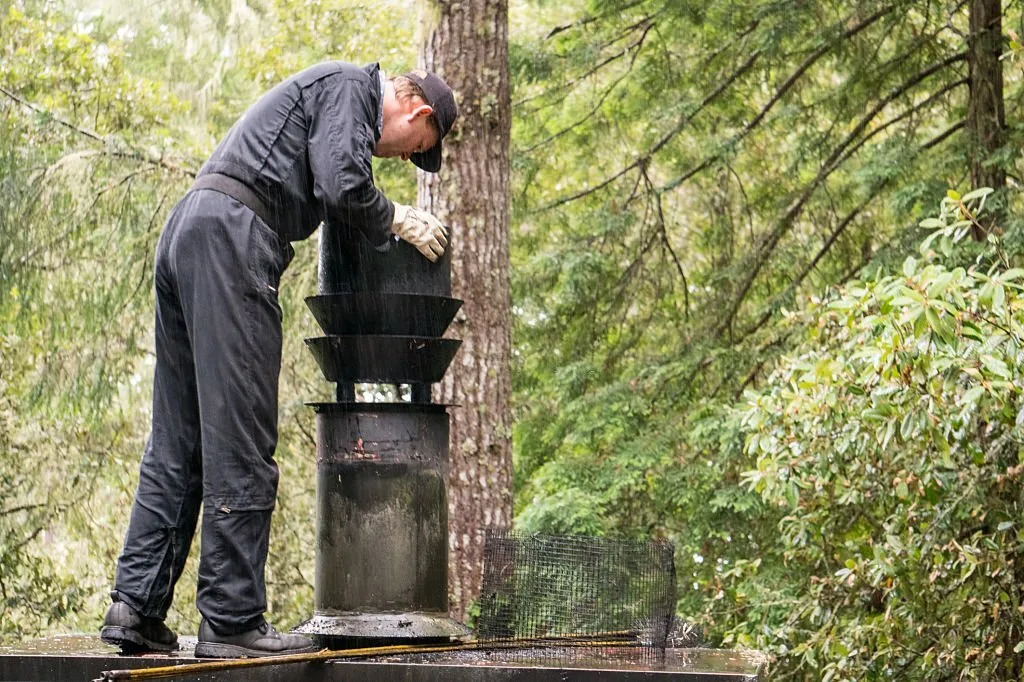
We start by identifying the type of vent you have: a masonry chimney with or without a liner, a metal B-vent, or a direct-vent pipe. We check the termination cap for blockage, look at the flue or pipe interior, and examine the connection between the appliance and the vent. We also verify that the appliance is shut down before any work begins on the vent.
Clear deposits, debris and blockages
Using brushes and vacuum equipment sized for gas vents rather than heavy wood-flue tools, we remove corrosion scale, debris, leaves, moss and any nesting material. We clear the termination cap and its screen so exhaust can exit freely. If an active nest or animal is present, our Chimney Animal and Nest Removal service handles the humane removal before the vent is cleaned.
Report findings and next steps
You receive a clear summary of what we found and what we removed, along with photos where useful. If we see corrosion that has eaten into the pipe, a damaged liner, a missing cap, or anything about the appliance that needs a qualified gas technician, we tell you plainly and explain your options.
Options
Gas vent cleaning options
- Masonry chimney serving a gas insert or gas logs — the most common setup in older Seattle and Tacoma homes; we clean the liner or the original clay flue and check it for the moisture damage gas exhaust can cause.
- B-vent (metal double-wall pipe) cleaning — for gas fireplaces and gas log sets that vent through a factory metal pipe; we clear the pipe and inspect joints and the rain cap.
- Direct-vent termination cleaning — for sealed-combustion fireplaces that vent horizontally through a wall or vertically through the roof; the focus is the outside cap, screen and the intake path.
- Cleaning combined with an annual inspection — the most useful option for most homeowners, since the inspection is what tells you whether the vent is safe for another season.
- Cap and screen clearing only — when the vent interior is clean but the termination has been choked by moss, debris or nesting.
Pricing
What affects the price
- Type of vent: masonry chimney, B-vent pipe or direct-vent termination
- Height and accessibility of the chimney or termination point
- Amount and type of buildup, especially heavy corrosion scale
- Whether a nest, animal or stuck debris has to be removed first
- Whether the cleaning is paired with a full annual inspection
- Condition of the termination cap and whether it needs replacement
- Number of gas appliances sharing the same vent
We don't publish flat prices because every chimney is different. You'll get a written quote after we look at the system — no surprises.
Timing & Safety
When gas vent cleaning is necessary, and when it is optional
Necessary:
- Any of the warning signs above, especially odors, a CO alarm, or sooty glass
- After a bird or animal has been heard or seen at the chimney top
- When a gas insert or log set has been installed in a chimney that previously burned wood and has not been cleaned since
- When the vent has not been looked at in more than a year
- After any storm that dropped branches, needles or moss onto the roof and cap
Optional but worthwhile:
- A quick cleaning of the cap and screen in the fall if the flue interior was clear last year
- Before listing a home for sale, so buyers see a documented, serviced vent
A gas fireplace that sees little use still needs inspecting. Deposits and nests form whether the fire is on or off, and a vent that sat idle all summer is the one most likely to be blocked when you first light it in October.
Safety considerations
If you smell gas, leave the house immediately and call your gas utility or 911 from outside. Do not flip switches, light anything or go looking for the source.
- Gas lines, shutoff valves, regulators and burner assemblies are only serviced by a qualified technician. James Chimney Sweep cleans and inspects the vent and chimney; we do not perform gas-line work and we will refer you to a qualified gas technician if the appliance itself needs attention.
- Never run a gas fireplace with the glass off or damaged on a sealed direct-vent unit.
- Keep a working carbon monoxide alarm on every floor, and treat any alarm as real.
- Do not attempt to clear a blocked cap or vent yourself, and never climb onto the roof to check it; let us handle it from the ground and the roofline with the right equipment.
- If you convert a wood fireplace to gas, the chimney should be inspected and cleaned before the first fire so old creosote is not left behind the new logs.
Seattle & Puget Sound conditions
Gas exhaust is loaded with water vapor, and in the Puget Sound that matters. Our mild, damp climate means the flue rarely gets hot enough to fully dry out, so acidic condensation sits on masonry and metal and slowly eats at it. Older brick chimneys in Seattle, Tacoma and Everett that were relined or simply reused for a gas insert are especially prone to spalling and white mineral staining. Outside, the moss and fir needles that pile up on roofs from Snohomish County down to Pierce County work their way into termination caps and screens, and the wet winters give birds and squirrels a strong reason to nest in a warm, sheltered vent. Homes near the Sound also see salt-air corrosion on metal caps and pipe sections. An annual cleaning and inspection catches all of this before the heating season.
Real Work
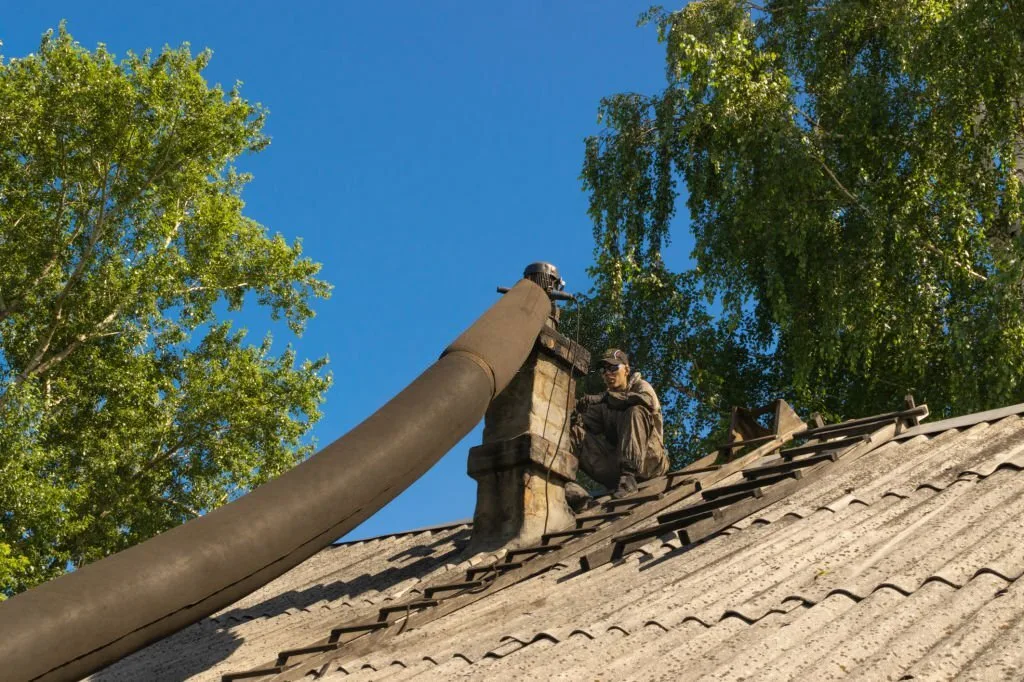
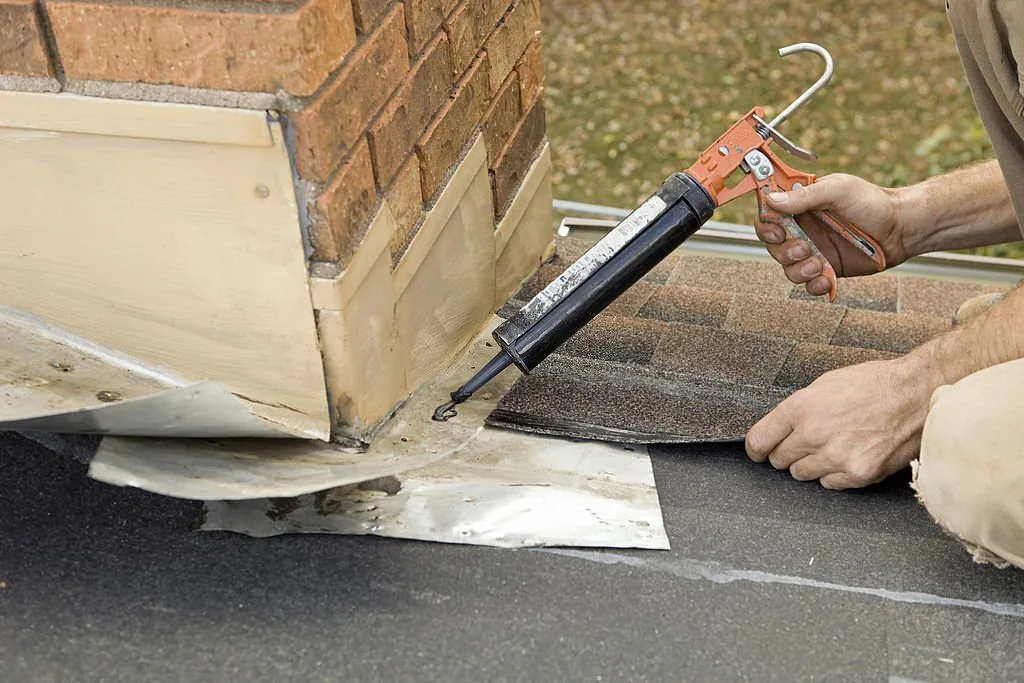
Chimney Gas Fireplace Cleaning in action
Get your gas fireplace vent cleared before the first cold night
Call 206-207-3974 or request a quote online, and a CSIA certified technician will inspect and clean your gas vent anywhere in King, Pierce or Snohomish County.
☎ (206) 207-3974 Request ServiceQuestions
Chimney Gas Fireplace Cleaning FAQ
My gas fireplace does not make creosote, so why does the chimney need cleaning?
Creosote is only one reason to clean a chimney. Gas exhaust leaves corrosion deposits, and the vent collects debris, moss and nests the same as any other opening on your roof. Any of these can restrict exhaust flow, which is how carbon monoxide ends up inside. The annual inspection NFPA 211 recommends applies to gas vents too.
Is this the same as a regular chimney sweep?
No. A standard Chimney Sweep is built around removing soot and creosote from a wood-burning flue with heavy brushes. Gas vent cleaning uses lighter tools, concentrates on corrosion, blockages and the termination cap, and includes checking the connection between the appliance and the vent.
How often should a gas fireplace vent be cleaned?
Plan on an inspection every year. Whether a full cleaning is needed that year depends on what the inspection finds. Vents under trees, near the water, or in older masonry chimneys usually need cleaning more often than a newer direct-vent unit on a clear roof.
Can you work on the gas logs or burner while you are here?
We clean and inspect the vent and chimney and will point out anything about the appliance that looks wrong, but we do not service gas lines, valves or burners. That work belongs to a qualified gas technician, and we can tell you when it is time to call one.
There is a bird nest in my gas vent. Do I need a different service?
Live animals and active nests are handled through our Chimney Animal and Nest Removal service first, then the vent is cleaned. If you are only seeing old nesting material and no activity, it is usually removed as part of the cleaning.
Can you tell me over the phone whether my vent is blocked?
No. A gas vent has to be looked at in person to know what is going on inside. If you smell gas or a CO alarm has sounded, leave the house and call your gas utility or 911 first, then schedule an inspection once it is safe.
Related services
Service areas
Helpful reading