
Home › Services › Stainless Steel Cap Installation
Stainless Steel Chimney Cap Installation Seattle, WA
Corrosion-resistant 304 and 316 stainless steel chimney caps installed across Seattle, Tacoma and the Puget Sound, King, Pierce and Snohomish counties.
- 25+ years in business
- CSIA certified
- Licensed, bonded & insured
Request Stainless Steel Cap Installation
Tell us what's going on — we'll confirm a time by phone or text.
Stainless steel chimney cap installation is the upgrade most Puget Sound homeowners end up making after watching a galvanized cap rust through. A chimney cap keeps rain, animals and debris out of your flue while letting smoke and exhaust out; a stainless steel cap does the same job without corroding in the wettest, saltiest air in the country. If your current cap is streaking orange down the crown, has holes in the mesh, or was installed cheaply by a builder, you are the homeowner this page is for.
This page is specifically about the material choice: why stainless, which grade, and what to expect from it over the next few decades. If you just need any cap put on a chimney that has none, our general Chimney Cap Installation page covers the basics of fit and style. If your existing cap simply needs a loose screw tightened or a lid re-seated, Chimney Cap Repair is the right service. And if your flue is an odd size or you want a decorative shroud, our Custom-Made Chimney Cap page explains fabricated options. Here, we focus on getting the metal right so you never buy a cap for that chimney again.
James Chimney Sweep has been installing caps across Seattle, Tacoma and the surrounding counties for more than 25 years. We are CSIA certified and licensed, bonded and insured in Washington.
Symptoms & Problems
Signs Your Galvanized Cap Is Failing and Stainless Is Overdue
- Orange or brown rust streaks running down the chimney crown or masonry
- Mesh screen rusted thin, torn, or missing sections where birds or squirrels can get through
- Lid pitted, flaking or visibly thinner at the edges than when new
- Rain or dripping sounds in the firebox after storms because the cap is perforated
- Cap replaced once already within the last 10 years and rusting again
- Home near Puget Sound, Elliott Bay, Commencement Bay or another saltwater shoreline
- Cap legs or fasteners corroded so the cap rocks or shifts in wind
- Brown staining on the cap even though it was sold as 'rust-resistant'
How It Works
How We Install a Stainless Steel Chimney Cap
Inspect the flue, crown and existing cap
We check the flue tile or liner dimensions, the condition of the crown, and how the old cap was attached. Rust staining tells us how the old metal failed, which helps us recommend the right stainless grade and mesh for your exposure.
Remove the old cap and fit the stainless cap
We take off the corroded cap, clean up the rusted fasteners and residue, then fit a properly sized 304 or 316 stainless cap with stainless hardware so there is no dissimilar metal to start a new rust point. Multi-flue chimneys get a single top-mount cap where appropriate.
Verify draft and document the work
We confirm the cap clears the flue opening, the mesh does not restrict draft, and the attachment is solid. You get photos of the finished cap and notes on anything else we noticed up top, such as a cracked crown or open mortar joints.
Options
Stainless Steel Cap Options
- 304 stainless single-flue cap — the standard choice for most inland Seattle, Bellevue, Everett and Tacoma homes; excellent resistance to rain and freeze-thaw at a reasonable cost.
- 316 marine-grade stainless cap — the right pick for waterfront and near-shore homes in West Seattle, Ballard, Edmonds, Mukilteo, Gig Harbor and along Puget Sound, where salt air attacks lesser metals.
- Stainless multi-flue top-mount cap — one large cap covering two or more flues, which also protects the crown from rain and is built entirely of stainless rather than a painted steel frame.
- Heavy-gauge mesh or spark-arrestor mesh — smaller mesh openings to stop embers on wood-burning chimneys, or standard mesh for maximum draft on gas and oil appliances.
- Stainless cap with a damper lid — a top-sealing damper built into a stainless cap, useful where the throat damper is broken and you want to stop heat loss and downdrafts.
Pricing
What affects the price
- Stainless grade: 304 versus 316 marine-grade
- Single-flue versus multi-flue top-mount cap size
- Flue opening dimensions and whether a standard size fits or a custom size is needed
- Mesh gauge and opening size, such as spark-arrestor mesh for wood burners
- Condition of the crown and whether the old cap's fasteners damaged it
- Roof pitch, chimney height and how the chimney can be safely accessed
- Whether a top-sealing damper is integrated into the cap
We don't publish flat prices because every chimney is different. You'll get a written quote after we look at the system — no surprises.
Timing & Safety
When Stainless Is Necessary and When It Is Optional
Stainless steel is strongly recommended, and in practice necessary, when:
- Your galvanized cap has rusted through once already; a second galvanized cap will fail the same way.
- Your home is within roughly a mile of saltwater, where salt deposits accelerate corrosion on plain steel.
- You have a stainless steel liner; mixing a galvanized cap with a stainless liner creates a corrosion point at the fasteners.
- Rust is staining a light-colored stucco, stone or brick chimney and you want the staining to stop at the source.
Stainless is a nice-to-have rather than essential when:
- The chimney serves a gas appliance that is rarely used and the existing cap is sound; you can wait until the next cap replacement cycle.
- You plan to remove or decommission the chimney in the next few years.
Even in those cases, the cost difference between galvanized and stainless is small compared to the cost of a second installation trip, which is why we rarely recommend galvanized in this climate. If your cap is missing entirely, see Chimney Cap Installation; if it is damaged but the metal is still sound, see Chimney Cap Repair.
Safety considerations
A chimney cap is a safety device, not just weather protection. The mesh keeps sparks from landing on a cedar-shake roof or dry moss, and it keeps raccoons, squirrels and birds out of the flue where nests can block exhaust. A cap that has rusted through quietly stops doing both jobs.
- Do not go on the roof to check or replace a cap yourself; wet, moss-covered Puget Sound roofs are slick year-round, and we handle access with proper equipment.
- Mesh that is too fine can restrict draft and cause smoke spillage or carbon monoxide to back up into the home; we size mesh to the appliance.
- NFPA 211 recommends an annual chimney inspection; we check the cap as part of that visit and can often replace it the same day.
- If your chimney serves a gas appliance and you ever smell gas, leave the house and call the gas utility or 911. Gas lines and valves are only serviced by a qualified technician; cap installation never involves touching them.
Seattle & Puget Sound conditions
Seattle and the Puget Sound are close to the worst-case environment for a chimney cap. We get roughly 150 rainy days a year, so a cap is wet far more often than it is dry, and galvanized zinc coatings simply wear away under constant moisture. Add salt air from the Sound, which carries inland with every westerly wind, and chloride deposits build up on the metal and eat through the zinc, then the steel beneath. That is why so many caps in West Seattle, Ballard, Magnolia, Edmonds, Mukilteo, Tacoma's waterfront and Gig Harbor show rust within a few years. Moss is another local issue: it grows on the cap lid and mesh, holds water against the metal, and accelerates corrosion. Freeze-thaw cycles in winter expand water trapped in rust pits and peel coatings faster. Stainless steel, particularly 316 grade with added molybdenum, resists chloride pitting and does not depend on a surface coating to survive, which is why it is the only cap material we recommend for homes near the water and the sensible default everywhere else in King, Pierce and Snohomish counties.
Real Work
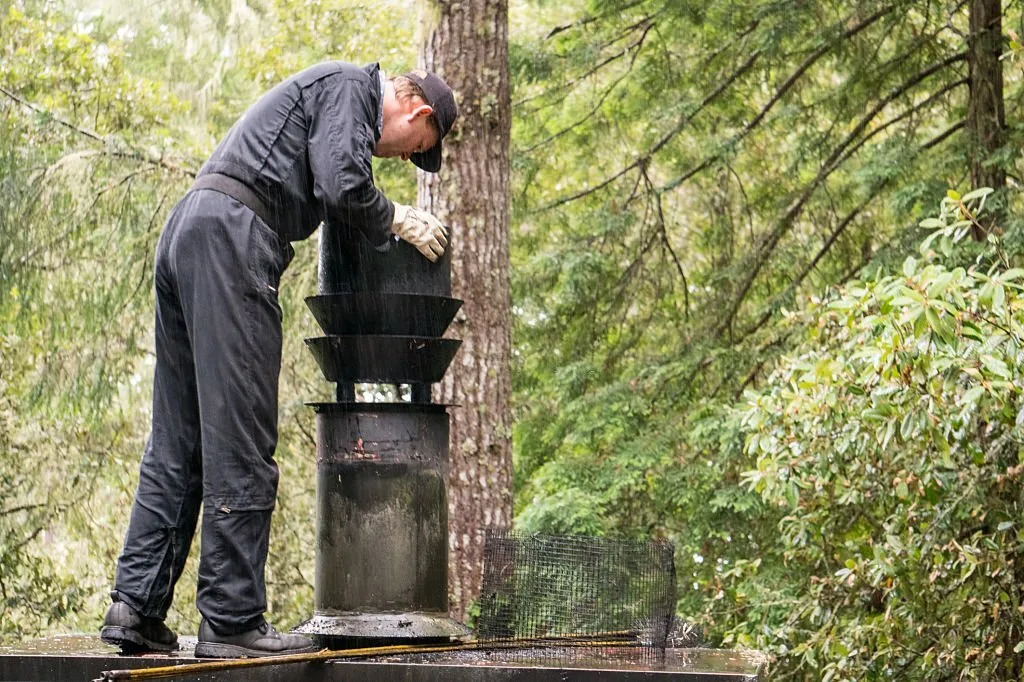
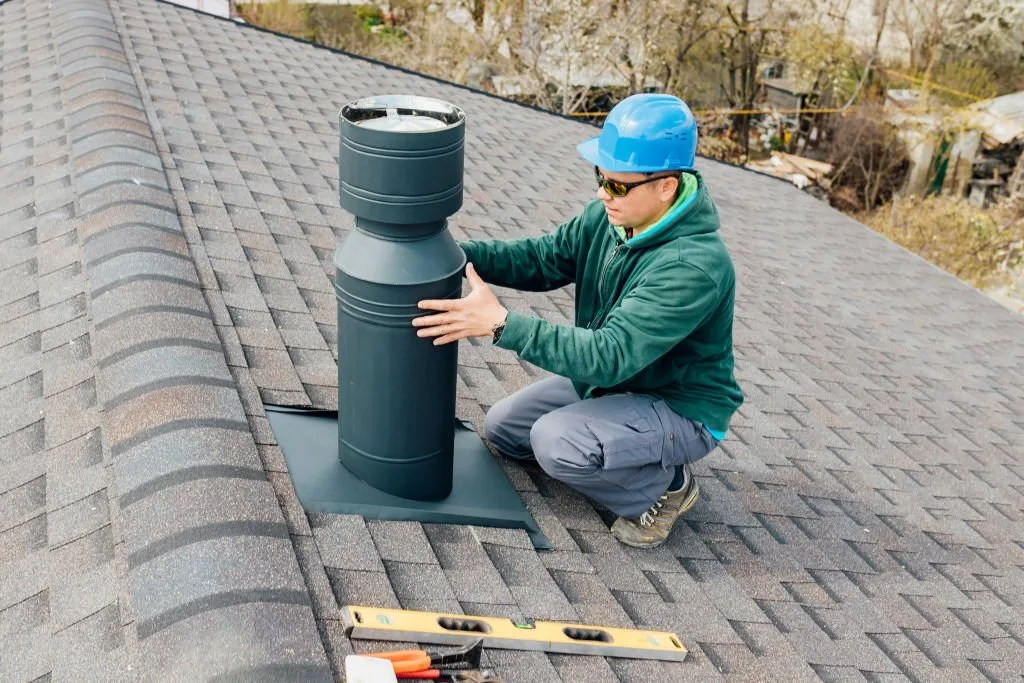
Stainless Steel Cap Installation in action
Ready to Stop Replacing Rusted Caps for Good?
Call 206-207-3974 or request a quote online and we will recommend the right stainless grade and mesh for your Seattle or Puget Sound home.
☎ (206) 207-3974 Request ServiceQuestions
Stainless Steel Cap Installation FAQ
What is the difference between 304 and 316 stainless steel chimney caps?
Both are true stainless alloys and both resist rain and freeze-thaw far better than galvanized steel. 316 adds molybdenum, which makes it much more resistant to chloride pitting from salt air. For inland homes, 304 is usually sufficient. For waterfront or near-shore homes around Puget Sound, we recommend 316 so the cap does not develop surface rust spots over time.
How long does a stainless steel chimney cap last compared to galvanized?
Galvanized caps in our climate commonly rust through in a handful of years, sometimes faster near the water. A properly installed stainless cap with stainless fasteners should outlast the rest of the chimney components and is, for practical purposes, the last cap you should have to buy for that flue. We cannot promise a specific lifespan, but the difference in real-world performance is dramatic.
Can you replace my rusted galvanized cap with stainless without changing anything else?
Usually yes. Most galvanized caps are standard sizes, and a stainless cap of the same dimensions fits the same flue tile. We remove the old cap and any rusted fasteners, clean the tile edge, and install the new cap with stainless hardware. If the old cap's screws cracked the flue tile or the crown, we will show you photos and explain the repair options.
Does mesh size matter on a stainless cap?
Yes. Smaller spark-arrestor openings are good for wood-burning fireplaces near cedar roofs or tree cover, because they stop embers. Larger standard mesh gives better draft and is preferred for gas and oil appliances. Mesh that is too fine can clog with creosote and restrict airflow, so we match the mesh to your appliance rather than simply choosing the smallest opening.
Will a stainless steel cap stop the rust stains on my chimney?
It stops new staining at the source, because stainless does not shed iron oxide the way a corroding galvanized cap does. Existing stains on brick, stucco or stone may fade with weathering but often need cleaning to fully remove. We can advise on that when we inspect the chimney.
Is a stainless cap worth it for a chimney I rarely use?
Generally yes, because the cap's job of keeping rain and animals out matters regardless of how often you light a fire. Rain entering an unused flue still damages the liner, smoke chamber and firebox, and the cost difference between galvanized and stainless is small relative to a second installation. If you are planning to remove the chimney soon, a basic cap may be adequate.
Related services
Service areas
Helpful reading